
Description
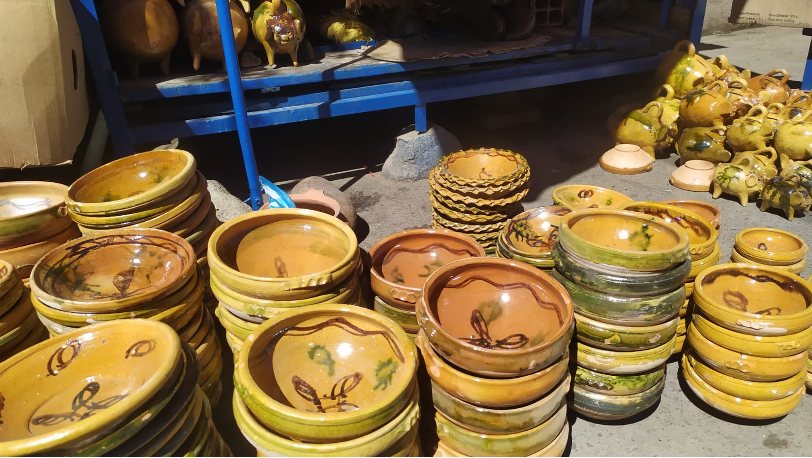
The ancestral ceramics that remain perennial through time. The knowledge and knowledge of the aborigines, which are transmitted from generation to generation, planted in attritions and customs in different contexts, who create in clay images of animals, masks and utensils that have certain uses, such as the toro chico (bull-shaped glass), which they use for the festival of all saints (festival of the dead). The first of November north Potosí (Bolivia) Chayanta. The idols, like the sayankus, are erected in different shapes: stones, thorns, cacti, etc. To those who perform a ritual on ceramic plates or dishes; They sacrifice with the essence and an animal fetus or lamb, or llama.
Since ancient times, potters have maintained a tradition of making utilitarian vessels, with a series of pre-Columbian techniques; They make pots, plates, zoomorphic glasses for traditional festivals, jugs, jars, flower pots, masks, casseroles, stoves or wood-burning stoves (konchas). A wide variety of utensils are made manually with various techniques.
The potters are found in different regions of Bolivia (Tiwuanaku), Cochabamba (Wayculi, potters, they use “kick” (pedal) wheels, Santa Cruz (Cotoca women potters), Chuquisaca (Tarabuco), Oruro (Sillota Ancasi – Belén, Jikilla), Potosí (Chayanta – Totorani) and Beni.
Each region has its own identity to create a ceramic piece.
The raw material of clay or loam is subjected to treatment by grinding or decanting; sifting or decoating; adding flux or degreaser: quartz or chamotte for high, medium or low temperature. It is placed in polyethylene bags for maceration and then a certain lifting technique is used: pellet, pinch, churros, plates, mold or lathe, then the burnished or false slip. They use oxides, lead enamels that are recycled from used car batteries: lead, minium, copper oxide, minerals, etc. (they are toxic to health).
They design stylized figures of flora, fauna, faces, etc., they create high and low relief. They burn in open-air ovens with sheep, llama and cow dung; wood-fired in cylindrical ovens.
englishIndigenous ceramics
The ancestral earthenware remains perennial through time. The knowledge and skills of the aborigines, which are passed down from generation to generation, traditions and customs are maintained in different contexts, who create clay images of animals, masks and utensils that have certain uses, such as the toro chico (bull-shaped vessels), which they use for the feast of All Saints (feast of the dead), the first of November in the north of Potosí (Bolivia) Chayanta. The idols, such as the "sayankus", are erect figures of different shapes: stones, thorns, cacti, etc. To which they pay a rite in ceramic plates or bowls. They sacrifice with the essence (the foetus of an animal or lamb, or llama).
Since ancient times, potters have maintained a tradition of making utilitarian vessels, with a series of pre-Columbian techniques. They make pots, plates, zoomorphic vessels for traditional festivals, jars, flowerpots, masks, pots, or fireplaces ("konchas") with firewood. A variety of utensils are made by hand using a variety of techniques. The potters are found in different regions of Bolivia (Tiwuanaku), Cochabamba (Wayculi, potters, use "patada" (pedal) lathes, Santa Cruz (Cotoca women potters), Chuquisaca (Tarabuco), Oruro (Sillota Ancasi – Belen, Jikilla), Potosi (Chayanta – Totorani) and Beni.
Each region has its own identity in order to create a piece of pottery. The clay raw material is subjected to treatment by grinding or decanting; sieving; adding flux or degreaser: quartz or chamotte for high, medium or low temperatures.
They use oxides, lead glazes that they recycle from used car batteries: lead, minium, copper oxide, minerals, etc. They design stylized figures of flora, fauna, faces and more, in high and low relief. They burn in open ovens with sheep, llama and cow dung; with firewood in cylindrical ovens.
Reviews
There are no reviews yet.