
Rari basketry

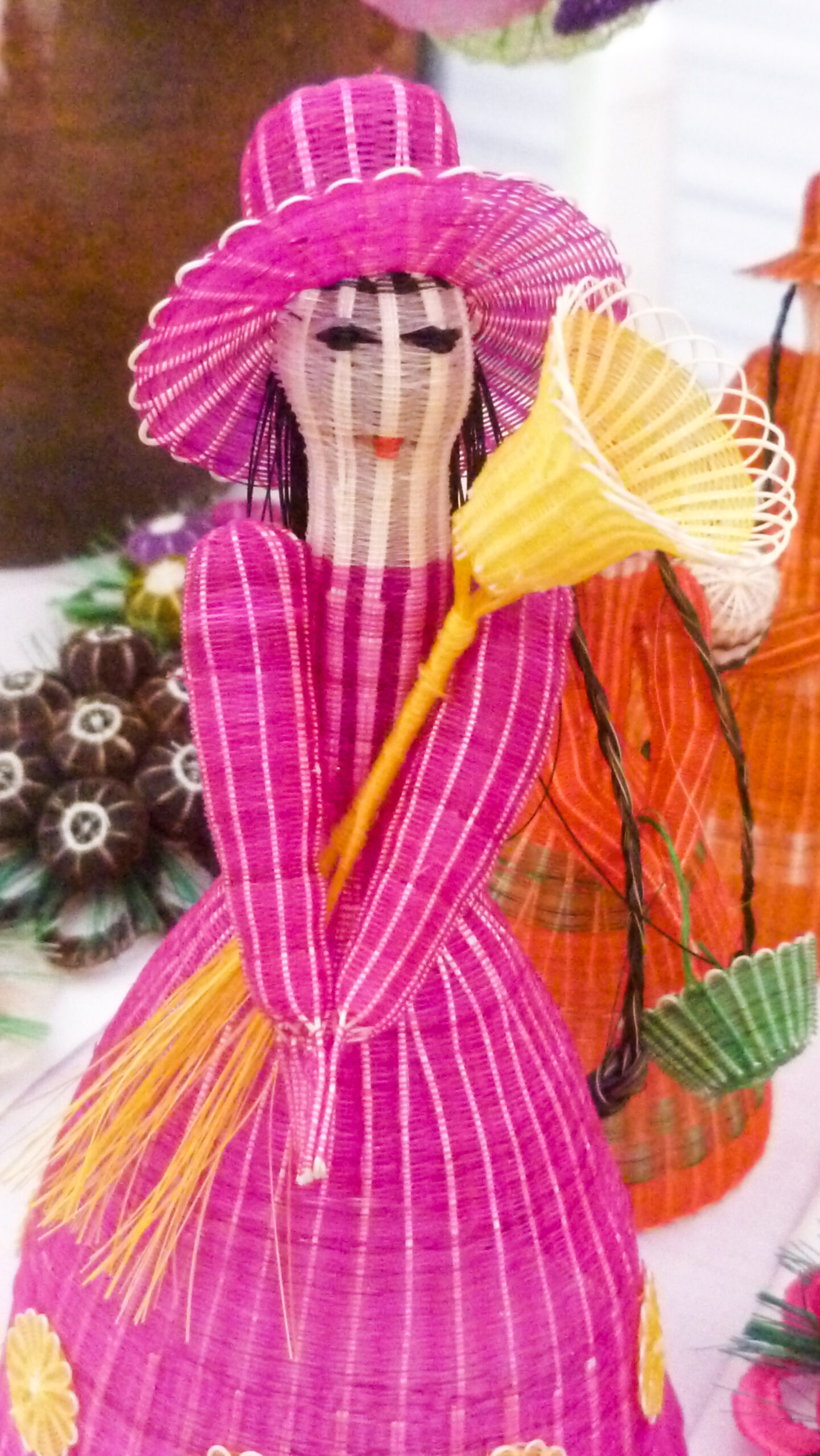
Rari es una aldea de la comuna de Colbún, Región del Maule, Chile, ubicada al pie de la precordillera, con una población de alrededor de 1300 habitantes. Rari se reconoce por su fina artesanía en miniatura, tejida con el crin de caballo, junto a una fibra vegetal llamada “ixtle” o “tampico”, proveniente de México, que […]

Descripción

Rari es una aldea de la comuna de Colbún, Región del Maule, Chile, ubicada al pie de la precordillera, con una población de alrededor de 1300 habitantes.

Rari se reconoce por su fina artesanía en miniatura, tejida con el crin de caballo, junto a una fibra vegetal llamada “ixtle” o “tampico”, proveniente de México, que se emplea para dar firmeza a la estructura del tejido.

Es un oficio transmitido generacionalmente por mujeres desde hace más de 200 años

La técnica consiste en el entramado de las fibras de crin en torno a las del ixtle, que son más resistentes y se disponen en la urdimbre.

Antiguamente se comenzó a tejer con las raicillas del árbol llamado Álamo, pero luego sustituyeron la trama por el crin y después la urdimbre por el vegetal de México, obteniendo un trabajo mucho más fino.

La temática de objetos es muy variada y sorprenden constantemente con nuevas propuestas cada vez más complejas.

Los objetos más tradicionales son los prendedores con figuras de mariposas, sombreritos, flores, pesebres, figuras de mujeres con largos vestidos como de principio de siglo. Hoy la variedad es muy grande: collares, aros, figuras de animales, ramos de flores, brujas, ángeles, flor de la camelia, escenas religiosas, dentro de muchas otras;  además de incorporar nuevos materiales como la plata y el cobre

Se distinguen estas figuras por un variado colorido de tonos brillantes y contrastados obtenidos mediante el teñido del crin y a veces también del vegetal.

La materia prima que utilizan es el pelo de las colas de los caballos muertos, para eso van personas que recolectan el material en los mataderos a venderlo directamente en el pueblo. Una vez obtenido el crin se selecciona según su grosor y calidad luego se lava profundamente para ser teñido, usualmente con anilinas artificiales. Es por eso que el crin de los caballos blancos es el más requerido, pero también el más escaso.

El vegetal lo importan directamente de una comunidad productiva de México.

La comunidad de artesanas de Rari fue reconocida como Tesoros Humanos Vivos el año 2010 por el Ministerio de las Culturas, las Artes y el Patrimonio y Unesco. También fue declarada ciudad artesanal del mundo 2015 por Word Crafts Council.

English

Basketwork of RariRari is a village in the commune of Colbún, Maule Region, Chile, located at the foot of the foothills of the Andes, with a population of around 1300 inhabitants. Rari is known for its fine miniature handicrafts, woven with horsehair, together with a vegetable fiber called «ixtle» or «tampico», from Mexico, which is used to give firmness to the structure of the fabric. It is a craft that has been passed down through the generations by women for over 200 years. The technique consists of weaving horsehair fibers around ixtle fibers, which are more resistant and are arranged in the warp. In the past, weaving began with the roots of the Alamo tree, but later the weft was replaced by the horsehair and then the warp was replaced by the Mexican plant, resulting in a much fine workmanship. The subject matter of the objects is very varied and they are constantly surprising us with new and increasingly complex proposals.

The most traditional objects are pins with figures of butterflies, little hats, flowers, cribs, figures of women in long dresses as at the beginning of the century. Today the variety is very large: necklaces, earrings, animal figures, bouquets of flowers, witches, angels, camellia flowers, religious scenes, among many others, as well as incorporating new materials such as silver and copper. These figures are distinguished by a variety of bright and contrasting colors obtained by dyeing the horsehair and sometimes also the plants. The raw material used is the hair from the tails of dead horses, for which people collect the material and sell it directly in the village. Once horse hair is obtained, it is selected according to its thickness and quality, then it is washed thoroughly to be dyed, usually with artificial anilines. This is why whitehair horse is the most sought after, but also the scarcest.

The vegetable is imported directly from a productive community in Mexico. The artisan community of Rari was recognized as a Living Human Treasure in 2010 by the Ministry of Culture, Arts and Heritage and UNESCO. It was also declared a craft city of the world in 2015 by the Word Crafts Council.

Valoraciones

No hay valoraciones aún.

Sé el primero en valorar “Rari basketry”

Tu dirección de correo electrónico no será publicada. Los campos obligatorios están marcados con *

Descripción

Rari es una aldea de la comuna de Colbún, Región del Maule, Chile, ubicada al pie de la precordillera, con una población de alrededor de 1300 habitantes.

Rari se reconoce por su fina artesanía en miniatura, tejida con el crin de caballo, junto a una fibra vegetal llamada “ixtle” o “tampico”, proveniente de México, que se emplea para dar firmeza a la estructura del tejido.

Es un oficio transmitido generacionalmente por mujeres desde hace más de 200 años

La técnica consiste en el entramado de las fibras de crin en torno a las del ixtle, que son más resistentes y se disponen en la urdimbre.

Antiguamente se comenzó a tejer con las raicillas del árbol llamado Álamo, pero luego sustituyeron la trama por el crin y después la urdimbre por el vegetal de México, obteniendo un trabajo mucho más fino.

La temática de objetos es muy variada y sorprenden constantemente con nuevas propuestas cada vez más complejas.

Los objetos más tradicionales son los prendedores con figuras de mariposas, sombreritos, flores, pesebres, figuras de mujeres con largos vestidos como de principio de siglo. Hoy la variedad es muy grande: collares, aros, figuras de animales, ramos de flores, brujas, ángeles, flor de la camelia, escenas religiosas, dentro de muchas otras;  además de incorporar nuevos materiales como la plata y el cobre

Se distinguen estas figuras por un variado colorido de tonos brillantes y contrastados obtenidos mediante el teñido del crin y a veces también del vegetal.

La materia prima que utilizan es el pelo de las colas de los caballos muertos, para eso van personas que recolectan el material en los mataderos a venderlo directamente en el pueblo. Una vez obtenido el crin se selecciona según su grosor y calidad luego se lava profundamente para ser teñido, usualmente con anilinas artificiales. Es por eso que el crin de los caballos blancos es el más requerido, pero también el más escaso.

El vegetal lo importan directamente de una comunidad productiva de México.

La comunidad de artesanas de Rari fue reconocida como Tesoros Humanos Vivos el año 2010 por el Ministerio de las Culturas, las Artes y el Patrimonio y Unesco. También fue declarada ciudad artesanal del mundo 2015 por Word Crafts Council.

English

Basketwork of RariRari is a village in the commune of Colbún, Maule Region, Chile, located at the foot of the foothills of the Andes, with a population of around 1300 inhabitants. Rari is known for its fine miniature handicrafts, woven with horsehair, together with a vegetable fiber called «ixtle» or «tampico», from Mexico, which is used to give firmness to the structure of the fabric. It is a craft that has been passed down through the generations by women for over 200 years. The technique consists of weaving horsehair fibers around ixtle fibers, which are more resistant and are arranged in the warp. In the past, weaving began with the roots of the Alamo tree, but later the weft was replaced by the horsehair and then the warp was replaced by the Mexican plant, resulting in a much fine workmanship. The subject matter of the objects is very varied and they are constantly surprising us with new and increasingly complex proposals.

The most traditional objects are pins with figures of butterflies, little hats, flowers, cribs, figures of women in long dresses as at the beginning of the century. Today the variety is very large: necklaces, earrings, animal figures, bouquets of flowers, witches, angels, camellia flowers, religious scenes, among many others, as well as incorporating new materials such as silver and copper. These figures are distinguished by a variety of bright and contrasting colors obtained by dyeing the horsehair and sometimes also the plants. The raw material used is the hair from the tails of dead horses, for which people collect the material and sell it directly in the village. Once horse hair is obtained, it is selected according to its thickness and quality, then it is washed thoroughly to be dyed, usually with artificial anilines. This is why whitehair horse is the most sought after, but also the scarcest.

The vegetable is imported directly from a productive community in Mexico. The artisan community of Rari was recognized as a Living Human Treasure in 2010 by the Ministry of Culture, Arts and Heritage and UNESCO. It was also declared a craft city of the world in 2015 by the Word Crafts Council.

Valoraciones

No hay valoraciones aún.

Sé el primero en valorar “Rari basketry”

Tu dirección de correo electrónico no será publicada. Los campos obligatorios están marcados con *

Descripción

Rari is a village in the Colbún commune, Maule Region, Chile, located at the foot of the foothills, with a population of around 1,300 inhabitants.

Rari is recognized for its fine miniature craftsmanship, woven with horsehair, along with a plant fiber called “ixtle” or “tampico”, from Mexico, which is used to give firmness to the structure of the fabric.

It is a craft passed down generationally by women for more than 200 years.

The technique consists of weaving the horsehair fibers around the ixtle fibers, which are more resistant and are arranged in the warp.

In the past, they began to weave with the roots of the tree called Alamo, but later they replaced the weft with horsehair and then the warp with the vegetable from Mexico, obtaining a much finer work.

The theme of objects is very varied and constantly surprises with new, increasingly complex proposals.

The most traditional objects are the pins with figures of butterflies, hats, flowers, mangers, figures of women with long dresses as from the beginning of the century. Today the variety is very great: necklaces, earrings, animal figures, bouquets of flowers, witches, angels, camellia flowers, religious scenes, among many others;  in addition to incorporating new materials such as silver and copper

These figures are distinguished by a varied coloring of bright and contrasting tones obtained by dyeing the horsehair and sometimes also the plant.

The raw material they use is the hair from the tails of dead horses. For this, people who collect the material in the slaughterhouses go to sell it directly in the town. Once the horsehair is obtained, it is selected according to its thickness and quality, then it is deeply washed to be dyed, usually with artificial anilines. That is why the mane of white horses is the most required, but also the most scarce.

The vegetable is imported directly from a productive community in Mexico.

The community of Rari artisans was recognized as Living Human Treasures in 2010 by the Ministry of Culture, Arts and Heritage and UNESCO. It was also declared a craft city of the world 2015 by the Word Crafts Council.

EnglishBasketwork of Rari

Rari is a village in the commune of Colbún, Maule Region, Chile, located at the foot of the foothills of the Andes, with a population of around 1300 inhabitants. Rari is known for its fine miniature handicrafts, woven with horsehair, together with a vegetable fiber called "ixtle" or "tampico", from Mexico, which is used to give firmness to the structure of the fabric. It is a craft that has been passed down through the generations by women for over 200 years. The technique consists of weaving horsehair fibers around ixtle fibers, which are more resistant and are arranged in the warp. In the past, weaving began with the roots of the Alamo tree, but later the weft was replaced by the horsehair and then the warp was replaced by the Mexican plant, resulting in a much fine workmanship. The subject matter of the objects is very varied and they are constantly surprising us with new and increasingly complex proposals.

The most traditional objects are pins with figures of butterflies, little hats, flowers, cribs, figures of women in long dresses as at the beginning of the century. Today the variety is very large: necklaces, earrings, animal figures, bouquets of flowers, witches, angels, camellia flowers, religious scenes, among many others, as well as incorporating new materials such as silver and copper. These figures are distinguished by a variety of bright and contrasting colors obtained by dyeing the horsehair and sometimes also the plants. The raw material used is the hair from the tails of dead horses, for which people collect the material and sell it directly in the village. Once horse hair is obtained, it is selected according to its thickness and quality, then it is washed thoroughly to be dyed, usually with artificial anilines. This is why whitehair horse is the most sought after, but also the scarcest.

The vegetable is imported directly from a productive community in Mexico. The artisan community of Rari was recognized as a Living Human Treasure in 2010 by the Ministry of Culture, Arts and Heritage and UNESCO. It was also declared a craft city of the world in 2015 by the Word Crafts Council.

Valoraciones

No hay valoraciones aún.

Sé el primero en valorar “Rari basketry”

Tu dirección de correo electrónico no será publicada. Los campos obligatorios están marcados con *

Descripción

Rari es una aldea de la comuna de Colbún, Región del Maule, Chile, ubicada al pie de la precordillera, con una población de alrededor de 1300 habitantes.

Rari se reconoce por su fina artesanía en miniatura, tejida con el crin de caballo, junto a una fibra vegetal llamada “ixtle” o “tampico”, proveniente de México, que se emplea para dar firmeza a la estructura del tejido.

Es un oficio transmitido generacionalmente por mujeres desde hace más de 200 años

La técnica consiste en el entramado de las fibras de crin en torno a las del ixtle, que son más resistentes y se disponen en la urdimbre.

Antiguamente se comenzó a tejer con las raicillas del árbol llamado Álamo, pero luego sustituyeron la trama por el crin y después la urdimbre por el vegetal de México, obteniendo un trabajo mucho más fino.

La temática de objetos es muy variada y sorprenden constantemente con nuevas propuestas cada vez más complejas.

Los objetos más tradicionales son los prendedores con figuras de mariposas, sombreritos, flores, pesebres, figuras de mujeres con largos vestidos como de principio de siglo. Hoy la variedad es muy grande: collares, aros, figuras de animales, ramos de flores, brujas, ángeles, flor de la camelia, escenas religiosas, dentro de muchas otras;  además de incorporar nuevos materiales como la plata y el cobre

Se distinguen estas figuras por un variado colorido de tonos brillantes y contrastados obtenidos mediante el teñido del crin y a veces también del vegetal.

La materia prima que utilizan es el pelo de las colas de los caballos muertos, para eso van personas que recolectan el material en los mataderos a venderlo directamente en el pueblo. Una vez obtenido el crin se selecciona según su grosor y calidad luego se lava profundamente para ser teñido, usualmente con anilinas artificiales. Es por eso que el crin de los caballos blancos es el más requerido, pero también el más escaso.

El vegetal lo importan directamente de una comunidad productiva de México.

La comunidad de artesanas de Rari fue reconocida como Tesoros Humanos Vivos el año 2010 por el Ministerio de las Culturas, las Artes y el Patrimonio y Unesco. También fue declarada ciudad artesanal del mundo 2015 por Word Crafts Council.

English

Basketwork of Rari

Rari is a village in the commune of Colbún, Maule Region, Chile, located at the foot of the foothills of the Andes, with a population of around 1300 inhabitants. Rari is known for its fine miniature handicrafts, woven with horsehair, together with a vegetable fibre called «ixtle» or «tampico», from Mexico, which is used to give firmness to the structure of the fabric. It is a craft that has been passed down through the generations by women for over 200 years. The technique consists of weaving horsehair fibres around ixtle fibres, which are more resistant and are arranged in the warp. In the past, weaving began with the roots of the Alamo tree, but later the weft was replaced by the horsehair and then the warp was replaced by the Mexican plant, resulting in a much finer workmanship. The subject matter of the objects is very varied and they are constantly surprising us with new and increasingly complex proposals.

The most traditional objects are pins with figures of butterflies, little hats, flowers, cribs, figures of women in long dresses as at the beginning of the century. Today the variety is very large: necklaces, earrings, animal figures, bouquets of flowers, witches, angels, camellia flowers, religious scenes, among many others, as well as incorporating new materials such as silver and copper. These figures are distinguished by a variety of bright and contrasting colours obtained by dyeing the horsehair and sometimes also the plants. The raw material used is the hair from the tails of dead horses, for which people collect the material and sell it directly in the village. Once the horsehair is obtained, it is selected according to its thickness and quality, then it is washed thoroughly to be dyed, usually with artificial anilines. This is why white horsehair is the most sought after, but also the scarcest.

The vegetable is imported directly from a productive community in Mexico. The artisan community of Rari was recognised as a Living Human Treasure in 2010 by the Ministry of Culture, Arts and Heritage and UNESCO. It was also declared a craft city of the world in 2015 by the Word Crafts Council.

Valoraciones

No hay valoraciones aún.

Sé el primero en valorar “Cesteria de rari”

Tu dirección de correo electrónico no será publicada. Los campos obligatorios están marcados con *