
Descripción
In Guatemala, textile crafts date back to pre-Hispanic times, as have been evidenced in the Mayan codices and vessels, which show images of people carrying woven canvas as part of their clothing.
With the arrival of the Spanish to Guatemalan territory (16th century), the natives adopted features of the Spanish culture, which mixed with the pre-Hispanic culture and this is still reflected in the current clothing that is preserved and used daily by a large part of the indigenous population, which is mostly concentrated in the western highlands of the country.
The most elaborate piece of this clothing is thegüipil or blouse, which is usually woven with cotton thread on the backstrap or stick loom. This, depending on the technique used for its ornamentation, will vary in preparation time and cost. A simple güipil with plain stripes can take a few days to make, while a güipil loaded with different symbolism (flowers, animals, human or geometric figures) brocaded directly from the loom, can take the weaver months to finish the piece, which can still have a hand-embroidered collar as a decorative complement.
The canvas of the backstrap loom is usually narrow (approximately 21”), so two canvases are often needed to form the güipil, these being joined by a decorative hand-embroidered band in bright colors.
El courtor skirt, is regularly woven on a pedal loom, in plain colors or with jasper application (or Ikat technique). The pedal loom weaving process is faster, wider and is traditionally carried out by men, although many women have already learned to manipulate it. The cut is tied with a sash also hand-woven with colorful brocades and other pieces such as thetouched(head ornament),bitchor thetzute(canvas to shelter or carry small children), finish making up the Mayan textile clothing and are hand-woven by women, for the most part, who learn the technique as children, which is transmitted from generation to generation.
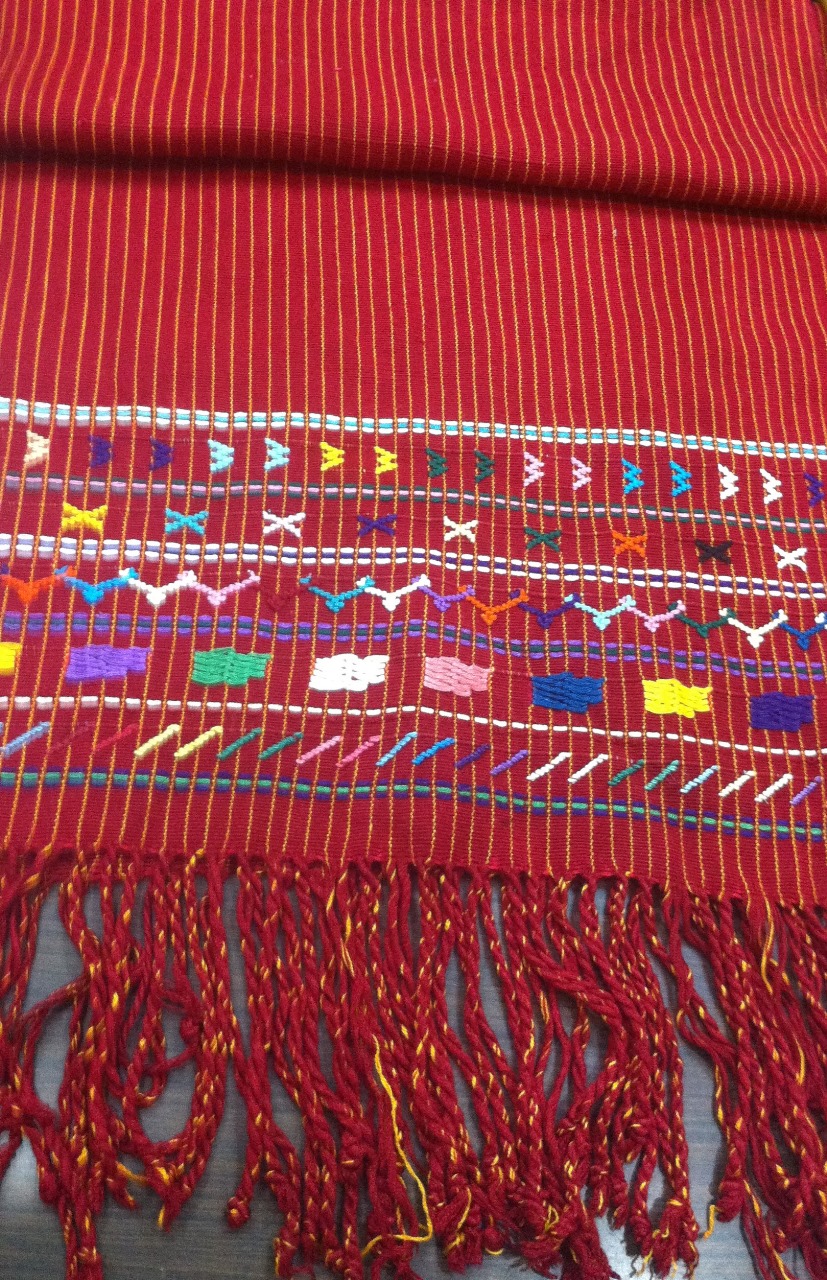
Guatemalan artisanal textiles are characterized by the use of bright and multiple colors, with so many colors and designs used, characteristic of the different municipalities from which they come. Due to their attractiveness and demand, the different textile weaving techniques have been applied to canvases that are then applied in the making of products offered to the tourist or export market: tablecloths, ford holders, napkins or centerpieces, bags and wallets, shawls and scarves, cushions or wall decoration, among other categories.
english
Handmade Textiles
In Guatemala, textile craftsmanship dates back to pre-Hispanic times, as evidenced in Mayan codices and vessels, where images of people carrying woven canvases as part of their clothing are shown. With the arrival of the Spaniards to Guatemalan territory (16th century), the natives adopted traits of the Spanish culture, which was mixed with the pre-Hispanic ones and this is still reflected in the current clothing that is preserved and worn daily by a large part of the indigenous population, which is mostly concentrated in the western highlands of the country.
The most elaborate piece of this garment is the güipil or blouse, which is usually woven with cotton thread on the backstrap loom or stick. This, depending on the technique used for its ornamentation, will vary in processing time and cost. A simple güipil with smooth stripes can take a few days to make, while a güipil loaded with different symbolisms (flowers, animals, human or geometric figures) brocaded directly from the loom, can take months for the weaver to finish the piece, which can even have a hand-embroidered collar as a decorative accessory.
The canvas of the backstrap loom is usually narrow (approx. 21″), so many times two canvases are needed to form the güipil, these being joined by a decorative randa embroidered by hand in bright colors.
The cut or skirt is usually woven on a pedal loom, in plain colors or with the application of jaspers (or Ikat technique). The process of weaving on a pedal loom is faster, wider and is traditionally done by men, although many women have already learned to manipulate it. The skirt is tied with a sash, also hand-woven with colorful brocades and other pieces such as the headdress (ornament on the head), thebitchor thetzute(canvases to keep or carry small children), they finish making up the Mayan textile clothing and are woven by hand by women for the most part, who learned the technique from childhood. which is passed down from generation to generation.
Guatemalan handmade textiles are characterized by the use of vivid and multiple colors, with so many colors and designs used, characteristic of the different municipalities where they come from.
Guatemalan textiles are characterized by the use of multiple bright colors, being characteristics of the different regions from which they come. Due to their attractiveness and demand, they are used in the production for tourist or export markets: tablecloths, door holders, napkins or centerpieces, bags and wallets, shawls and scarves, cushions or wall decoration, among other categories.
Valoraciones
No hay valoraciones aún.