
Descripción
Camélidos sudamericanos domésticos.
De los camélidos autóctonos sudamericanos, la llama (Lama guanicoe), derivada del guanaco, es la especie doméstica de más difusión. Estos animales constituían una parte fundamental de las culturas prehispánicas ya que proporcionaban carne, leche, fibras, medios de carga, guano.
La mayor parte de las llamas se crían en comunidades de la Puna de las provincias de Jujuy, Salta y Catamarca.
La fibra es la más utilizada de entre los camélidos nativos. La calidad de la llama argentina es alta y comparable a la de la alpaca. El sistema productivo predominante en esta ganadería es el tradicional de las regiones andinas, con producción estacional y manejo cíclico y trashumante. Si bien existen hilanderías de tipo semi-industrial, la mayoría de la producción se realiza en el ámbito de comunidades, cooperativas y grupos familiares de forma artesanal.
De importancia en este sentido es Red Puna Artesanías, rama de la Red Puna, agrupación de artesanas y tejedoras parte de la Economía Popular, organizadas para producir y comercializar artesanías siguiendo criterios de precio justo, respeto por la identidad cultural, valorización de técnicas ancestrales y sustentabilidad.
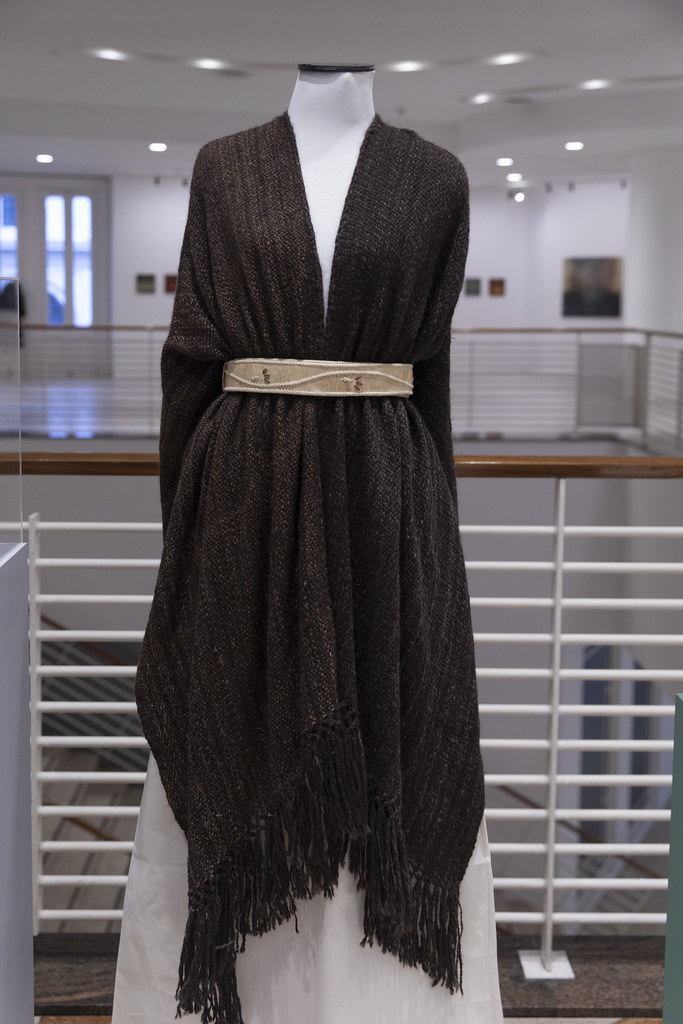
La fibra, hilada tanto a mano como con rueca, se utiliza para realizar tanto prendas de vestir (ponchos, abrigos, gorros, bufandas, guantes, chales), como objetos para interiores (almohadones, mantas, alfombras), pequeños juguetes y accesorios. Un ejemplo son las tulmas, strips of wool topped with pompoms used to braid hair in the traditionQuechua y Aymara, which are updated as decorative elements and theyou suck,small bags in which the coca leaf was traditionally carried.
The yarn is woven with two and five needles, as well as on a Creole loom. The color palette includes the natural colors of the fiber (white, various earths, black) and those achieved with natural dyes, widely used. As motifs, there are stripes, geometric abstracts (fretwork, flowers, animals) and those products of the variation of ligaments (partridge’s eye, spikes). The endings are usually fringed or rapacejo.
Finally, especially with regard to objects for interior decoration, there are alliances between artisans and designers in urban areas.
english
Call productsOf the indigenous South American camelids, the llama, derived from theguanaco, is the most popular domestic species. These animals played a key role in pre-Hispanic cultures, as they provided meat, milk, fiber, and guano, and served as pack animals.
Most llamas are bred in communities living in the highlands of the provinces of Jujuy, Salta, and Catamarca.
Among the native camelids, the llama fiber is the most widely used. The wool from the Argentinian llama is of high quality and comparable to alpaca wool. The predominant production system for this livestock follows the traditional practices of the Andean regions, characterized by seasonal production and cyclical, transhumant management. While there are semi-industrial spinning mills, the majority of production is conducted by communities, cooperatives, and family groups utilizing traditional methods.
Notable in this aspect is a branch of Red Puna, called Red Puna Artesanias, which is a group of craftswomen and weavers who are part of the Popular Economy, organized to produce and market handicrafts following criteria of fair price, respect for cultural identity, appreciation of ancestral techniques, and sustainability.
The fiber, spun both by hand and with a spinning wheel, is used to make clothing (ponchos, coats, hats, scarves, gloves, shawls), objects for interiors (cushions, blankets, rugs), and small toys and accessories. Examples are thetulmas, strips of wool with pompoms used to braid hair in the Quechua and Aymara tradition, and which are now used as decorative elements, and theyou suck, small bags in which coca leaves were traditionally carried.
The yarn is woven with two and five needles, as on the Creole loom. The color palette includes the natural colors of the fiber (white, various earth tones, and black) and those produced with natural dyes, which are widely used. As motifs, there are stripes, abstract geometric patterns (such as fretwork, flowers, and animals), and those resulting from variations in weave designs (such as bird eyes and ears of corn). The terminations are usually fringed or twisted fringed.
Finally, partnerships are established between craftsmen and designers from urban areas, mainly in the field of interior design.
The masks of the Carnival of Oruro are one of the essential elements of the iconic dance of this carnival, which is the only one that is performed for faith and devotion to the Virgin of Candelaria, who is the patron saint of Oruro.
There are several techniques to make the masks of the Carnival of Oruro (plaster, brass, sponge, fiberglass, etc.), plaster is the most traditional material and combines more materials at the same time. Here I outline the mask-making technique of the «El Quirquincho» Mask Workshop. It should be noted that this art is a family legacy that is passed down from generation to generation.
MATERIALS:
Plaster, paints, spotlights, hats (felt), mirrors, glue, fabric (jute), cardboard and brushes.
MOLDS:
They are similar to shoe lasts, one part forms the back of the neck and the other the face. FELT:
The hat felts are put into the molds and covered with plaster. Once they are dry, the contours are cut out and the two pieces are sewn together, then the holes are made to serve as eyes and nose.
ACCESSORY PIECES:
These are the body of the dragon, its wings, horns of the mask, eyes, ears, etc. The crystals are cut for the eyes, teeth and eyebrows of the mask.
CHARACTERISTIC FEATURES OF THE MASK:
On the contour of the nose, there will be many-pointed endings resembling the flames of hell. After the refining process, the mask is ready for painting. The color combination always starts from the lowest to the darkest shades. The mask is then decorated with gold and silver tones with a very fine and long brush, and also with wavy lines in the form of veins on the ears, the chest and the wings.
In this way, one is ready to fulfill the wish or promise to dance for the Virgin of the Socavón in the «Carnival of Oruro».
Valoraciones
No hay valoraciones aún.