
Lapidary

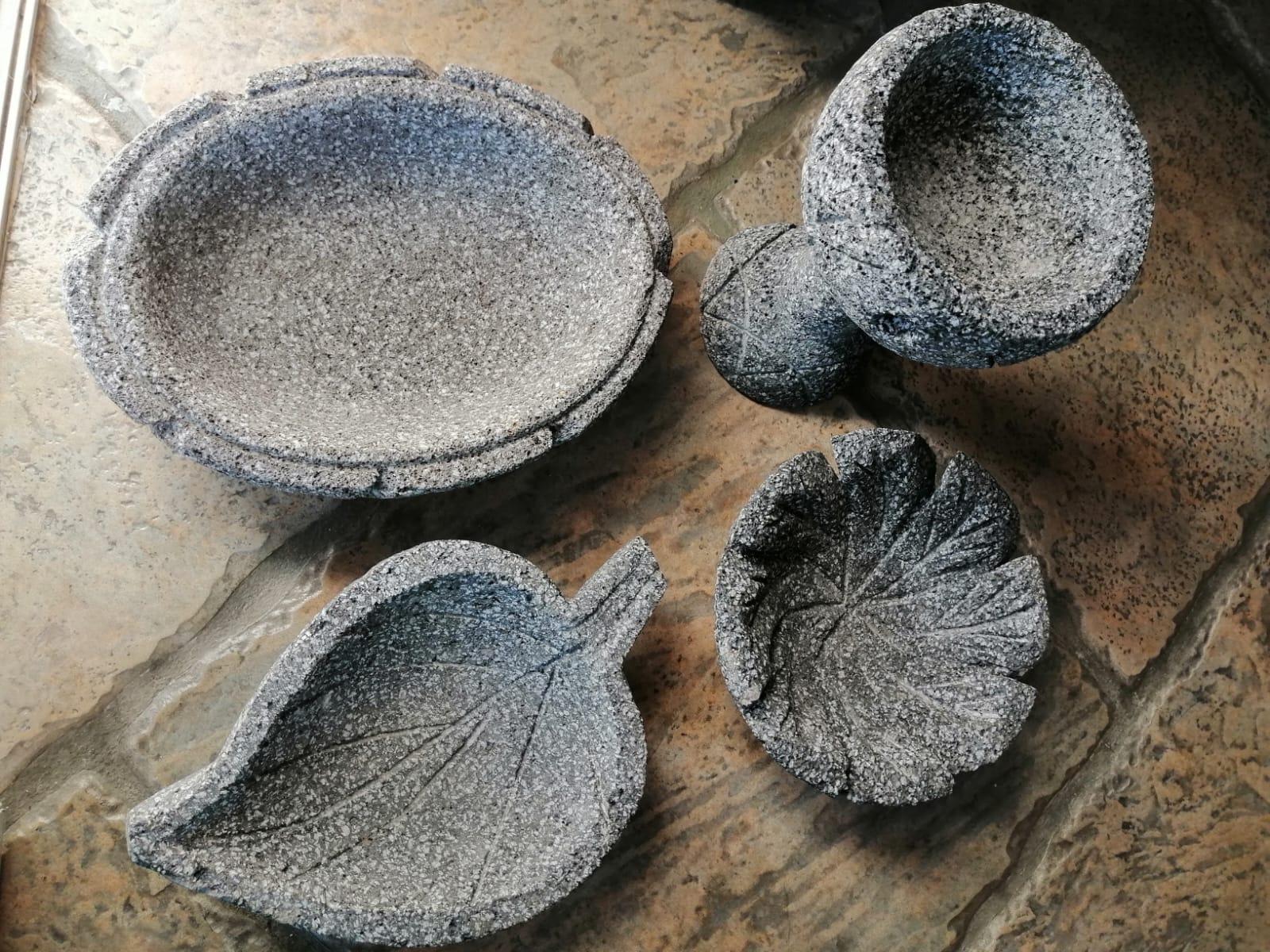
En México se realizan hoy innumerables trabajos en piedra volcánica, andesita, ónix, obsidiana. Es un trabajo ancestral que facilitó la vida de los primeros pobladores y que hoy continúa vigente, aunque muchas piezas han adquirido un carácter ornamental. Entre una gran variedad de objetos, el metate y el molcajete son especialmente representativos. Ambos sirven para […]

Descripción

En México se realizan hoy innumerables trabajos en piedra volcánica, andesita, ónix, obsidiana. Es un trabajo ancestral que facilitó la vida de los primeros pobladores y que hoy continúa vigente, aunque muchas piezas han adquirido un carácter ornamental.

Entre una gran variedad de objetos, el metate y el molcajete son especialmente representativos. Ambos sirven para moler y martajar ya sean alimento o fibras vegetales y están presentes aún hoy, en gran parte de las cocinas mexicanas

Los artesanos los producen utilizando cincel y martillo, principalmente en el Estado de México, en Puebla y en Jalisco.

Los molcajetes son morteros trípodes, generalmente sin decoración y con un diámetro que no rebasa los 10 cm. Pueden ser también de barro, como eran en el México precolombino. La palabra viene del nahuatl mollicaxtli, (molly-sauce andcaxitl–cajete). The stone used for grinding is called mano de molcajete,owl, temolote or texolotl o pylonand sauces are mainly made there.

For their part, metates are rectangles that can measure up to a meter in length; They are slightly concave and with supports that give them an inclination to facilitate grinding, which is done with a cylindrical stone called a metate hand, ormetapilli. Its name comes from Nahuatlmetatl, which means tooth. In the Mayan language they call itka,and in mixtecyooso. Traditionally, the metate is placed on the floor and there, kneeling women grind the corn or cocoa.

Although since the mid-20th century many women prefer to go to the mills to avoid the work of grinding, in many regions the use of metate is still in force because there is a belief that food made with molcajete and metate tastes better.

Other stones with which crafts are made in Mexico are onyx, which is worked mainly in Puebla and Tlaxcala, and obsidian in the State of Mexico.

english

LapidaryIn Mexico today there are countless works in volcanic stone, andesite, onyx and obsidian. It is an ancestral work that facilitated the life of the first settlers and that continues to this day, although many pieces have acquired an ornamental character.

Among a wide variety of objects, the «metate» and the «molcajete» are particularly representative. Both are used to grind and grind either food or vegetable fibers and are still present today in most Mexican kitchens.

Artisans produce them using chisel and hammer, mainly in the State of Mexico, Guanajuato, Puebla and Jalisco.

The «molcajetes» are tripod mortars, generally undecorated and with a diameter of no more than 20 cm. They can also be made of clay, as they were in pre-Columbian Mexico. The word comes from the Nahuatl «mollicaxtli», (molli-salsa and caxitl-cajete). The stone used for grinding is called «mano de molcajete», «tejolote», «temolote» or «texolotl» or «pilón» and is mainly used to make sauces.

The «metates» are rectangles that can be up to one meter long; they are slightly concave and have supports that give them an inclination to facilitate grinding, which is done with a cylindrical stone called «mano de «metate», or «metapilli». 20th century, many women have preferred to go to the mills to avoid the work of grinding, in many regions the use of the «metate» is still in use, as it is believed that the food prepared on them tastes better.

Other stones with which handicrafts are made in Mexico are onyx, marble and the quarry that is worked mainly in Puebla and Tlaxcala, and obsidian in the State of Mexico.

Valoraciones

No hay valoraciones aún.

Sé el primero en valorar “Lapidary”

Tu dirección de correo electrónico no será publicada. Los campos obligatorios están marcados con *

Descripción

In Mexico today countless works are carried out in volcanic stone, andesite, onyx, obsidian. It is an ancestral work that made life easier for the first settlers and that continues today, although many pieces have acquired an ornamental character.

Among a wide variety of objects, the metate and the molcajete are especially representative. Both are used to grind and mash either food or vegetable fibers and are still present today in a large part of Mexican cuisines.

Artisans produce them using chisel and hammer, mainly in the State of Mexico, Puebla and Jalisco.

Molcajetes are tripod mortars, generally without decoration and with a diameter that does not exceed 10 cm. They can also be made of clay, as they were in pre-Columbian Mexico. The word comes from the Nahuatl mollicaxtli, (molli-salsa and caxitl-cajete). The stone used for grinding is called mano de molcajete, tejolote, temolote or texolotl or pilón and sauces are mainly made with it.

For their part, metates are rectangles that can measure up to a meter in length; They are slightly concave and with supports that give them an inclination to facilitate grinding, which is done with a cylindrical stone called mano de metate, or metapilli. Its name comes from the Nahuatl metatl, which means tooth. In the Mayan language they call it ka, and in Mixtec yooso. Traditionally, the metate is placed on the floor and there, kneeling women grind the corn or cocoa.

Although since the mid-20th century many women prefer to go to the mills to avoid the work of grinding, in many regions the use of metate is still in force because there is a belief that food made with molcajete and metate tastes better.

Other stones with which crafts are made in Mexico are onyx, which is worked mainly in Puebla and Tlaxcala, and obsidian in the State of Mexico.

englishLapidary

In Mexico today there are countless works in volcanic stone, andesite, onyx and obsidian. It is an ancestral work that facilitated the life of the first settlers and that continues to this day, although many pieces have acquired an ornamental character.

Among a wide variety of objects, the "metate" and the "molcajete" are particularly representative. Both are used to grind and grind either food or vegetable fibers and are still present today in most Mexican kitchens.

Artisans produce them using chisel and hammer, mainly in the State of Mexico, Guanajuato, Puebla and Jalisco.

The "molcajetes" are tripod mortars, generally undecorated and with a diameter of no more than 20 cm. They can also be made of clay, as they were in pre-Columbian Mexico. The word comes from the Nahuatl "mollicaxtli", (molli-salsa and caxitl-cajete). The stone used for grinding is called "mano de molcajete", "tejolote", "temolote" or "texolotl" or "pilón" and is mainly used to make sauces.

The "metates" are rectangles that can be up to one meter long; they are slightly concave and have supports that give them an inclination to facilitate grinding, which is done with a cylindrical stone called "mano de "metate", or "metapilli". 20th century, many women have preferred to go to the mills to avoid the work of grinding, in many regions the use of the "metate" is still in use, as it is believed that the food prepared on them tastes better.

Other stones with which handicrafts are made in Mexico are onyx, marble and the quarry that is worked mainly in Puebla and Tlaxcala, and obsidian in the State of Mexico.

Valoraciones

No hay valoraciones aún.

Sé el primero en valorar “Lapidary”

Tu dirección de correo electrónico no será publicada. Los campos obligatorios están marcados con *

Descripción

En México se realizan hoy innumerables trabajos en piedra volcánica, andesita, ónix, obsidiana. Es un trabajo ancestral que facilitó la vida de los primeros pobladores y que hoy continúa vigente, aunque muchas piezas han adquirido un carácter ornamental.

Entre una gran variedad de objetos, el metate y el molcajete son especialmente representativos. Ambos sirven para moler y martajar ya sean alimento o fibras vegetales y están presentes aún hoy, en gran parte de las cocinas mexicanas

Los artesanos los producen utilizando cincel y martillo, principalmente en el Estado de México, en Puebla y en Jalisco.

Los molcajetes son morteros trípodes, generalmente sin decoración y con un diámetro que no rebasa los 10 cm. Pueden ser también de barro, como eran en el México precolombino. La palabra viene del nahuatl mollicaxtli, (molli-salsa y caxitl–cajete). A la piedra que se usa para moler la llaman mano de molcajete, tejolote, temolote o texolotl o pilón y en él se elaboran principalmente salsas.

Por su parte, los metates son rectángulos que pueden llegar a medir hasta un metro de largo; son ligeramente cóncavos y con soportes que le dan una inclinación para facilitas la molienda, la cual se realiza con una piedra cilíndrica llamada mano de metate, o metapilli. Su nombre viene del náhuatl metatl, que significa muela. En lengua maya le llaman ka, y en mixteco yooso. Tradicionalmente, el metate se coloca en el piso y ahí, las mujeres arrodilladas muelen el maíz o el cacao.

Aunque desde mediados del siglo XX muchas mujeres prefieren ir a los molinos para evitar el trabajo de moler, en muchas regiones el uso del metate sigue vigente pues existe la creencia de que la comida elaborada con molcajete y metate sabe mejor.

Otras piedras con las que se elaboran artesanías en México, son el ónix, que se trabaja principalmente en Puebla y Tlaxcala, y la obsidiana en el Estado de México.

english

Lapidary

In Mexico today there are innumerable works in volcanic stone, andesite, onyx and obsidian. It is an ancestral work that facilitated the life of the first settlers and that continues to this day, although many pieces have acquired an ornamental character.

Among a wide variety of objects, the «metate» and the «molcajete» are particularly representative. Both are used to grind and grind either food or vegetable fibres and are still present today in most Mexican kitchens.

Artisans produce them using chisel and hammer, mainly in the State of Mexico, Guanajuato, Puebla and Jalisco.

The «molcajetes» are tripod mortars, generally undecorated and with a diameter of no more than 20 cm. They can also be made of clay, as they were in pre-Columbian Mexico. The word comes from the Nahuatl «mollicaxtli», (molli-salsa and caxitl-cajete). The stone used for grinding is called «mano de molcajete», «tejolote», «temolote» or «texolotl» or «pilón» and is mainly used to make sauces.

The «metates» are rectangles that can be up to one metre long; they are slightly concave and have supports that give them an inclination to facilitate grinding, which is done with a cylindrical stone called «mano de «metate», or «metapilli». Its name comes from the Nahuatl metatl, which means grindstone. In Mayan it is called «ka», and in Mixtec «yooso». Traditionally, the «metate» is placed on the floor and there, the women kneel down to grind the corn or cocoa. Although since the middle of the 20th century, many women have preferred to go to the mills to avoid the work of grinding, in many regions the use of the «metate» is still in use, as it is believed that the food prepared on them tastes better.

Other stones with which handicrafts are made in Mexico are onyx, marble and the quarry that is worked mainly in Puebla and Tlaxcala, and obsidian in the State of Mexico.

Valoraciones

No hay valoraciones aún.

Sé el primero en valorar “Lapidaria”

Tu dirección de correo electrónico no será publicada. Los campos obligatorios están marcados con *