
Description
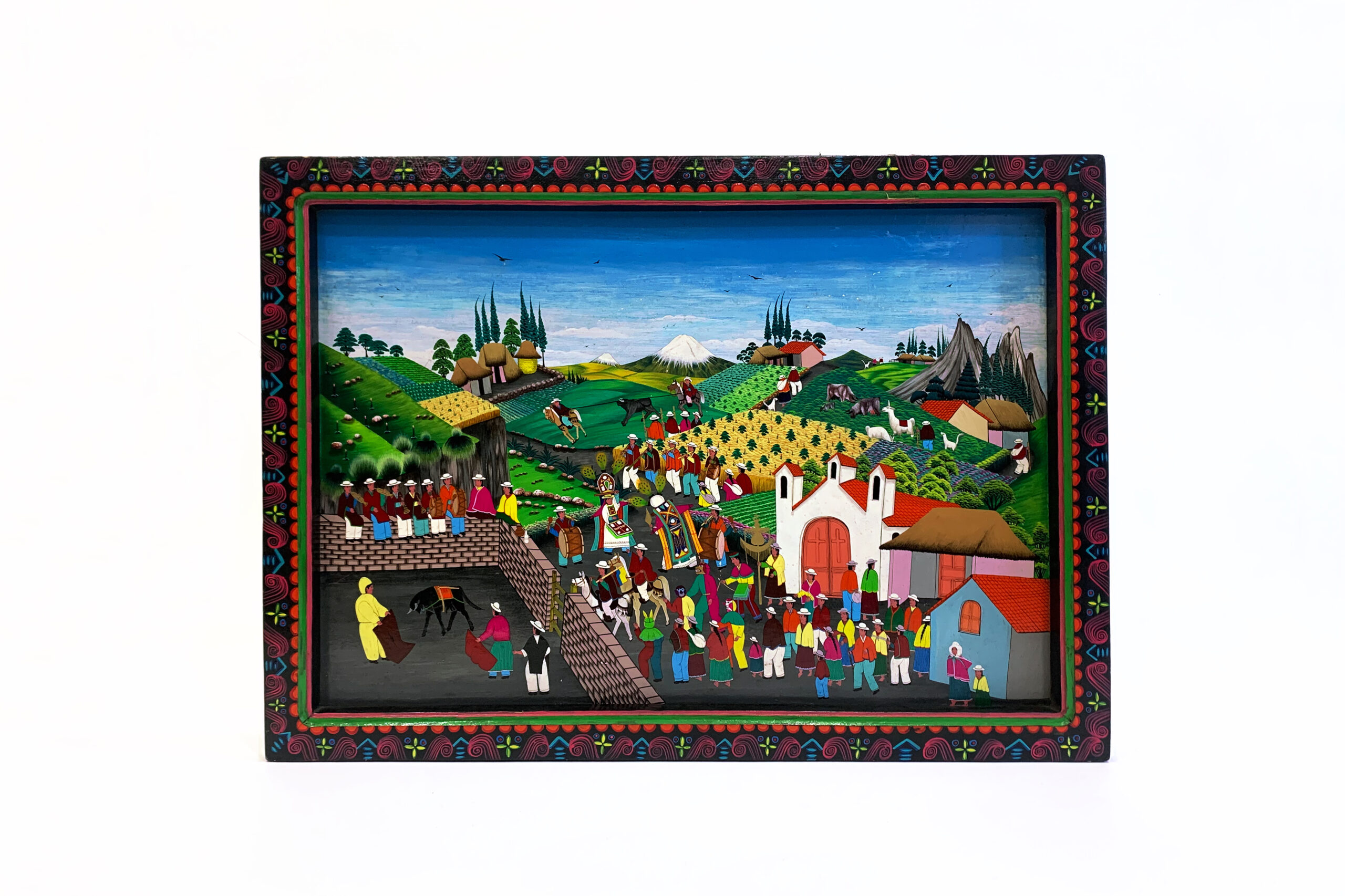
Tigua painters live in dispersed communities in the province of Cotopaxi. This art belonging to popular painting was born in the 1970s with the Toaquiza brothers, originally from the Kichwa culture, who were part of the music band for the Corpus Christi festivities in Pujilí. They painted and sold drums with images alluding to the dancers. The meeting and suggestions of the Hungarian folklorist Olga Fisch made them experiment with painting traditional scenes on drums and paintings, becoming pieces desired by collectors and dealers of ethnic objects.
The transmission and dissemination of this knowledge meant that the farmers of the Pujilí canton found a new source of income in painting. Over time, an identity seal has been created that currently has the designation of origin “Pintura de Tigua”.
Traditional techniques and raw materials have undergone variations. Natural anilines have been replaced by industrial paints and framing has been modified to make the paintings more durable, portable and marketable. Some artisans have replaced sheepskins with canvas and also make objects such as spoons, chests, trays, boxes, tables and chairs. These creations are offered nationally and internationally and many Tigua families live off what they earn from this work.
The artists are recognized for their colorful paintings of landscapes of the Andean moors in rural areas of the country, in which festive scenes, customs and rituals that contain an important symbolic load are recounted. The works do not fall within the classical canons of Western art, rather they are considered artistic works of an aboriginal or naïve nature.
The Tigua community is part of the Zumbahua parish, Pujilí canton, Cotopaxi province.
EnglishPopular Painting of Tigua
The Tigua painters live in scattered communities in the province of Cotopaxi. This art belonging to popular painting was born in the 1970s with the Toaquiza brothers, originally from the Kichwa culture, who were part of the music band of the Corpus Christi festivities in Pujilí. They painted and sold drums with images alluding to the dancers. The meeting and suggestions of the Hungarian folklorist Olga Fisch led them to experiment with the painting of traditional scenes on drums and pictures, which became popular with collectors and traders of ethnic objects.
The transmission and dissemination of this knowledge meant that the peasants of the canton of Pujilí found a new source of income in painting. Over time, a seal of identity has been created, which currently has the designation of origin "Pintura de Tigua" (Tigua Painting). The traditional techniques and raw materials have undergone variations. Natural dyes have been replaced by industrial paints and framing has been modified to make the paintings more durable, portable and commercial.
Some artisans have replaced sheepskin with canvas, and also make objects such as spoons, chests, bowls, boxes, tables and chairs. These creations are sold nationally and internationally and many families in Tigua make a living from their work. The artists are known for their colorful paintings of landscapes of the Andean highlands in the rural areas of the country, in which they depict festive scenes, customs and rituals that contain an important symbolic charge.
The works do not fall within the classical canons of Western art, but rather are considered to be works of art of an aboriginal or naïve nature. The community of Tigua is part of the parish of Zumbahua, canton Pujilí, province of Cotopaxi.
Reviews
There are no reviews yet.