
Description
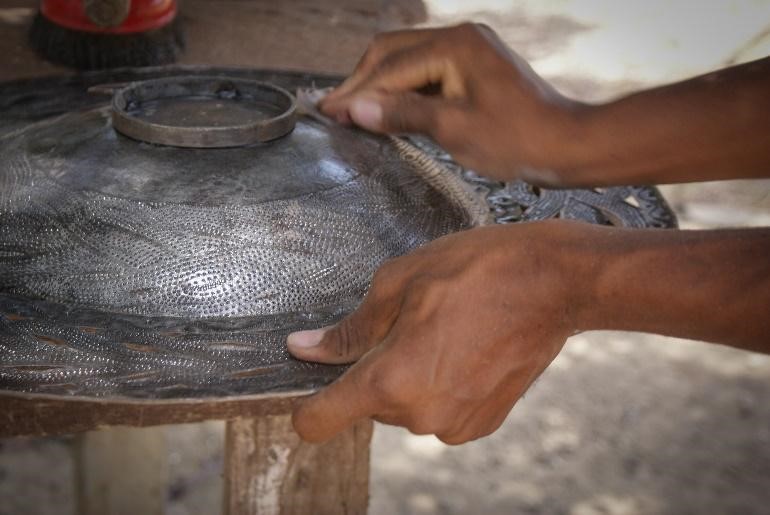
Iron cutting is a unique form of traditional craftsmanship in Haiti. Originally, at the beginning of the 20th century, metal drums were used. To package them, paper or cardboard is burned inside to strip them, then the metal is cut and hammered to make plates. Next, the craftsman draws shapes with a temporary material (chalk, limestone) and shears the desired shapes. Finally, the craftsman hammers and cuts the material again to obtain the final work. The finishes can be rough: dented iron or even look like lace because the finishes are very delicate. The work is not mechanized and the entire process is done by hand. In general, the color remains raw, the material is only covered with varnish, but sometimes it is painted. Nowadays, the shortage of drums forces artisans to work with recycled sheets. The final products can be useful objects: mirrors, tables, keychains, lampshades or wall lamps, paintings. The size can vary from tens of centimeters to several meters in height. This know-how owes its inspiration to the Haitian religious magic system, the first works would have been crosses to decorate graves, since the locals could not afford tombstones. The inspirations are very varied: divinities and their attributes, fruit trees, bands with feet or totally abstract. This practice occurs in several regions of the country, but the largest community is found in Noailles (Croix des Bouquets), which has managed to federate hundreds of artists who share this know-how in a workshop. The Georges Liautaud Museum, inaugurated in 1989, regularly organizes events to preserve this unique know-how, maintain the transmission subsidiaries and make these works known. Some artisans (Jolimeau) enjoy international recognition.
French
Fer decoupe de NoaillesThe first découpé is a form of artisanal traditionnel unique to Haïti. At the origin, at the debut of the 20th century, the metal drums (drums) are used. Pour les conditionner, du papier ou du carton est brulé à l’intérieur afin de bien les décaper, ensuite le métal est découpé et martelé afin d’en faire des feuilles. Puis l’artisan dessine des forms avec un matériau temporaire (craie, pierre calcaire) et cisaille les forms voulues. Finally, the artisans work and decoupent encore the material to obtain the final work. Les finitions peuvent être brutes: fer cabossé ou encore ressembler à de la dentelle sot les finitions sont délicates. The work on the mécanisé and all the process is done in the main. In general, the remaining brute color, the material is just recovered from vernis but arrives when it is painted. Today, the scarcity of drums forces artisans to work with all recycled drums. Les productions finales peuvent être des objets utiles : miroirs, des tables, porte-clefs, paravents ou encore des appliques murales, tableaux. The tail can vary from centimeters to height meters. Ce savoir-faire doit son inspiration au système magicalo religieux Haïtien, les premières œuvres auraient été des croix pour décorer des tombes, les locaux ne pouvant se payer des pierres tombales. Les inspirations sont extrêmement variées: divinités et leurs attributs, arbre fruitier, bands à pied ou entièrement abstraite. This practice goes back to the most regions of the country but the largest community is situated in Noailles (Croix des Bouquets) who is the fédérer of the centaines of artists who are part of the savoir-faire in the atelier. The Georges Liautaud museum, inaugurated in 1989, organizes régulièrement des évènements in order to preserve unique savoir-faire, maintain transmission subsidiaries and faire connaitre ces œuvres. Certain artisans (Jolimeau) on an international recognition.
english
Noailles cut ironIron cutting is a unique form of traditional craftsmanship in Haiti. Originally, in the early 20th century, recycled steel oil containers were used. To pack them, paper or cardboard is burned inside to pickle them, then the metal is cut and hammered to make sheets. The craftsman then draws shapes with a temporary material (chalk, limestone) and shears them into the desired shapes. Finally, the craftsman hammers and cuts the material again to obtain the final work. The finishes can be rough: dented iron or even look like lace because the finishes are very delicate. The work is not mechanized and the whole process is done by hand.
In general, the color remains raw, the material is only covered with varnish, but sometimes it is painted. Nowadays, the shortage of containers forces craftsmen to work with recycled sheet metal. The end products can be useful objects: mirrors, tables, key rings, screens or frames. The size can vary from tens of centimeters to several meters in height.
This know-how owes its inspiration to the Haitian religious magic system, the first works would have been crossed to decorate tombs, as the locals could not afford tombstones. The inspirations are very varied: divinities and their attributes, fruit trees, bands with feet or completely abstract.
Reviews
There are no reviews yet.