
Description
The carved artisanal works of Honduras are only produced in the town of Valle de Ángeles, Francisco Morazán department, 25 kilometers from the capital.
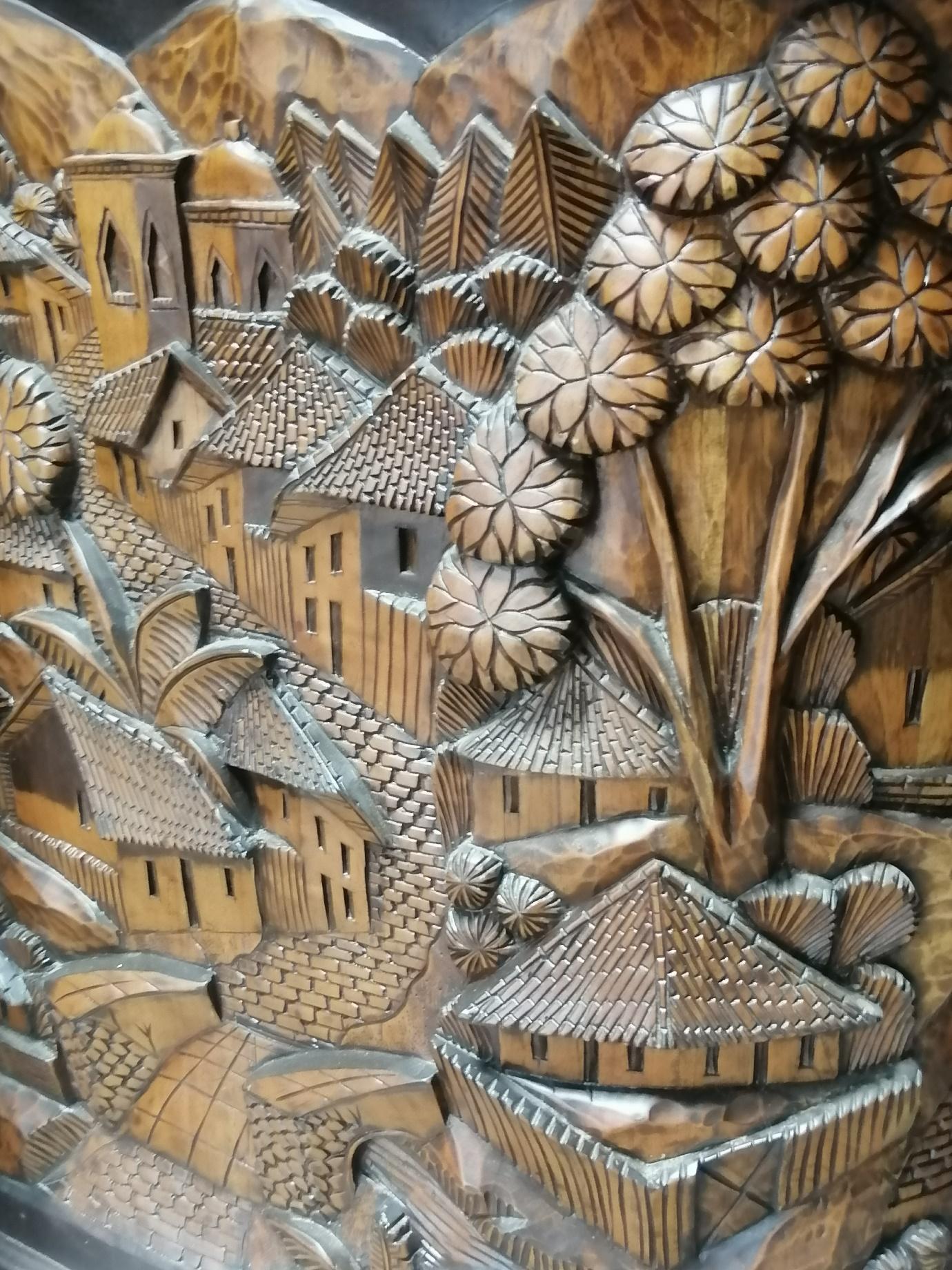
The trunks of various sizes stand out, from miniatures to large chests for storing bedding, but they also make paintings as equally carved ornaments. At the same time, there are people who commission carved doors, bars, living room or kitchen furniture, and bed backs, as well as tables of different sizes, with different landscapes.
The drawings, according to the carvers, “come out of their heads.” And even if they make hundreds of them, no work is the same as another. However, according to requests, some “clients” who like this art can take a photograph as a model, or explain what they want, but the carvers prefer to make spontaneous drawings, since this technique gives them more freedom of creation.
Although there are Artisan Cooperatives in Honduras, wood carving is only done in this place. The wood they use is cedar and mahogany, although someone can request another type of wood depending on the use they will give it. Large forks and spoons are also requested to be used as key hangers or carved paintings with landscapes, flowers or other motifs.
Valle de Ángeles is the town par excellence in which you can obtain almost all the crafts of Honduras in various warehouses installed there, but the carved wood is only worked in this place. Their techniques are very artisanal. They do not work with power tools, only hand cutting saws, hand knives, chisels, wood planes and they do not use nails, only screws and hinges.
They also make “wall paintings.” Some have acrylic paints, according to request, but it is not common. Their tradition is to carve the wood with the natural color, sand it several times and only put sealer on it, but the shadows or lightness of the pieces, which they call “lucado”, are achieved with sandpaper, according to the same nature in which they live, mountains, bahareque and tile houses, corridors, churches, fences, and they are inspired by their own town or in Santa Lucia, another place in the same area. In reality, the artisans live up to the name of their town: Valle de Ángeles.
englishCarved wood.
Wood carvings are only produced in the town of Valle de Ángeles, in the department of Francisco Morazán, 25 kilometers from the capital. The chests are of various sizes, from miniatures to chests, carved doors, bars, living room or kitchen furniture, and bed backs, as well as tables of various sizes, with landscapes.
The drawings, according to the carvers, are their own creations. They can also reproduce photographs or explain what they want, but the carvers prefer to make spontaneous drawings, as this technique gives them more freedom of creation.
There are artisan cooperatives in Honduras, and wood carving is only done here. The wood they use is cedar and mahogany, although someone can ask for another type of wood depending on the use they will make of it. They also ask for large forks and spoons to be used as key hangers or pictures carved with landscapes, flowers or other motifs.
Valle de Angeles is the town par excellence where you can get almost all the handicrafts of Honduras in various sheds installed there, their techniques are very artisanal. They do not work with electric tools, only hand saws for cutting, hand blades, chisels, wood planes and they do not use nails, only screws and hinges. They also make "wall paintings."
Their tradition is to carve the wood with the natural colour, sand it several times and only use sealer. But the shades or lightness of the pieces, which they call "luceado", are achieved with sandpaper, according to the same nature in which they live, mountains, mud and tile houses, corridors, churches, fences, and they are inspired by their own village or in Santa Lucia, another place in the same area. In fact, the artisans honor the name of their village: Valle de Angeles.
Reviews
There are no reviews yet.