
Description
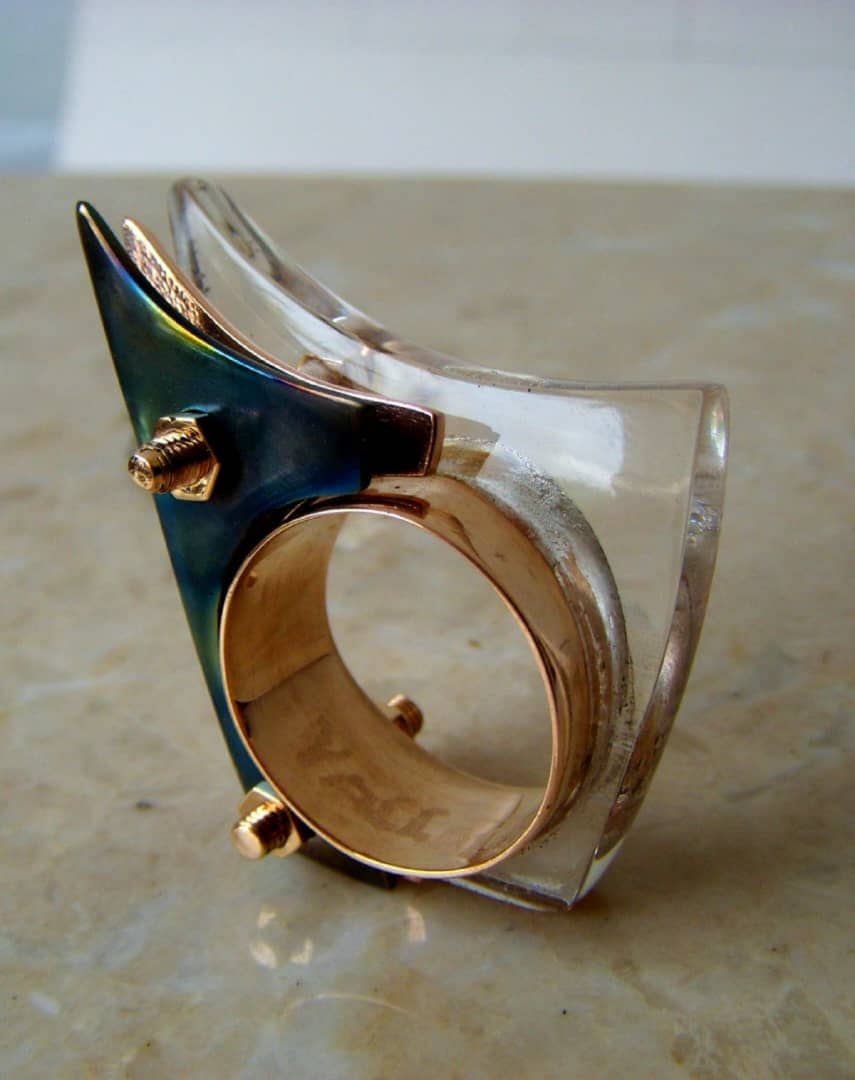
An important production of current Cuban goldsmithing can be categorized as neo crafts and author crafts, this is developed in the universe of experimentation and design. It shows the incorporation of themes and concepts of contemporary society such as the unity between tradition and modernity, the diversity of materials based on recycling, the combination of non-traditional materials with precious metals, and the breaking of traditional scales in jewelry, etc.
The Cuban goldsmiths' workshops are small spaces where they work with traditional craft tools and means, the works are built piece by piece, with meticulousness and mastery, far from the seriality of the industry and market fashions.
The main techniques are direct modeling, lost wax casting, embossing, engraving, cutwork, chiseling, tarnishing, oxidation, graining, enamelling, spinning, filigree and setting (inlaid with precious or semi-precious stones).
The work of the Cuban goldsmith José Carlos Rafart (1946-2009), a master who created a personal universe of forms in his sculptures and jewelry, constituted a turning point in the work of contemporary Cuban goldsmithing. The original shapes created by Rafart, some of which evoke marine beings, insects and plants, with a certain influence of Catalan Art Nouveau, today constitute a legacy and a reference of high aesthetic level for contemporary Cuban goldsmithing.
Although goldsmith artisans are not very numerous, compared to other manifestations, it is a thriving craft that has strength and identity among Cuban artisanal expressions.
In Cuba there is the Goldsmith's Museum of the City of Havana, which houses an important collection of goldsmith's pieces from different historical stages and in the galleries of the Cuban Fund of Cultural Assets the works of contemporary goldsmiths are exhibited where the visitor can appreciate the excellence achieved.
englishContemporary Cuban artisan goldsmith.
An important production of current Cuban goldsmithing can be categorized as neo-crafts and signature craftsmanship. It is developed in the universe of experimentation and design. It shows the incorporation of themes and concepts from contemporary society such as the unity between tradition and modernity, the diversity of materials based on recycling, the combination of non-traditional materials with precious metals, and the breaking of traditional standards in jewelry.
The workshops of Cuban goldsmiths are small spaces where they work with traditional tools and artisanal means, the works are built piece by piece, with meticulousness and mastery, far from the seriality of the industry and the fashions of the market.
The main techniques are direct modeling, lost-wax molding, embossing, engraving, fretwork, chiseling, tarnishing, oxidation, graining, enameling, spinning, filigree, and setting (inlays of precious or semi-precious stones).
The work of the Cuban goldsmith José Carlos Rafart (1946-2009), a master who created a personal universe of forms in his sculptures and jewelry, constituted a turning point in the work of contemporary Cuban goldsmithing. The original forms created by Rafart, some of which evoke marine beings, insects and plants, with a certain influence of Catalan Art Nouveau, constitute today a legacy and a reference of high aesthetic level for contemporary Cuban goldsmithing.
Although there are not very many artisans of goldsmithing, compared to other manifestations, it is a thriving trade that has strength and identity among Cuban artisanal expressions.
In Cuba, there is the Museum of Goldsmithing of the City of Havana, which keeps an important collection of pieces from different historical periods. In the galleries of the Cuban Fund of Cultural Goods, the works of contemporary goldsmiths are exhibited where the visitor can appreciate the excellence achieved.
Reviews
There are no reviews yet.