
Description
Hammock, name given by the natives “cradle of the gods”. The Taino* people made them with the bark of the Hamack tree, hence the origin of the universalized word hammock which means “fish net.” In the mythology of the native peoples of the forested areas, the hammock or kyha (ke-ha, sleeping place), for the Guaraní, is also related to the genesis when the gods created the human race. It is made on a vertical loom or frame, made with four wooden slats held by inserts or wedges, the size varies depending on the dimension of the garment to be obtained.
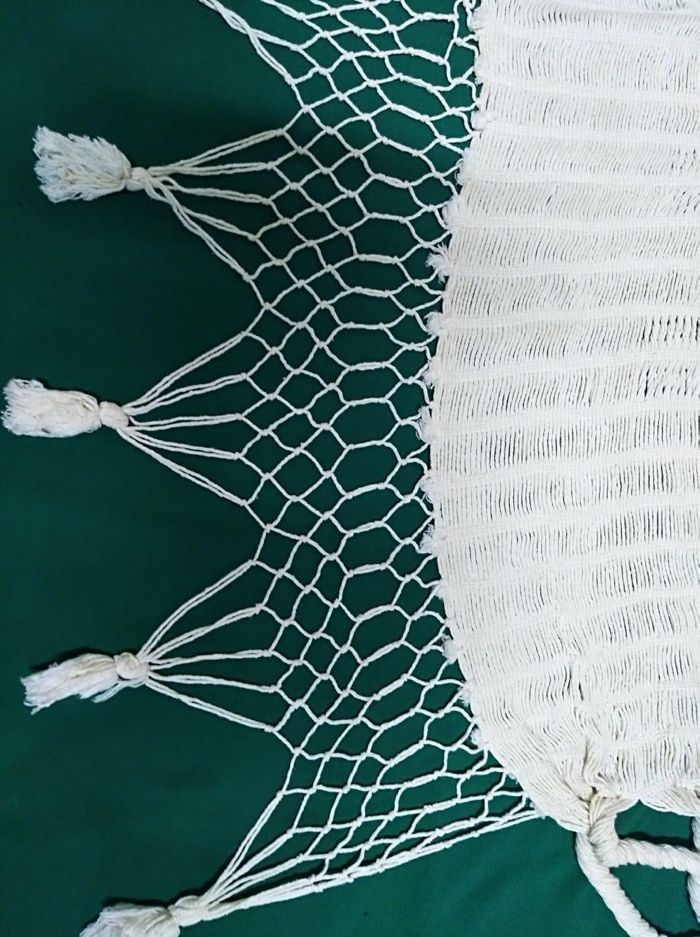
Currently it is made with cotton threads obtained industrially, previously the threads (poyvi) were made manually, extracting the fiber from the plant grown in the farms. Cotton is a plant endemic to America that, in addition to white, existed in various colors. In Paraguay, native plants with white and ocher fiber are still preserved. They are made with raw or dyed thread, which they dye with anilines, previously with natural dyes obtained from leaves, stems, seeds or minerals. It is an especially feminine activity but generally the whole family is involved, including children. The guard or fringe is made with knots, in recent years crochet was incorporated.
Production is abundant in Carapeguá and Pirayu, Department of Paraguarí. They are still rarely made with fiber from yvira, karaguata (bromeliads) and coconut leaves (mbokaja). Obtaining these fibers and manufacturing them is done by men.
It is used to sleep or rest. In colonial houses, including those built at the beginning of the 19th century, hooks (hammocks) made of wood or metal were embedded in the walls, located diagonally, to place the hammocks. It is used in rural areas, placed in corridors or under trees. They are sold in craft stores throughout the country. Carapegueños usually sell through the macatero system, selling house by house throughout the country. It was declared Intangible Cultural Heritage of Carapeguá by Municipal Ordinance No. 05/2022.
EnglishKyha-hammock
The name for the hammock given by the natives "cradle of the gods". The Taino people made them from the bark of the Hamack tree, hence the origin of the universalized word hammock meaning "fish net". In the mythology of the original peoples of the forest areas, the hammock or kyha (ke-ha, place to sleep), for the Guarani, is also related to the genesis when the gods created the human race. It is made on a vertical loom or frame, made with four wooden strips held in place by wedges, the size varying according to the size of the garment to be made.
Nowadays it is made with cotton threads obtained industrially, in the past, the threads (poyvi) were made by hand, extracting the fiber from the plant cultivated in the farms. Cotton is a plant endemic to the Americas, which, apart from white, also exists in various colors. In Paraguay, native plants with white and ocher-coloured fiber are still preserved. They are made with raw or dyed thread, which they dye with anilines, formerly with natural dyes obtained from leaves, stems, seeds or minerals. It is a particularly feminine activity, but usually involves the whole family, including children. The guard or fringe is made with knots, and in recent years crochet has been incorporated.
Production is abundant in Carapeguá and Pirayu, Department of Paraguarí. Rarely are they still made with yvira, karaguata (bromeliaceae) and coconut leaf (mbokaja) fibers. These fibers are obtained and made by men. It is used for sleeping or resting. In colonial houses, including those built at the beginning of the nineteenth century, wooden or metal hooks (hamaqueras) were embedded in the walls diagonally to place the hammocks. It is used in rural areas, placed in corridors or under trees. They are sold in craft shops throughout the country. The Carapegueños used to sell by the macatero system, house-to-house sales throughout the country. The kiha-hamaca was declared Intangible Cultural Heritage of Carapeguá by Municipal Ordinance N° 05/2022.
Reviews
There are no reviews yet.