
Description
Desde mediados del siglo XVI, durante la colonización española de Santo Domingo se establecieron varios talleres de joyería, aprovechando la explotación de las minas de oro y plata que se encontraron.
Al agotarse esta explotación minera , los españoles partieron a la conquista de otras tierras convirtiendo a Hispaniola, lo que hoy es la República Dominicana en una colonia pobre.
Otra limitante para el desarrollo de la joyería en el país se debió a los escasos conocimientos de orfebrería que tenían los aborígenes taínos que habitaban la isla.
Ya en época contemporánea ( 1950) es cuando se explotan de forma artesanal las minas de ámbar del país, produciendo joyas sencillas montadas con alambres de cobre y Lleno de oro (gold filled).
En cuanto a capacitaciones cabe destacar la operación del centro artesanal de Puerto Plata, (1980) que capacitó jóvenes en joyería por técnicos joyeros alemanes y operó la Fundación Dominicana de Desarrollo.
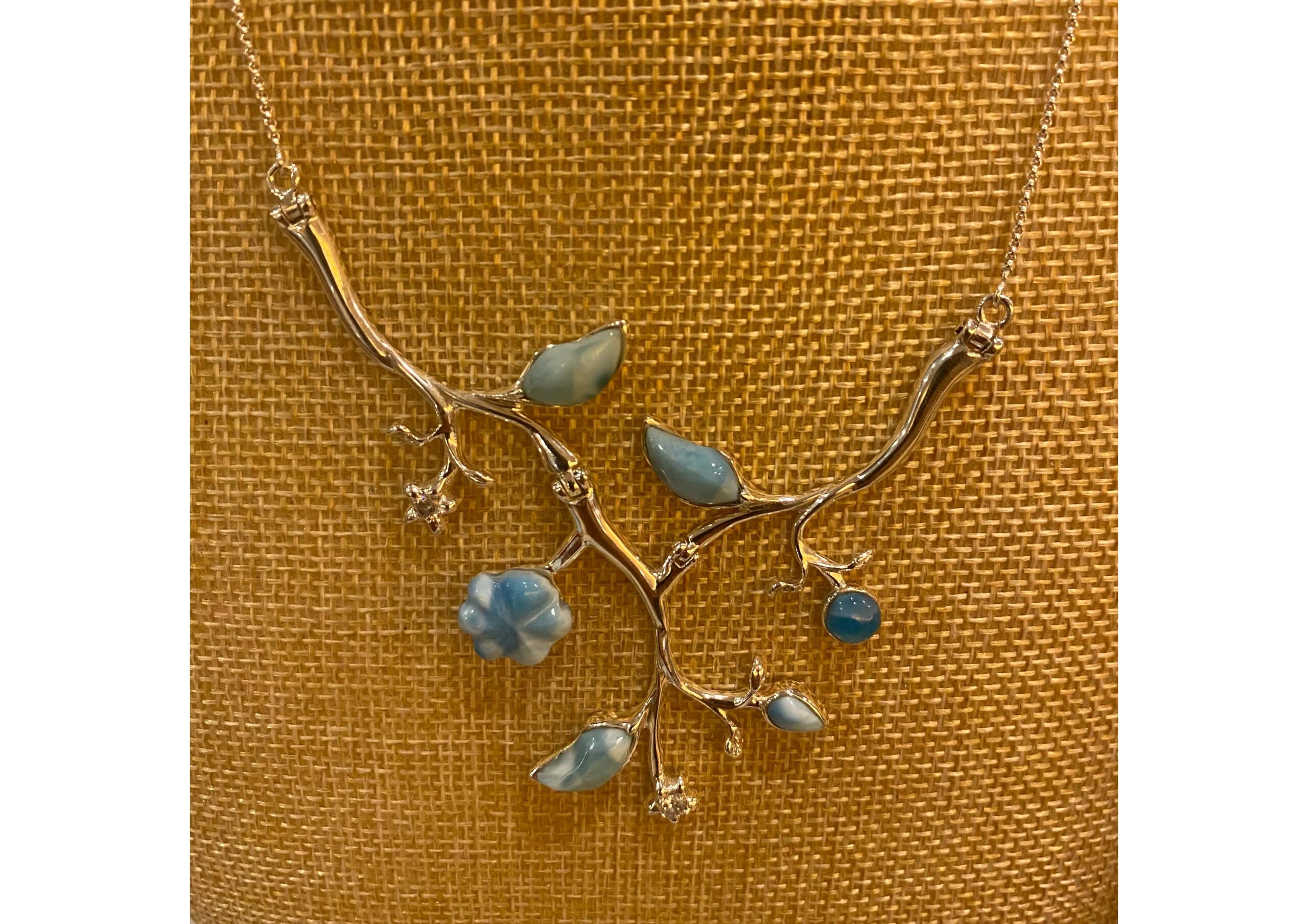
En 1971, el joyero Miguel Mendez descubre la piedra de Larimar, una pectolita azul verdosa, encontrada solamente en el país, en la cercanía de la comunidad de Bahoruco, adquiriendo la joyería de esta piedra con aceptación internacional.
Con la joyería de ámbar y la película Jurassic Park (1993) en donde se extraen ADN de insectos fosilizados en ámbar, para la reproducción de animales prehistóricos, causó un gran interés de compras turísticas de la joyería de esta piedra. In the community of Bahoruco, the Larimar Workshop Museum School operates (2014), training young people from its community in basic design techniques, lapidary, casting, polishing and others.
A group of young people (6) from this school were awarded scholarships and trained at the university level at the Atlantic Jewelry School in Vigo, Spain, through a Program coordinated by Spanish Cooperation and financed by the Ministries of Industry, Commerce and MSMEs (MICM) and of Higher Education, Science and Technology (MEPyD), which contributed to raising the level of teaching and the creation of new lines of design.
English
JeweleryFrom the middle of the 16th century, during the Spanish colonization of Santo Domingo, several jewelery workshops were established, taking advantage of the exploitation of the gold and silver mines that were found.
When this mining exploitation was exhausted, the Spaniards left to conquer other lands, turning “Hispaniola”, which is today the Dominican Republic, into a poor colony. Another limitation for the development of jewelery in the country was due to the scarce knowledge of goldsmithing that the Taino aborigines who inhabited the island had. In the contemporary period (1950), the country’s amber mines were exploited in an artisanal way, producing simple jewelry mounted with copper wire and gold (gold filled). In terms of training, it is worth mentioning the operation of the artisan center of Puerto Plata (1980), which trained young people in jewelery making by German jewelery technicians and operated the Dominican Development Foundation.
In 1971, the jeweler Miguel Mendez discovered the Larimar stone, a greenish-blue pectolite, found only in the country, in the vicinity of the community of Bahoruco, and jewelry made of this stone gained international acceptance. With amber jewelery and the filmjurassic park(1993) where fossilized insects are extracted from amber, there was a great interest in amber jewelry as a tourist attraction.
The community of Bahoruco operates the Larimar Museum-Workshop School (2014) training young people in basic design techniques, lapidary, polishing and others. A group of young people from this school received scholarships and university-level training at the Escuela de Joyeria del Atlantico in Vigo, Spain, through a program coordinated by Spanish Cooperation and financed by the Ministries of Industry, Commerce and Mipymes (MICM) and Higher Education, Science and Technology (MEPyD), which contributed to raising the level of teaching and the creation of new lines of design.
Reviews
There are no reviews yet.