
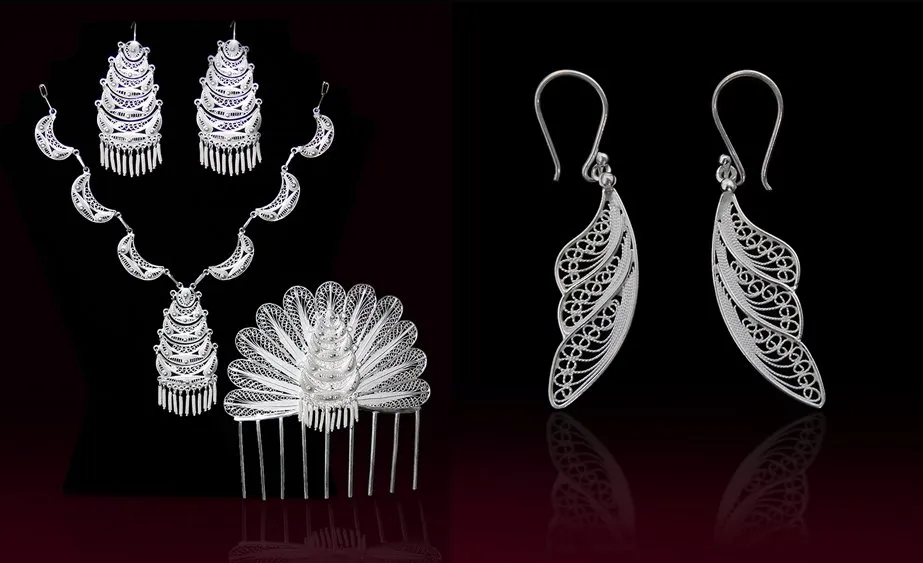
Description
Catacaos is one of the best-known districts of the Piura region in the area of artisanal tradition.
Pre-Hispanic Andean goldsmithing is famous for the ability to handle metals, the use of techniques similar to those of the old world and for the imagination with which the characteristic designs of the Andean culture were presented in their goldsmithing pieces. Metallurgy was a widely spread and developed practice with the northern Peruvian coast as one of the most important centers of creation.
Filigree was already a known technique on the pre-Hispanic northern coast, as shown by the archaeological vestiges of the Moche and Sicán (Lambayeque) societies, although at that time only part of the pieces were worked with this technique and with less finesse than the Catacan filigree of today, which descends directly from the techniques spread from the colony. This technique consists of the use of precious metal threads (gold, silver) for jewelry work. Until the first half of the 20th century, it has been the only technique used in Catacaos for the production of objects such as earrings, crosses, rings, bracelets, crowns, chests and other items.
Filigree is a goldsmith technique, used in handmade jewelry using very fine metal threads (generally gold or silver) and that allows creating complex pieces of jewelry. It is a fine and delicate process since a single piece can take weeks or months to make.
Filigree is currently a technique that does not require the intervention of machinery, outside of the process of rolling (making thread from molten material), drawing (calibrating thread for thread for work) and drumming (giving shine to the finished jewel ). This is precisely where the value of this technique lies, since the artisan himself creates and arranges through his practical skill and imagination.
The goldsmith technique consists of building structures from fine threads of precious metal.
The district of Catacaos is one of the 10 districts that make up the province of Piura, in the department of the same name.
Between the 1940s and 1960s, fine utilitarian jewelry was produced (bracelets, earrings, brooches and filigree with naturalistic themes. Silver spinning was produced with manual processes and using the bellows blowtorch.
In the 1970s, this technique occupied the entire activity of the artisans of Catacaos. The electric torch was introduced into the process and the silver spinning processes were mechanized. Technique opened the doors for the exploration of new shapes and volumes, so pieces such as baskets and chests began to be seen.
Starting in the 1980s, the technological contribution evolved in the development of increasingly sculptural pieces, such as chalanes, fighting cocks, turkeys, royals and traditional figures, although it never stopped producing pieces of jewelry such as earrings, bracelets, and rings. This evolution also led to the incorporation of new techniques with the aim of enriching the final pieces.
The artisan workshop has been the space through which knowledge of traditional metalworking techniques has been perpetuated. In these workshops, work is divided into specific tasks. When the apprentices become independent, they become teachers and set up workshops in their new homes. Currently in Catacaos there are workshops belonging to families, workshops run by individual teachers and those that hire workers.
EnglishFiligree of Catacos
Catacaos is one of the best-known districts of the Piura region in the field of traditional craftsmanship. The pre-Hispanic Andean gold and silver work is famous for the ability to handle metals, the use of techniques similar to those of the old world and the imagination with which the characteristic designs of the Andean culture were presented in their pieces of gold and silver work. Metallurgy was a widespread and developed practice, with the northern Peruvian coast being one of the focal points of its creation.
Filigree was already a known technique in the pre-Hispanic northern coast, as shown by archaeological remains from the Moche and Sicán societies (Lambayeque), although at that time only part of the pieces were worked with this technique and with less fineness than today's filigree, which is directly descended from the techniques spread from the colony. This technique, which consists of the use of precious metal threads (gold and silver), was until the first half of the 20th century the only technique used in Catacaos for the elaboration of objects such as earrings, crosses, rings, bracelets, crowns, chests and other articles. Filigree is nowadays a technique that does not require the intervention of machinery, apart from the process of lamination (making thread from molten material), drawing (calibrating thread for thread for the work) and tumbling (giving the finished jewelry a shine). This is precisely where the value of this technique lies, as the craftsman himself creates and arranges through his own practical skill and imagination.
Between the 1940s and 1960s, fine utilitarian jewelery (bracelets, earrings, pins and naturalist-themed jewelery) was produced. The spinning of silver was produced with manual processes and using the bellows blowtorch. In the 1970s, this technique occupied the entire activity of the artisans of Catacaos. The electric torch was introduced into the process and the silver spinning processes were mechanized. Technification opened the doors to the exploration of new forms and volumes, and so we began to see pieces such as baskets and chests. From the 1980s onwards, the technological contribution evolved in the development of increasingly sculptural pieces, such as 'chalanes', fighting cocks, turkeys, roosters and traditional figures, although jewelery pieces such as earrings, bracelets and rings never stopped being produced. This evolution also led to the incorporation of new techniques with the aim of enriching the final pieces.
The artisan workshop has been the space in which the knowledge of traditional metalworking techniques has been perpetuated. In these workshops, the work is divided into specific tasks, and when the apprentices become independent, they become masters and set up workshops in their new homes. Nowadays in Catacaos, there are workshops belonging to families, workshops of individual masters and those that hire workers.
Reviews
There are no reviews yet.