
Description
The Guaraní knew vertical loom weaving, they used different plant fibers, including cotton. With this technology they made various fabrics and designs with the knot-weaving technique with two skeins, one white and the other colored; The designs were based on status, sex and age. The dyeing was done with natural dyes, today the population uses anilines.
The Spanish introduced horses, for which they needed small blankets that are part of the saddle, one of them is called jarga. For this purpose it was necessary to use sheep wool, an animal species introduced by them, thus a new product and a new raw material for fabrics were born in America, corresponding to the natives, manufacturing the jargon using the technique and technology known to them.
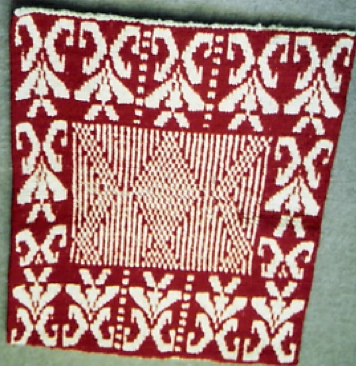
The designs are generally geometric and have names in Guaraní and Spanish such as: chakúa is made in the center using rhombuses, squares, lines or small crosses; rose guard, pindo guard, star guard, carnation guard or S guard.
In the past they were manufactured in almost all the towns but now the municipalities that make them are Carapeguá, San Miguel and Chaco but in very small quantities due to the time it takes to manufacture them and the low cost paid. The process of obtaining wool is very long, it must be washed several times, dried in the sun, beaten, joined, dyed and then made into balls with a spindle. With this same technique and designs, tapestries are produced one and a half meters long and 90 cm. wide that are highly appreciated used as decoration in homes.
To safeguard the technique, the use of cotton was implemented, the raw material of which is obtained commercially and tapestries, placemats, bags and pillows are made.
EnglishJerga (horse blankets)
The Guarani knew how to weave on a vertical loom, using different vegetable fibers, including cotton. With this technology they made various weavings and designs using the knot-weaving technique with two skeins, one white and the other coloured; the designs were based on status, sex and age. The dyeing was done with natural dyes; today the population uses aniline dyes.
The Spaniards introduced horses, for which small blankets were needed to form part of the saddle, one of which is called jarga. For this purpose, it was necessary to use sheep's wool, an animal species introduced by them, and so a new product and a new raw material for weaving was born in America, and it was up to the natives to make jargon using the technique and technology known to them.
The designs are generally geometric and have names in Guaraní and Spanish such as: "chakúa" is made in the center using rhombuses, squares, lines or small crosses; "guarda rosa", "guarda pindo", "guarda star", "guarda carnation" or "guarda S".
Formerly they were made in almost all the towns, but nowadays the municipalities that make them are Carapeguá, San Miguel and Chaco, but in very small quantities due to the time it takes to make them and the low cost they are paid. The process of obtaining the wool is very long, it has to be washed several times, dried in the sun, beaten, joined, dyed and then made into balls with a spindle. With this same technique and designs, tapestries one and a half meters long and 90 cm wide are produced, which are highly appreciated and used as decoration in homes.
In order to safeguard the technique, the use of cotton was implemented, the raw material of which is obtained in the trade and tapestries, placemats, bags and cushions are made.
Reviews
There are no reviews yet.