Description
Técnica utilizada inicialmente por egipcios, griegos y romanos (3000 a.C.).*
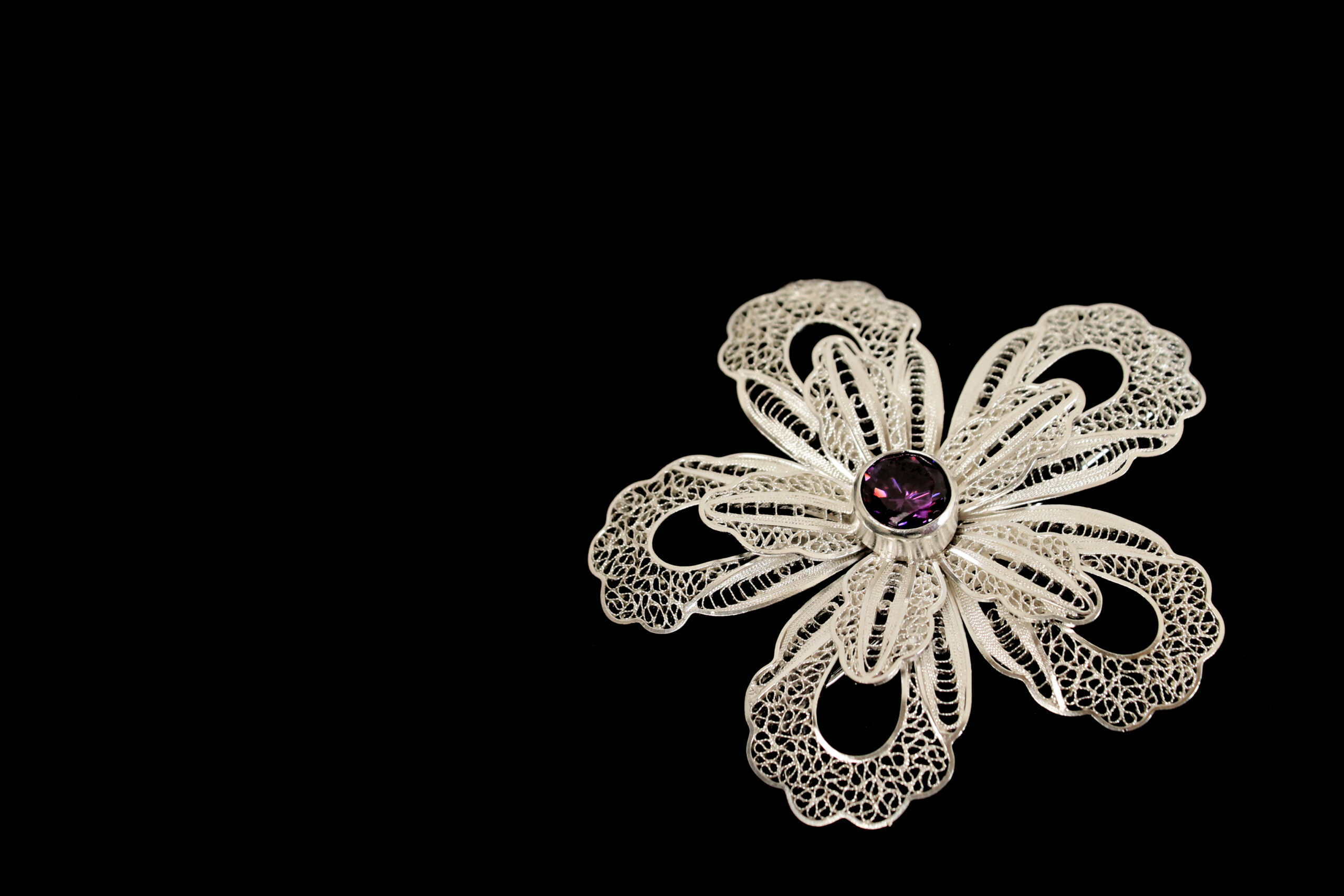
La filigrana mantiene una importante presencia en el territorio ecuatoriano desde épocas prehispánicas y durante la Colonia se consolidó como un oficio artesanal (s. XVI). La zona austral (Azuay, Cañar y Loja), debido a sus fuentes mineras de oro y plata, es reconocida por el trabajo en orfebrería, donde el delicado y preciso trabajo de la filigrana es altamente destacado.
Esta técnica consiste en fundir metales preciosos para convertirlos en hilos muy finos de hasta 0.5 mm de diámetro, que son entorchados y laminados para rellenar el armazón o cartoneado** que define la forma de la pieza a elaborar. A continuación, la suelda se realiza por un maestro con gran experiencia, que consolida los segmentos diseñados para pasar al decapado con ácido, el cepillado y el bruñido. En este momento del proceso de creación son indispensables herramientas como la rillera *** de hilo, la laminadora, la hilera, las pinzas, el soplete de mano y el bruñidor.
Así, se fabrican aretes de tipo half moon, representative of the costume of the women of Saraguro (Loja) and the so-calledchola tendrilsused by peasant women from Azuay and Cañar; as well as charms, rings, chests, guitars, crowns and other objects. At the same time, the art ofcandongas ****It has become an identity reference for the city of Chordeleg and has been incorporated as an innovation in decoration, souvenirs and elements associated with the Cuenca identity. The diversity of motifs is wide and varied, the result of the change in creative artisan processes and the transformation of the cultural context.
Due to the implementation of new jewelry designs made with filigree, its use has spread throughout the country. However, being such a complex and laborious craft, currently there are few artisans who are dedicated to developing this art.Grades*For more information consult “Austral Filigrana” by Fausto Ordóñez Almeida, inCraftsman – artist Ecuador: Showroom(2019). Government Palace, Don Bosco Editorial, page. 91.
** “Process by which the outline of the jewel is made, the interior of which is filled with the filigree. The cardboarding is done with a thread thicker than that of the filigree” (Dictionary of Ecuadorian Crafts, 2003, page 61)
*** “A type of elongated steel box, with a handle, with different cavities. The most common has two. In it, the molten metal is poured into the crucible, depending on whether it is going to be worked into wires or sheets. To use it, it is previously heated and then sprayed with a little wax so that the molten metal can flow easily” (Dictionary of Ecuadorian Crafts, 2003, page 218).
English
FiligreeA technique initially used by the Egyptians, Greeks and Romans (3000 B.C.). Filigree has maintained an important presence in Ecuadorian territory since pre-Hispanic times and during colonial times it was consolidated as a craft trade (sixteenth century). The southern area (Azuay, Cañar and Loja), due to its gold and silver mining sources, is renowned for its goldsmith work, where the delicate and precise filigree work is highly outstanding.
This technique consists of melting precious metals to turn them into very fine threads of up to 0.5 mm in diameter, which are twisted and rolled to fill the framework or cardboard that defines the shape of the piece to be made. Welding is then carried out by a highly experienced master welder, who consolidates the designed segments before acid etching and burnishing. At this stage of the production process, tools such as the wire roller, the rolling machine, the spinner, the tongs, the hand torch and the burnisher.
Thus, half-moon earrings are made, representative of the costume of the women of Saraguro (Loja) and the so-called chola earrings used by peasant women from Azuay and Cañar; as well as pendants, rings, chests, guitars, crowns and other objects. At the same time, the art of candongas has become a reference point for the identity of the city of Chordeleg and has been incorporated as an innovation in decoration, souvenirs and elements associated with the identity of Cuenca. The diversity of motifs is wide and varied, a result of the change in creative craft processes and the transformation of the cultural context.
Due to the implementation of new designs of filigree jewelry, its use has spread throughout the country. However, being such a complex and laborious craft, there are currently few artisans who are dedicated to developing this art.
Reviews
There are no reviews yet.