
Description
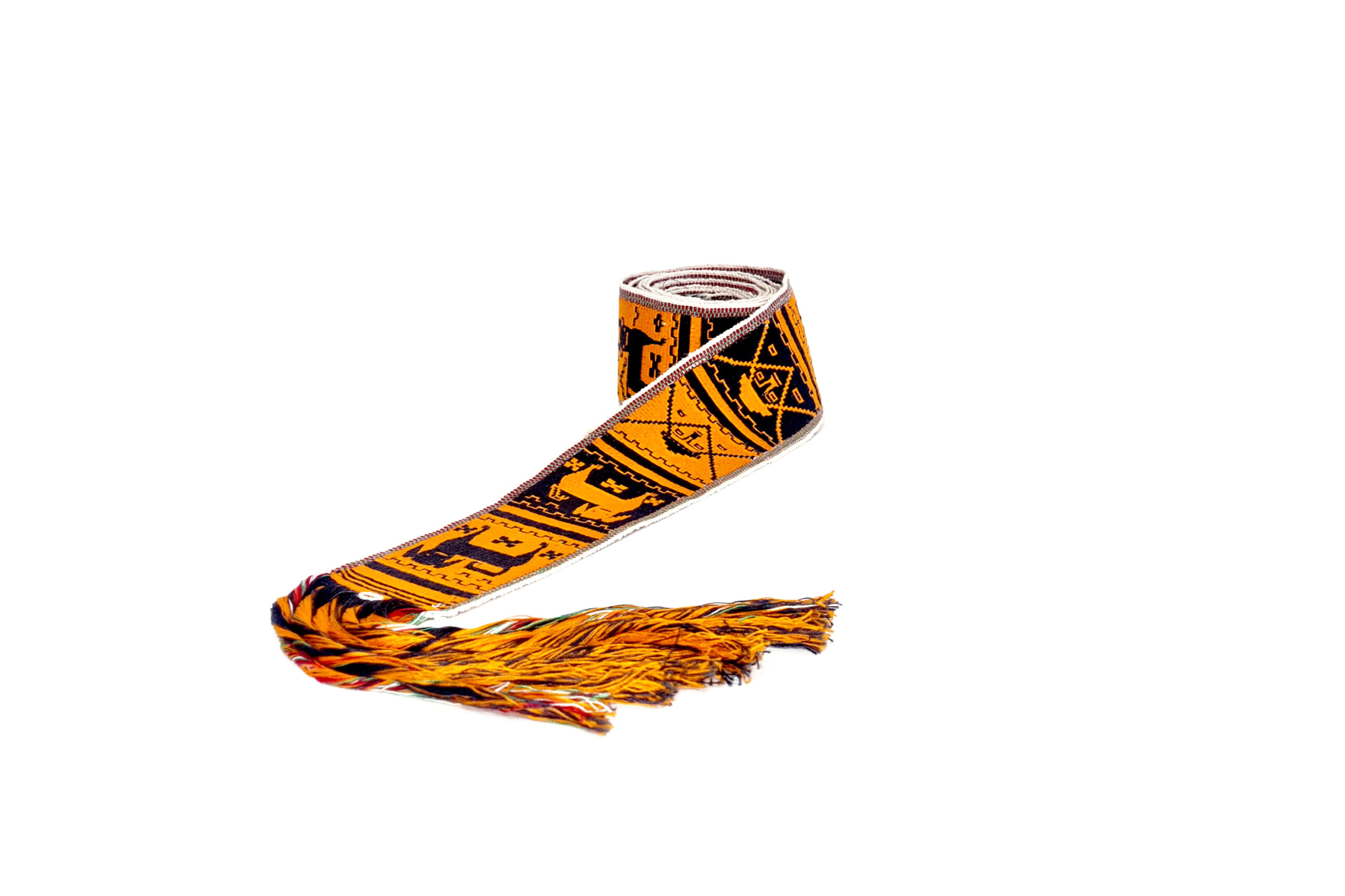
The double-sided sash or chumbi is an accessory used in the province of Cañar, Ecuador as part of traditional indigenous clothing. It is believed that its origin is found in the Cañari culture that dates back approximately 1,500 years and that its production technique has been transmitted from generation to generation.
They are woven on a hand loom with wool, cotton or acrylic and are generally made with very fine sewing thread using tools such as tingues, figuradores and pilladores. The designs can be religious, geometric, zoomorphic, anthropomorphic and phytomorphic; usually arranged in pairs, but in different colors.
These sashes are double-sided, they are usually used on both sides and contain elements of the symbolism of the culture to which they belong. They measure between 1.50 and 3 meters long and between 5 and 10 centimeters wide. When they are made from sheep wool, the spinning is done by women and the weaving is often a male task.
Its main function is to hold the men's poncho or cushma, although it also has an important presence in rituals, preventing energy from dispersing and providing strength to its wearer. They are especially used in sacred rites, baptisms and to wrap newborns; Women wear them only on festivities.
This technique was preserved for years by the artisan Juan Tenesaca, winner of the “National Competition for Intangible Cultural Heritage, Bearers of Traditional Knowledge in 2013” and declared in 2017 as an “Emblematic Artisan” by CIDAP. However, with his death, this ancestral knowledge is in danger of extinction, since few artisans work on this tradition.
Double-sided girdles with different characteristics and uses are also made in the provinces of Chimborazo, Imbabura, Bolívar and Loja.
EnglishChumbi from Cañar
The double-sided girdle or "chumbi" is an accessory used in the province of Cañar, Ecuador, as part of the traditional indigenous dress. It is believed to have originated in the Cañari culture approximately 1,500 years ago and its production technique has been passed down from generation to generation.
They are woven on a handloom with wool, cotton or acrylic and are usually made with very fine sewing thread using tools such as "tingues", "figuradores" and "pilladores". The designs can be religious, geometric, zoomorphic, anthropomorphic and phytomorphic, usually arranged in pairs, but in different colors.
These sashes are double-sided, usually used on both sides and contain elements of symbolism specific to their culture. They are between 1.50 and 3 meters long and between 5 and 10 centimeters wide. When they are made of sheep's wool, spinning is done by women and weaving is often a man's job.
Their main function is to support the men's poncho or "cushma", although they also have an important presence in rituals, preventing energy from dispersing and giving strength to the wearer. They are used especially in sacred rites, baptisms and to wrap newborn babies. Women wear them only during festivities.
This technique was preserved for years by the artisan Juan Tenesaca, winner of the "National Contest of Intangible Cultural Heritage, Carriers of Traditional Knowledge in 2013" and declared in 2017 as "Emblematic Artisan" (Emblematic Artisan) by CIDAP. However, with his death, this ancestral knowledge is in danger of extinction, since few artisans work in this tradition. Double-sided sashes with different characteristics and uses are also made in the provinces of Chimborazo, Imbabura, Bolívar and Loja.
Reviews
There are no reviews yet.