
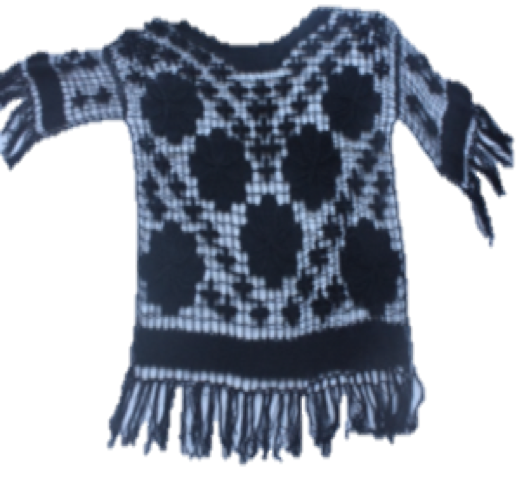
Description
Yu lace (needle lace), kapi'i lace (straw lace), is the oldest name and is out of use, it comes from the straw used for the size of the mesh, the same name and technique is registered in Panama. In the early 1990s, it was made using a coconut spine as a measure for the mesh and the spine pierced in the widest part as a needle. As needle lace, it is also recorded in various countries in America.
This lace, whose base is the fishing net, would be the oldest, as there are records that the natives used it as part of the clothing called typói, joining two cotton fabrics on the shoulder part. The diamond-shaped mesh is elastic. The most used is the square one, which is not elastic. Both are filled with moss stitch or burlap with which you can obtain all the diversity of designs that imagination and creativity allow.
Zoomorphic, phytomorphic and anthropomorphic designs were recorded. It is a female activity, but in recent years it has also been carried out by men. The designations are named in Guaraní or Spanish as: mbõi pire (snake skin); guasu (deer); ñandú pysã (ostrich foot), mainumby (butterfly), ryguasu (hen), rose, carnations, angels, dove, arasá poty (guayo flower), rice stitch, in addition to making squares, rhombuses, triangles, among others.
This craft requires very little investment, you only need thread, a needle and to carry out the embroidery, the net is placed on a wooden frame. Generally raw or white thread is used, lately they use colored threads especially for clothing. Its main use is for table linens and domestic decorations, mantillas, blouses, skirts, lace, randas and appliqués for dresses are made or completely made for weddings, parties or daily use.
In Carapeguá, Department of Paraguarí and in Yataity, Department of Guairá, it was previously done in several cities and in rural areas. It can be purchased in addition to the communities mentioned in the craft stores of Asunción. It was declared Intangible Cultural Heritage of Carapeguá by Municipal Ordinance No. 05/2022.
EnglishYu lace or kapi'i
Yu lace (needle lace) and kapi'i lace ("straw lace"), are the oldest names for this lace, but it is no longer in use. It comes from the straw used for the size of the mesh, and the same name and technique are recorded in Panama. At the beginning of the 1990s, it was made using a coconut thorn as a measure for the mesh and a thorn perforated at the widest part as a needle. It is also recorded as needle lace in various countries in the Americas.
This lace, which is based on fishnet, is probably the oldest, as there are records that the natives used it as part of their clothing, known as typói, by joining two cotton fabrics at the shoulder. The diamond-shaped mesh is elastic. The most commonly used is the square mesh, which is not elastic. Both are filled with rice stitch or hessian, which is used to obtain as many different designs as imagination and creativity allow. Zoomorphic, phytomorphic and anthropomorphic designs were recorded. It is a female activity, but in recent years it has also been carried out by men.
The designs are named in Guaraní or Spanish: mbõi pire (snake skin); guasu (deer); ñandú pysã (ostrich foot), mainumby (butterfly), ryguasu (hen), rose, carnations, angels, dove, arasá poty (guayo flower), rice stitch, as well as squares, rhombuses, triangles, among others. This handicraft requires very little investment, only thread and needle are needed, and to make the embroidery, the net is placed on a wooden frame. Generally, raw or white thread is used, but more recently colored threads have been used especially for clothing. Its main use is for table linen and domestic ornaments, they make blankets, blouses, skirts, lace, randas and appliqués for dresses or completely made up for weddings, parties or daily use.
In Carapeguá, Department of Paraguarí and in Yataity, Department of Guairá, it was formerly made in several towns and in rural areas. It can be purchased in addition to the communities mentioned above in handicraft shops in Asunción. It was declared Intangible Cultural Heritage of Carapeguá by Municipal Ordinance N° 05/2022.
Reviews
There are no reviews yet.