Description
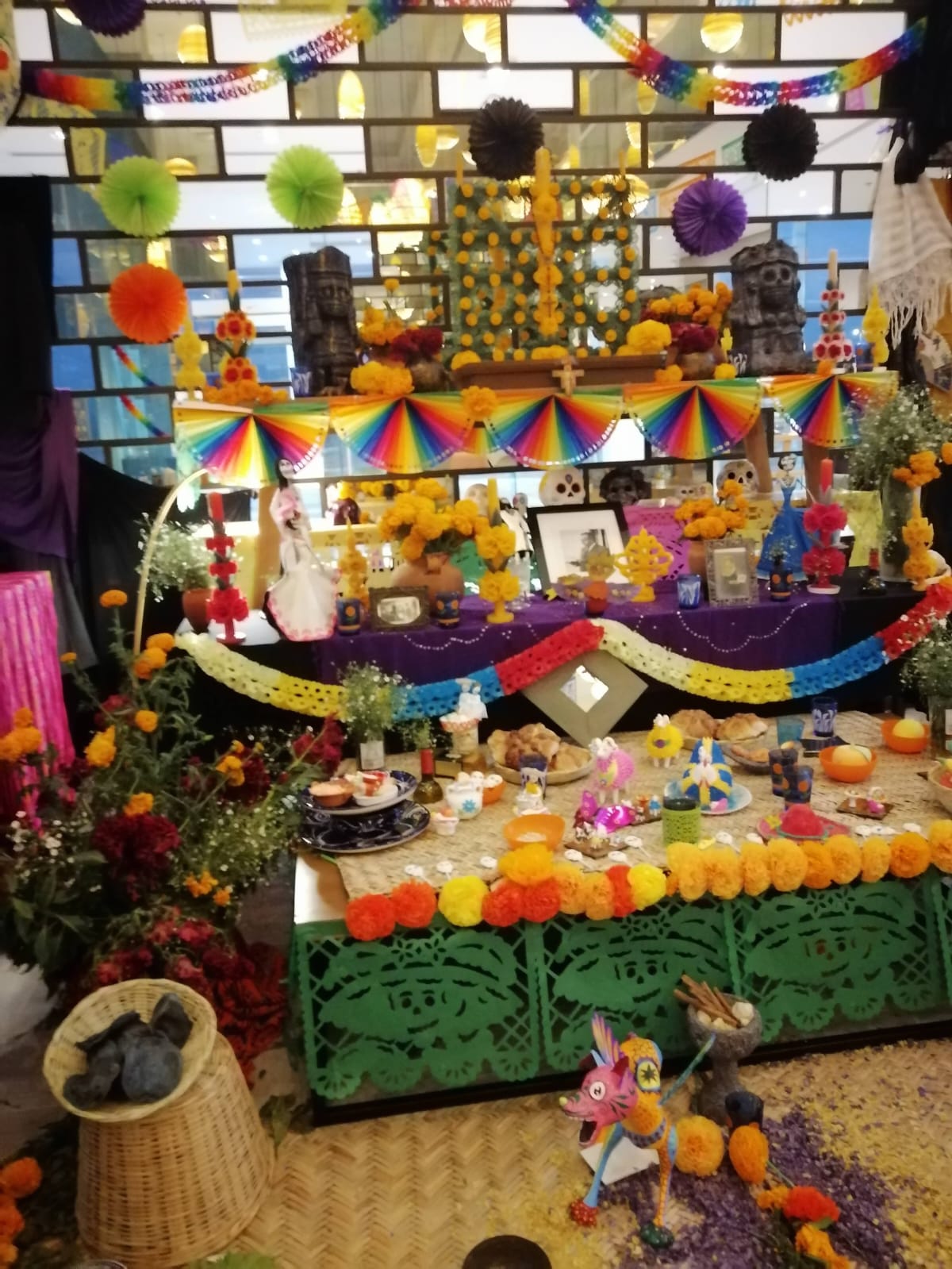
Altars are a tradition of pre-Hispanic origin that is part of the Day of the Dead in Mexico to save the deceased. Popular art in the Municipality of Salamanca is born from our deepest roots, it goes back to ancient and pre-Hispanic cultures such as the Cult of the Dead throughout Mesoamerica. Over time it has been nourished by different influences and new ways of relating in contemporary societies. In Guanajuato, the ephemeral art of sawdust mats has been incorporated into the traditional alfeñiques sweets that were made on November 1 of each year to give to children, candy skulls and miniature reproductions of different scenes, today you will find little witches and Fridas, the famous painter of Mexico.
Where does the custom of the Altar of the Dead come from since some of our traditions and customs express the perception of the indigenous people and integrate their uniqueness and their own history. The Day of the Dead mats are made of painted sawdust to welcome and pay tribute to those who have already died and begin their journey to that place called MICTLAN. The beings who have already transcended on November 1 are children and on day 2 adults cross into earthly life to visit and eat in the company of their loved ones and family. They are decorated with papel picado that tells us about the underworld, and orange is the color that the native peoples say is the color that they identify. purple is death, yellow is life.
This tradition is currently Intangible Cultural Heritage of Humanity by UNESCO, and consists of placing offerings to honor deceased loved ones.
englishThe Altar of the Dead Mexican Fiesta
Altars are a tradition of pre-Hispanic origin that is part of the Day of the Dead in Mexico in honor of the dead. The popular art in the Municipality of Salamanca is born from our deepest roots, it goes back to millenary and pre-Hispanic cultures such as the Cult of the Dead in all of Mesoamerica. With the passing of time, it has been nourished by the different influences and the new ways of relating in contemporary societies. In Guanajuato the ephemeral art of sawdust mats has been incorporated into the traditional sweets of "alfeñiques" that were made for the 1st of November each year to give to the little ones, sweet skulls and miniature reproductions of different scenes, today you will find little witches and "Fridas", the most famous painter in Mexico.
The custom of the Altar of the Dead comes from the indigenous people who have integrated their own history into Mexican culture. The Day of the Dead mats are made of painted sawdust and are meant to welcome and pay tribute to those who have passed away and begin their journey to the place called "MICTLAN". On the 1st of November, those who have already transcended are the children and on the 2nd of November, the adults, cross over to earthly life to visit and eat in the company of their loved ones and family. They decorate themselves with papel picado that speaks to us of the underworld, and orange is the color that the native people say they identify with, purple with death, yellow with life.
This tradition is currently Intangible Cultural Heritage of Humanity by UNESCO, and consists of placing offerings of what the deceased liked to honor their departed loved ones.
Reviews
There are no reviews yet.