
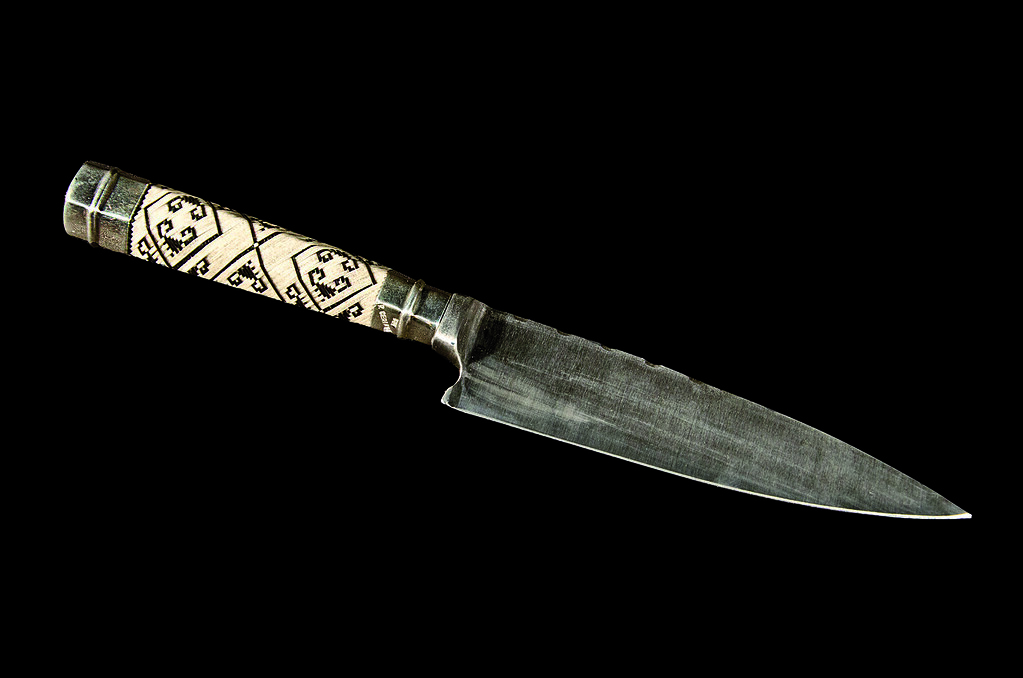
Description
In Argentina the knife is a utensil, a symbol and an object of worship. Its presence in national literature links it to the rural way of life. The Argentine knife transcended these areas and became popular as an element of identity. The knife is part of the gastronomic culture of barbecue, but in recent years its scope has expanded to all the uses demanded by the trend called slow food, which valued regional cuisine and which has the knife as its main tool.
The Argentine knife presents a variety of high-quality craftsmanship in its workmanship.
The artisans are specialists in the manufacture of blades, ends, sheaths or cases. The blades can be made by roughing or forging, with excellent results in both. Forging has developed in the country in recent years due to the presence and consolidation of schools and workshops of the trade, where numerous young people have been trained, which influences the type of production oriented towards collecting, gastronomy and lifestyle. Damascus steel has more and more followers in Argentina.
However, it is in the Cape that Argentine cutlery exhibits its appeal in a diversity of materials, techniques and motifs. The handle of the Argentine knife is the main support of the fine fabric with rawhide edges. A cape wrapped in 40 or 90 tientos with different motifs is one of the most popular artisanal expressions in the country. Argentine silversmithing is not left to the saga, thanks to which, with traditional goldsmithing techniques, the capes are transformed into unique luxury pieces and confer prestige to their wearers. A more organic trend is that of wooden capes that present as much variety as there are climates and forests in Argentina. This last variety of ropes is also associated with the production of special cases for collector knives, made with native woods and fine finishes.
All blades require sheaths for protection, and in general these and the butt of the knife are part of the same design project.
References
López Osornio, Mario. Creole Fencing. Knife, reinquee, poncho and chuza. Buenos Aires, Nuevo Siglo Editions, 1995
englishKnives
In Argentina, the knife is a utensil, a symbol, and an object of worship. Its presence in national literature links it to the rural way of life. The Argentinian knife transcended these spheres and became popular as an element of identity. While it is an integral part of the gastronomic culture of barbecue, in recent years, its scope has expanded to meet the demands of the so-called slow food trend, which values regional cuisine and designates the knife as its primary tool.
The Argentine knife showcases a variety of high-quality craftsmanship.
Artisans are specialists in the manufacture of blades, ends, sheaths, or cases. Blades can be made by roughing or forging, with excellent results. Forging has developed in the country in recent years due to the presence and consolidation of schools and workshops of the trade, where many young people have been trained. This influences the type of production destined for collectors, gastronomy, and lifestyle. Damascus steel is becoming increasingly popular in Argentina.
However, it is in the handle that Argentinian cutlery reveals its allure through a diverse array of materials, techniques, and motifs. The handles of Argentinian knives serve as the primary canvas for the intricate weaving of rawhide cords. A handle adorned with 40 or 90 different motifs represents one of the most popular handicraft expressions in the country. Following closely is Argentinian silversmithing, where traditional goldsmithing techniques are applied to transform handles into unique luxury pieces that bestow prestige upon their users. Another trend involves the use of wooden handles, reflecting the diversity of climates and forests in Argentina. This particular handle variety is also linked to the crafting of special cases for collector's knives, made with native woods and exquisite finishes.
All blades require protection in sheaths, which, alongside the knife handle, often form an integral part of the same design project.
References
Lopez Osornio, Mario. Creole Fencing. Knife, reinquee, poncho and chuza. Buenos Aires, Nuevo Siglo Editions, 1995
Reviews
There are no reviews yet.