
Description
La isla Grande de Chiloé es la mayor de las islas que integran el Chiloé archipelago, an island complex located in the Los Lagos Region, in it south of Chili.
It is crossed from north to south by the coastal mountain range. The area is characterized by its maritime activity, by a strong religiosity, by its fiber, wool and wood crafts, and mainly, by its cultural traditions.
The archipelago is covered with profuse vegetation, with Valdivian forests and a dozen wetlands, which allows the growth of a wide variety of plant fibers that have been used for years in the manufacture of basketry objects.
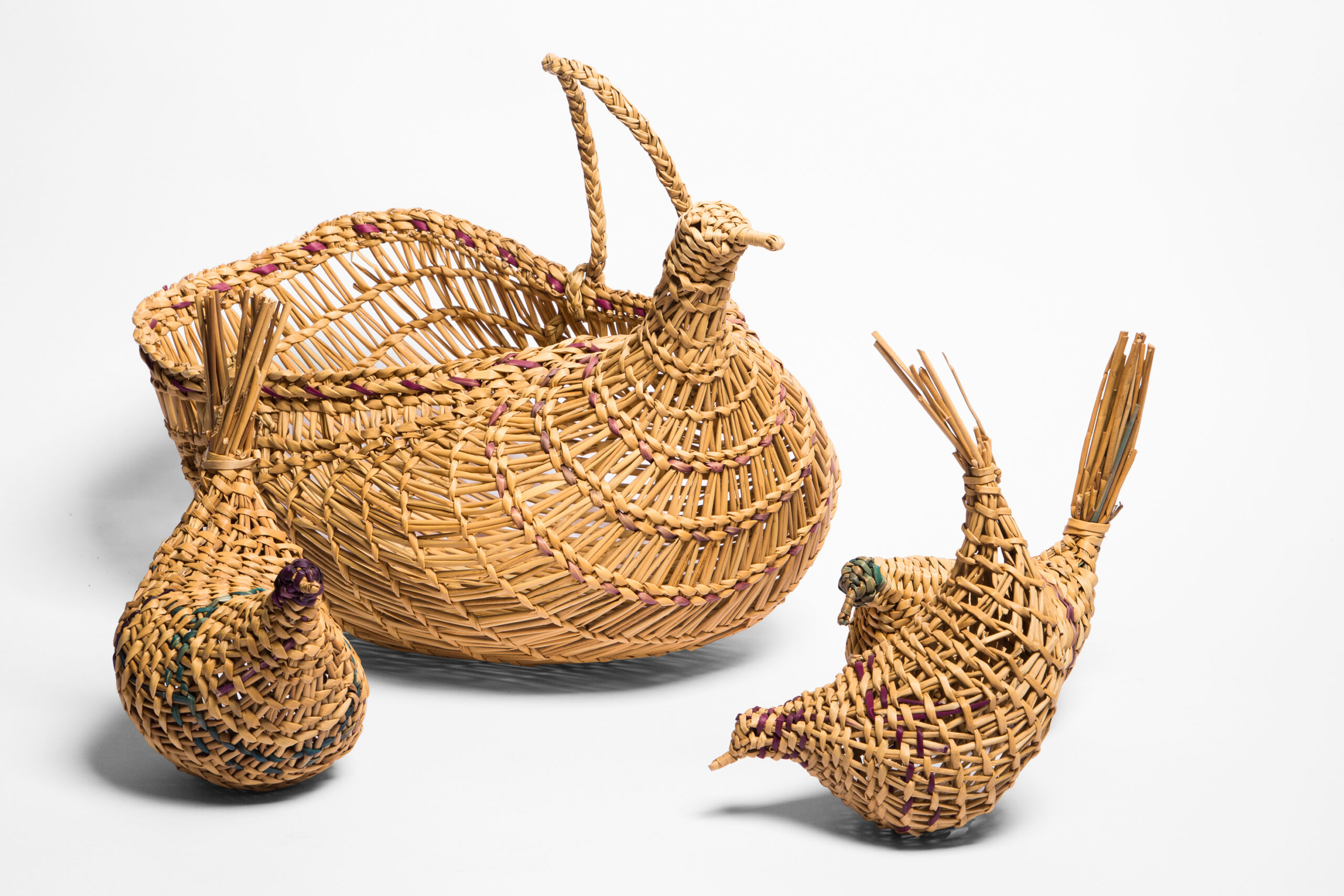
The baskets were and are the containers used to provide what is necessary for the subsistence that nature provides. The craft of basket weaving is a tradition that is generally transmitted through the mother’s line.
This trade is carried out mostly by women, from the collection and preparation of materials to weaving and final sale.
In the making of Chilote basketry, materials that come from the local flora are used, such as “jonquillo” (Juncussp.), “ñapo” (Juncus sp.), “manila” (Phormium tenax), “ñocha” (Cyperus sp.), “quilineja” (Luziariga radicals) and various species of vines known as “boqui” (Boquila trifoliolata, Campsidium valdivianum, Cissus striata).The weaving technique used is simple mating, which is practiced throughout the archipelago, and aduja weaving, which is used on Llingua Island and nearby sectors. The use of external tools is scarce, thus demonstrating the antiquity of this craft.
In relation to the fibers, the collection of each one has its particularity, as well as the preparation and use in a certain type of fabric. All this is identified and applied by the basket makers. In the past, the diversity of objects to weave was greater. Today only some of them maintain their original function, mainly those for carrying and storing, and some such as the chaiwe and the press basket for making chicha. These are generally used in more remote places on the island, by older islanders who maintain their traditions and at traditional festivals.
English
Chilota basketryThe Isla Grande de Chiloé is the largest of the islands that make up the Chiloé archipelago, a group of islands located in the Los Lagos Region, in southern Chile. It is crossed from north to south by the Cordillera de la Costa mountain range. The area is characterized by its maritime activity, its strong religiosity, its fiber, wool and wood crafts, and above all its cultural traditions.
The archipelago is covered by profuse vegetation, with Valdivian forests and a dozen wetlands, which allows the growth of a great variety of vegetable fibers that have been used for years in the manufacture of basketry objects.
The baskets were and still are the containers used to provide what nature provides for subsistence. The craft of basket weaving is a tradition that is generally passed down through the mother’s side. This craft is mostly carried out by women, from the collection and preparation of the materials to the weaving and the final sale. In the making of Chiloé basketry, materials from the local flora are used, such as “junquillo” (Juncussp.), “ñapo” (Juncus sp.), “manila” (Phormium tenax), “ñocha” (Cyperus sp.), “quilineja” (Luziariga basans) and various species of creepers known as “boqui” (Boquila trifoliolata, Campsidium valdivianum, Cissus striata).
The weaving technique used is simple pairing, which is practiced throughout the archipelago, and “aduja” weaving, which is used on Llingua Island and nearby areas. The use of external tools is rare, demonstrating the antiquity of this craft.
In relation to the fibers, the collection of each one has its own particularity, as well as the preparation and use in a certain type of weaving. All of this is identified and applied by the basket weavers.
In the past, there was a greater diversity of objects to weave. Today only some of them maintain their original function, mainly those for carrying and storing, and some such as the “chaiwe” and the press basket for making “chicha”. These are generally used in more remote parts of the island, by older islanders who maintain their traditions and in traditional festivals.
Reviews
There are no reviews yet.