
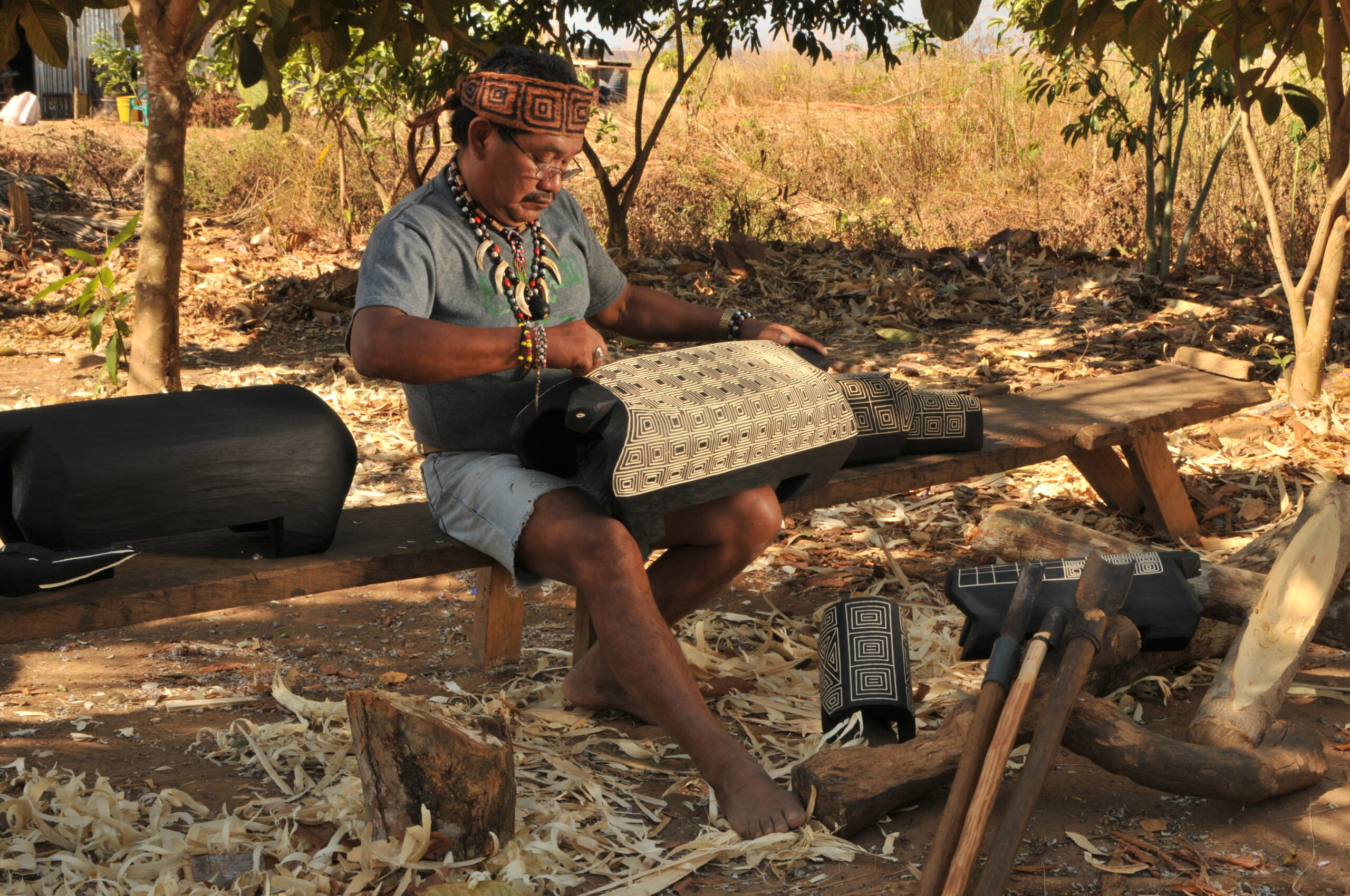
Description
Colombia is a multiethnic and pluricultural country with more than 87 indigenous ethnic groups that are part of the national culture and are bearers of traditions, legacies and knowledge since time immemorial. Among them is the Sikuani ethnic group, established in reservations created by the National Government in 1975 through INCORA, one of these reservations is that of Corocito, located in Puerto Gaitán, Meta, next to the river, among the bushes of the mountain to avoid flooding. There lives Ramito Moreno, a Sikuani indigenous person whose name is Christian although the shaman gave him another name that he keeps as a great secret from strangers.
Ramiro is a fisherman and farmer like his ancestors; He recognizes himself as “the greatest artist of the reservation” for his knowledge and skill in wood carving and because he has taught this work to his children and to more than 180 Sikuani indigenous people who are transmitting what they have learned to others. “I have no education but I have knowledge,” says Ramiro with the serenity and security of someone who knows and values what he does and with the authority that recognizes his comfort as a “senior captain” and as “oriented.”
Since his childhood “he looked at people to see if he could rescue something from their customs and traditions.” At 36 years old he left the reservation and traveled to Puerto Ayacucho to work and learn about other ethnic groups. At the age of 48 he decided to remake the benches that his parents and grandparents used. Félix told him that each bench has its own history and is made according to the use to which it is intended. “The carving is very respectful or very helpful.” Some are used for conversation, others for bartering, for girls and women or for multiple uses. The bench carvers go to the shaman to investigate how they should carve them. It can be a carving of a turtle, a snake or any other animal according to the shaman's dream. "In the dream, the wise man sees this as something natural; he finds a figure and defines which one can be used for each occasion… The geometric designs live in the imagination of shamans and are called 'keys to heaven', which open and show the path to be followed." Certain drawings and figures do not apply to the objects that are sold because they only correspond to the shamans and the community. For the carving, “machaco, chaparro de agua and saladillo” wood found in the reservation is used. Every three years a replanting is done so that there is no shortage of wood.
They are currently improving the designs and quality of wood carved items to market them throughout the country. Ramiro wants to fix up his house and open a store in the reservation so that tourists and buyers from many places can come. There you can visit him and he will continue wearing his outfits with his traditional necklaces to keep his identity and culture alive with great pride.
EnglishSikuani Bench
Colombia is a multi-ethnic and pluricultural country with more than 87 indigenous ethnic groups that form part of the national culture and are bearers of traditions, legacies and knowledge since time immemorial. Among them is the Sikuani ethnic group, established in reservations created by the National Government in 1975 through INCORA, one of these reservations is Corocito, located in Puerto Gaitán, Meta, next to the river, among the bushes of the forest to avoid flooding. Ramito Moreno lives there, an indigenous Sikuani whose name is Christian, although the shaman gave him another name which he keeps as a great secret from outsiders.
Ramiro is a fisherman and farmer like his ancestors. He recognizes himself as "the greatest artist of the reserve" because of his knowledge and skill in wood carving and because he has taught this work to his children and to more than 180 Indigenous Sikuani who are passing on to others what they have learned. "I have no studies but I have knowledge," Ramiro says with the serenity and confidence of someone who knows and values what he does, and with the authority that comes from his comfort as a "senior captain" and as a "guide."
Since his childhood, he "looked at the people to see if he could rescue something of their customs and traditions." At the age of 36, he left the reserve and traveled to Puerto Ayacucho to work and get to know other ethnic groups. At the age of 48, he decided to remake the benches used by his parents and grandparents. Félix told him that each bench has its own history and is made according to its intended use. "The carving is very helpful. Some are used for conversation, others for bartering, for girls and ladies or for multiple uses. The bench carvers go to the shaman to find out how they should carve them. It may be a carving of a turtle, a snake or any other animal according to the shaman's dream. "In the dream, the wise man sees this as something natural; he finds a figure and defines which one can be used for which occasion. ….. The geometrical designs live in the imagination of the shamans and are called "keys of heaven", which open and show the path to be followed". Certain designs and figures are not applied to objects that are traded because they belong only to the shamans and the community. Wood from "machaco", "chaparro de agua" and "saladillo" found in the reserve is used for carving. Every three years the wood is replanted so that there is no shortage of wood.
They are currently improving the designs and quality of the wood carved articles in order to market them throughout the country. Ramiro wants to fix up his house and open a store in the reserve to attract tourists and buyers from all over the country. There they will be able to visit him and he will continue to wear his attire with his traditional necklaces to keep his identity and culture alive with great pride.
Reviews
There are no reviews yet.