
Description
Pomaire is a small town, located 70 km from Santiago in the Commune of Melipilla, Province of the same name in the Metropolitan Region.
There are antecedents of indigenous pottery production, prior to the Spanish arrival. With their arrival they adapted their production to the requirements of this culture with new objects, especially containers for seeds, chichas and wines, among others, which were essential for the domestic life of landowners and ranchers. With this history, Pomaire is recognized as an intrinsically pottery town. and this practice has continued to this day.
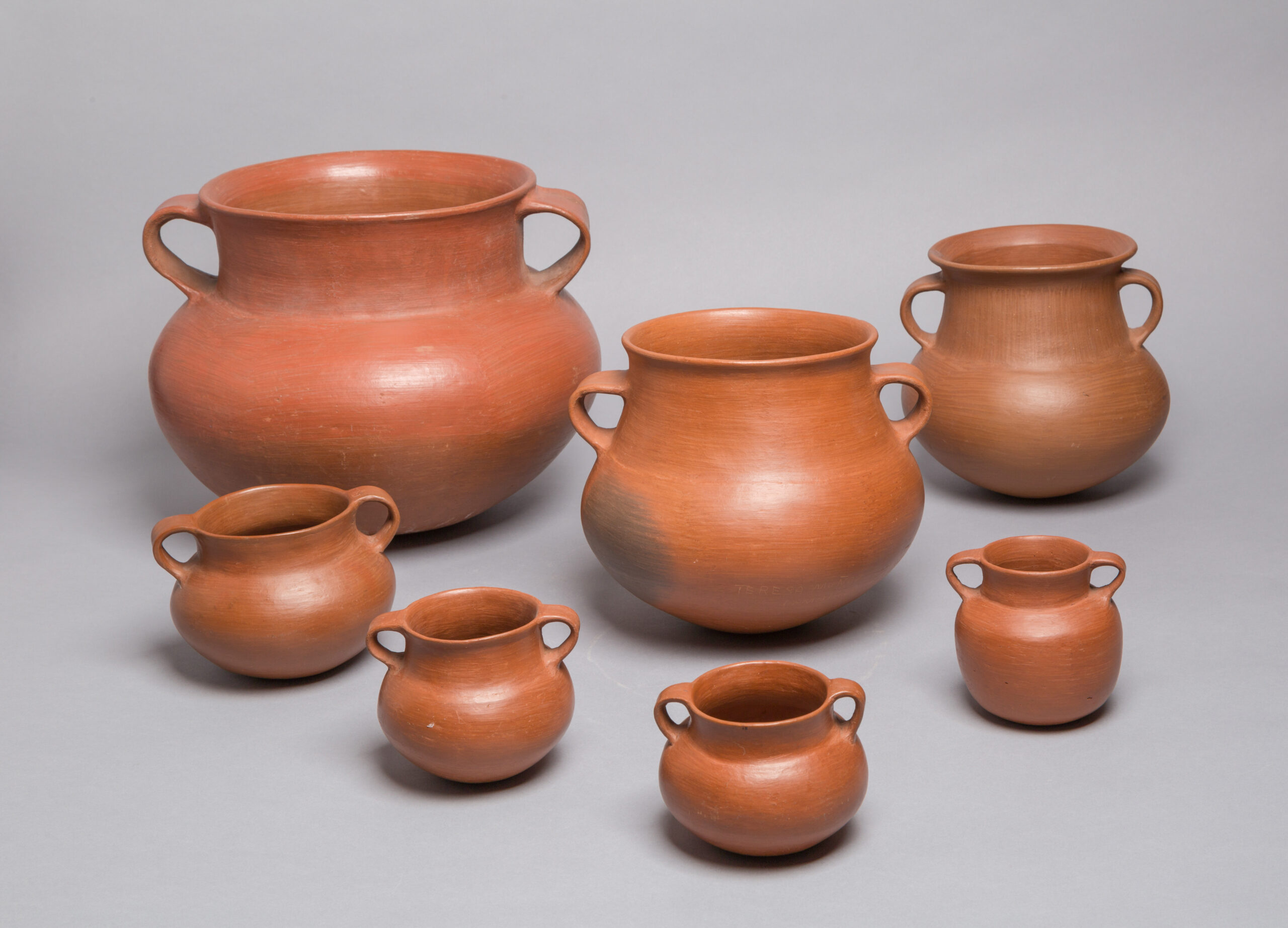
Today several techniques are worked on depending on the work system, the technology used and the objects designed. The most used are the pedal lathe, the electric lathe and the manual lathe or manual modeling; The polishing finishes are manual, and sometimes indirect smoking is applied in the same ovens and in others with a slip applied with “colo”. The firing is done in wood-burning ovens. The pieces are essentially utilitarian, pots, fountains, pans, flower pots, miniatures and human figures.
The raw material is clay, a secondary clay, reddish in color with a high percentage of iron that makes it very melting at low temperatures. When mixed with water it is very plastic, and can be easily modeled. It is extracted in locations in the central zone of the country
Nowadays the artisans no longer carry out the process of extracting the raw material, there are now several specialized extractors that extract, process and distribute the prepared clay to the artisans in the quality required by each one.
Currently, Pomaire continues to be a very tourist town where a great diversity of clay objects are produced and sold: traditional ones along with new production lines where innovations constantly appear for the market along with new searches for expressions of a personal nature.
EnglishPottery of Pomaire
Pomaire is a small village, located 70 km from Santiago in the commune of Melipilla, province of the same name in the Metropolitan Region. There are antecedents of indigenous pottery production, prior to the Spanish arrival. With their arrival, they adapted their production to the requirements of this culture with new objects, especially containers for seeds, "chichas" and wines, among others, which were indispensable for the domestic life of landowners and ranchers. With this trajectory, it is recognized as an intrinsically potter people, and this practice has lasted until the present day.
Today, various techniques are used depending on the working system, the technology used and the objects designed. The most commonly used are the treadle wheel, the electric wheel and the hand wheel or hand modeling; the polishing finishes are manual, and sometimes indirect smoking is applied in the kilns themselves and sometimes with engobe applied with 'colo'. Firing is carried out in wood-fired kilns. The pieces are essentially utilitarian: pots, dishes, flowerpots, miniatures and human figures. The raw material is "greda", a secondary clay, reddish in color with a high percentage of iron, which makes it very melting at low temperatures. When mixed with water, it is very plastic and can be easily modeled. It is extracted in localities in the central part of the country.
Nowadays the artisans no longer carry out the extraction process of the raw material. Now there are several specialized extractors that extract, process and distribute the prepared clay to the artisans in the quality required by each one. Pomaire continues to be a very touristic town where a great diversity of clay objects are produced and commercialized: the traditional ones together with new productive lines where innovations constantly appear for the market together with new searches for personal expressions.
Reviews
There are no reviews yet.