
Mapuche Woods

En la conquista hispana, en el sur de Chile vivían los mapuches, pueblo de una serie de grupos independientes que compartían un territorio, idioma y rasgos culturales. Su sistema económico, era basado en la caza y la horticultura, luego en los siglos XVIII y XIX se adecuaron a un sistema de agricultura y ganadería. Hoy, los […]

Descripción

En la conquista hispana, en el sur de Chile vivían los mapuches, pueblo de una serie de grupos independientes que compartían un territorio, idioma y rasgos culturales.

Su sistema económico, era basado en la caza y la horticultura, luego en los siglos XVIII y XIX se adecuaron a un sistema de agricultura y ganadería.

Hoy, los mapuches presentan un gran fraccionamiento cultural, por la migrationtowards the big cities, Santiago andTemuco, although always related to their communities of origin. Although, a certain racial and social segregation persists with Chilean society, which is observed in the rates of lower education and income, higher unemployment and higher poverty than the national average.

From their origins, the Mapuche populations used wood from the rich and abundant forests that nature provides in the area. In the work they do with it, they express their worldview, especially in the symbols in pieces such as the rehue, a sculpture carved into a stepped trunk, symbolizing the connection with the cosmos, and the chemamull, a carving of a human figure in a large oak or laurel trunk, which they use in their main ceremonies. Another piece is the kollones, ritual masks, used in the same ceremonies: the nguillatún (prayer ceremony), the machitún (healing ceremony), and the we tripantu (new year celebration).

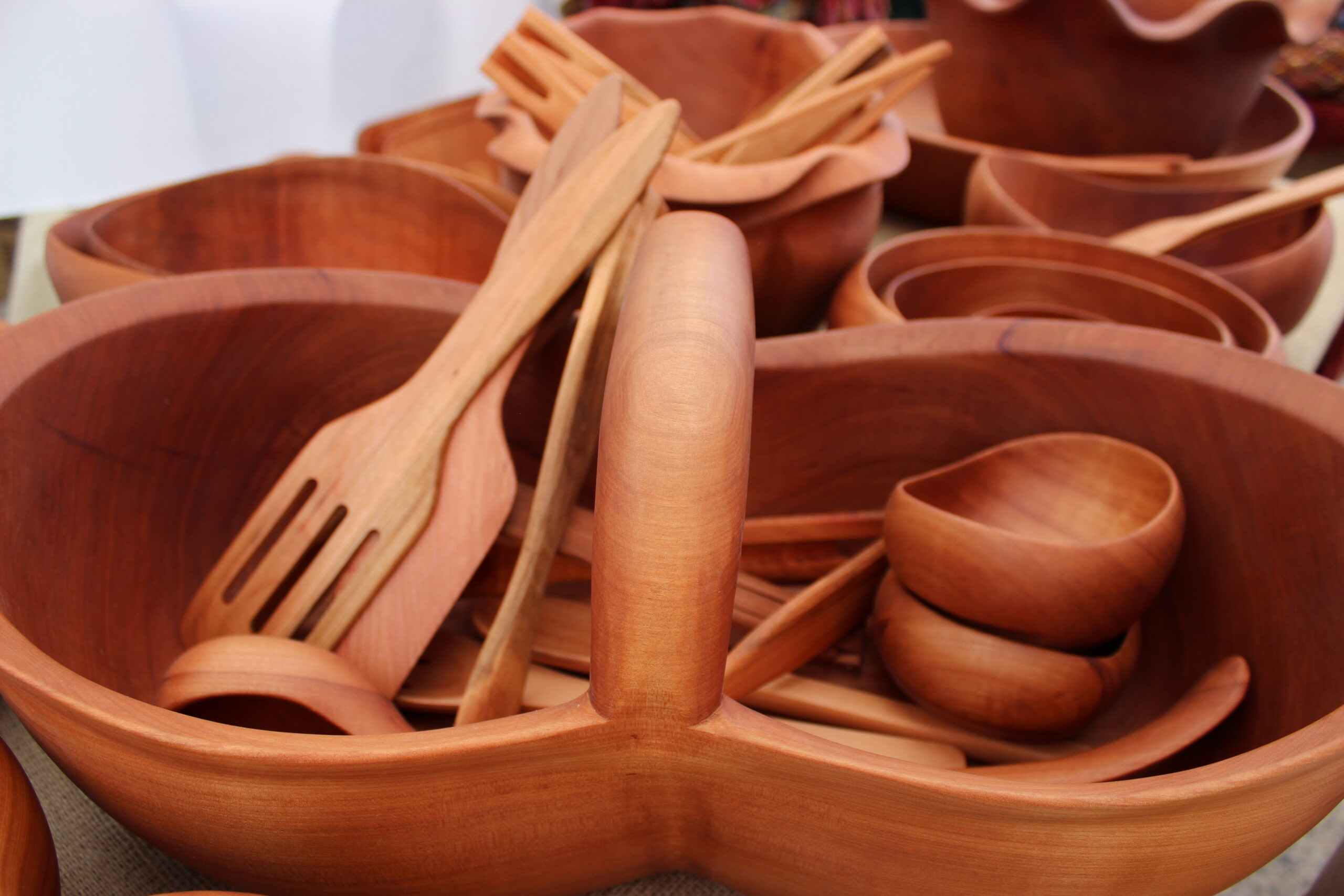
On the other hand, several utilitarian elements carved in wood are preserved: such as benches or wancos; mortars, plates or rali, dishes, spoons, ladles, trays, plates, trays and other ornamental items such as. chicken fountains, duck fountains, pigs, etc.

The main woods used are raulí and coigue, although today mañío, laurel, cinnamon, olivillo, radical and oak are also used.

The main production centers are Villarrica and Liquiñe, although its practice is very common from the Bio Bio region to Magallanes.

The town of Liquiñe received the title of “Craft City of the World” in 2018 conferred by the World Crafts Council for its contribution to the maintenance of knowledge acquired through tradition and the safeguarding of intangible cultural heritage, thus reinforcing the Mapuche identity of the area.

English

Mapuche woodcraftDuring the Hispanic conquest, in the south of Chile lived the Mapuches, a people made up of a series of independent groups that shared a territory, language and cultural traits.

Their economic system was based on hunting and horticulture, then in the 18th and 19th centuries they adapted to a system of agriculture and livestock raising. Today, the Mapuches are culturally divided due to migration to the big cities, Santiago and Temuco, although they are always related to their communities of origin. However, a certain racial and social segregation in Chilean society persists, which can be seen in the indices of lower education and income, higher unemployment and greater poverty than the national average.

Since their origins, the Mapuche people have used wood from the rich and abundant forests that nature provides in the area. In the works they make with it, they express their cosmovision, especially in the symbols in pieces such as the rehue, a sculpture carved in a stepped trunk, symbolizing the connection with the cosmos, and the chemamull, a carving of a human figure in a large oak or laurel trunk, which they use in their main ceremonies. Another piece is the «kollones», ritual masks, used in the same ceremonies: the «nguillatún» (prayer ceremony), the «machitún» (healing ceremony) and the «we tripantu» (new year celebration).

On the other hand, several utilitarian elements carved in wood are preserved: such as benches or wancos; mortars, plates or rali, dishes, spoons, ladles, trays, plates, bowls and other ornamental elements such as chicken dishes, duck dishes, pigs, etc. The main woods used are raulí and coigue, although today mañío, laurel, canelo, olivillo, radical and oak are also used.

The main centers of production are Villarrica and Liquiñe, although the practice is very common from the Bio Bio region to Magallanes. The town of Liquiñe was awarded the title of «Craft City of the World» in 2018 by the World Crafts Council for its contribution to the maintenance of knowledge acquired by tradition and the safeguarding of intangible cultural heritage, thus reinforcing the Mapuche identity of the area.

Valoraciones

No hay valoraciones aún.

Sé el primero en valorar “Mapuche Woods”

Tu dirección de correo electrónico no será publicada. Los campos obligatorios están marcados con *

Descripción

En la conquista hispana, en el sur de Chile vivían los mapuches, pueblo de una serie de grupos independientes que compartían un territorio, idioma y rasgos culturales.

Su sistema económico, era basado en la caza y la horticultura, luego en los siglos XVIII y XIX se adecuaron a un sistema de agricultura y ganadería.

Hoy, los mapuches presentan un gran fraccionamiento cultural, por la migrationtowards the big cities, Santiago andTemuco, although always related to their communities of origin. Although, a certain racial and social segregation persists with Chilean society, which is observed in the rates of lower education and income, higher unemployment and higher poverty than the national average.

From their origins, the Mapuche populations used wood from the rich and abundant forests that nature provides in the area. In the work they do with it, they express their worldview, especially in the symbols in pieces such as the rehue, a sculpture carved into a stepped trunk, symbolizing the connection with the cosmos, and the chemamull, a carving of a human figure in a large oak or laurel trunk, which they use in their main ceremonies. Another piece is the kollones, ritual masks, used in the same ceremonies: the nguillatún (prayer ceremony), the machitún (healing ceremony), and the we tripantu (new year celebration).

On the other hand, several utilitarian elements carved in wood are preserved: such as benches or wancos; mortars, plates or rali, dishes, spoons, ladles, trays, plates, trays and other ornamental items such as. chicken fountains, duck fountains, pigs, etc.

The main woods used are raulí and coigue, although today mañío, laurel, cinnamon, olivillo, radical and oak are also used.

The main production centers are Villarrica and Liquiñe, although its practice is very common from the Bio Bio region to Magallanes.

The town of Liquiñe received the title of “Craft City of the World” in 2018 conferred by the World Crafts Council for its contribution to the maintenance of knowledge acquired through tradition and the safeguarding of intangible cultural heritage, thus reinforcing the Mapuche identity of the area.

English

Mapuche woodcraftDuring the Hispanic conquest, in the south of Chile lived the Mapuches, a people made up of a series of independent groups that shared a territory, language and cultural traits.

Their economic system was based on hunting and horticulture, then in the 18th and 19th centuries they adapted to a system of agriculture and livestock raising. Today, the Mapuches are culturally divided due to migration to the big cities, Santiago and Temuco, although they are always related to their communities of origin. However, a certain racial and social segregation in Chilean society persists, which can be seen in the indices of lower education and income, higher unemployment and greater poverty than the national average.

Since their origins, the Mapuche people have used wood from the rich and abundant forests that nature provides in the area. In the works they make with it, they express their cosmovision, especially in the symbols in pieces such as the rehue, a sculpture carved in a stepped trunk, symbolizing the connection with the cosmos, and the chemamull, a carving of a human figure in a large oak or laurel trunk, which they use in their main ceremonies. Another piece is the «kollones», ritual masks, used in the same ceremonies: the «nguillatún» (prayer ceremony), the «machitún» (healing ceremony) and the «we tripantu» (new year celebration).

On the other hand, several utilitarian elements carved in wood are preserved: such as benches or wancos; mortars, plates or rali, dishes, spoons, ladles, trays, plates, bowls and other ornamental elements such as chicken dishes, duck dishes, pigs, etc. The main woods used are raulí and coigue, although today mañío, laurel, canelo, olivillo, radical and oak are also used.

The main centers of production are Villarrica and Liquiñe, although the practice is very common from the Bio Bio region to Magallanes. The town of Liquiñe was awarded the title of «Craft City of the World» in 2018 by the World Crafts Council for its contribution to the maintenance of knowledge acquired by tradition and the safeguarding of intangible cultural heritage, thus reinforcing the Mapuche identity of the area.

Valoraciones

No hay valoraciones aún.

Sé el primero en valorar “Mapuche Woods”

Tu dirección de correo electrónico no será publicada. Los campos obligatorios están marcados con *

Descripción

En la conquista hispana, en el sur de Chile vivían los mapuches, pueblo de una serie de grupos independientes que compartían un territorio, idioma y rasgos culturales.

Su sistema económico, era basado en la caza y la horticultura, luego en los siglos XVIII y XIX se adecuaron a un sistema de agricultura y ganadería.

Hoy, los mapuches presentan un gran fraccionamiento cultural, por la migrationtowards the big cities, Santiago andTemuco, although always related to their communities of origin. Although, a certain racial and social segregation persists with Chilean society, which is observed in the rates of lower education and income, higher unemployment and higher poverty than the national average.

From their origins, the Mapuche populations used wood from the rich and abundant forests that nature provides in the area. In the work they do with it, they express their worldview, especially in the symbols in pieces such as the rehue, a sculpture carved into a stepped trunk, symbolizing the connection with the cosmos, and the chemamull, a carving of a human figure in a large oak or laurel trunk, which they use in their main ceremonies. Another piece is the kollones, ritual masks, used in the same ceremonies: the nguillatún (prayer ceremony), the machitún (healing ceremony), and the we tripantu (new year celebration).

On the other hand, several utilitarian elements carved in wood are preserved: such as benches or wancos; mortars, plates or rali, dishes, spoons, ladles, trays, plates, trays and other ornamental items such as. chicken fountains, duck fountains, pigs, etc.

The main woods used are raulí and coigue, although today mañío, laurel, cinnamon, olivillo, radical and oak are also used.

The main production centers are Villarrica and Liquiñe, although its practice is very common from the Bio Bio region to Magallanes.

The town of Liquiñe received the title of “Craft City of the World” in 2018 conferred by the World Crafts Council for its contribution to the maintenance of knowledge acquired through tradition and the safeguarding of intangible cultural heritage, thus reinforcing the Mapuche identity of the area.

English

Mapuche woodcraftDuring the Hispanic conquest, in the south of Chile lived the Mapuches, a people made up of a series of independent groups that shared a territory, language and cultural traits.

Their economic system was based on hunting and horticulture, then in the 18th and 19th centuries they adapted to a system of agriculture and livestock raising. Today, the Mapuches are culturally divided due to migration to the big cities, Santiago and Temuco, although they are always related to their communities of origin. However, a certain racial and social segregation in Chilean society persists, which can be seen in the indices of lower education and income, higher unemployment and greater poverty than the national average.

Since their origins, the Mapuche people have used wood from the rich and abundant forests that nature provides in the area. In the works they make with it, they express their cosmovision, especially in the symbols in pieces such as the rehue, a sculpture carved in a stepped trunk, symbolizing the connection with the cosmos, and the chemamull, a carving of a human figure in a large oak or laurel trunk, which they use in their main ceremonies. Another piece is the «kollones», ritual masks, used in the same ceremonies: the «nguillatún» (prayer ceremony), the «machitún» (healing ceremony) and the «we tripantu» (new year celebration).

On the other hand, several utilitarian elements carved in wood are preserved: such as benches or wancos; mortars, plates or rali, dishes, spoons, ladles, trays, plates, bowls and other ornamental elements such as chicken dishes, duck dishes, pigs, etc. The main woods used are raulí and coigue, although today mañío, laurel, canelo, olivillo, radical and oak are also used.

The main centers of production are Villarrica and Liquiñe, although the practice is very common from the Bio Bio region to Magallanes. The town of Liquiñe was awarded the title of «Craft City of the World» in 2018 by the World Crafts Council for its contribution to the maintenance of knowledge acquired by tradition and the safeguarding of intangible cultural heritage, thus reinforcing the Mapuche identity of the area.

Valoraciones

No hay valoraciones aún.

Sé el primero en valorar “Mapuche Woods”

Tu dirección de correo electrónico no será publicada. Los campos obligatorios están marcados con *

Descripción

En la conquista hispana, en el sur de Chile vivían los mapuches, pueblo de una serie de grupos independientes que compartían un territorio, idioma y rasgos culturales.

Su sistema económico, era basado en la caza y la horticultura, luego en los siglos XVIII y XIX se adecuaron a un sistema de agricultura y ganadería.

Hoy, los mapuches presentan un gran fraccionamiento cultural, por la migrationtowards the big cities, Santiago andTemuco, although always related to their communities of origin. Although, a certain racial and social segregation persists with Chilean society, which is observed in the rates of lower education and income, higher unemployment and higher poverty than the national average.

From their origins, the Mapuche populations used wood from the rich and abundant forests that nature provides in the area. In the work they do with it, they express their worldview, especially in the symbols in pieces such as the rehue, a sculpture carved into a stepped trunk, symbolizing the connection with the cosmos, and the chemamull, a carving of a human figure in a large oak or laurel trunk, which they use in their main ceremonies. Another piece is the kollones, ritual masks, used in the same ceremonies: the nguillatún (prayer ceremony), the machitún (healing ceremony), and the we tripantu (new year celebration).

On the other hand, several utilitarian elements carved in wood are preserved: such as benches or wancos; mortars, plates or rali, dishes, spoons, ladles, trays, plates, trays and other ornamental items such as. chicken fountains, duck fountains, pigs, etc.

The main woods used are raulí and coigue, although today mañío, laurel, cinnamon, olivillo, radical and oak are also used.

The main production centers are Villarrica and Liquiñe, although its practice is very common from the Bio Bio region to Magallanes.

The town of Liquiñe received the title of “Craft City of the World” in 2018 conferred by the World Crafts Council for its contribution to the maintenance of knowledge acquired through tradition and the safeguarding of intangible cultural heritage, thus reinforcing the Mapuche identity of the area.

English

Mapuche woodcraftDuring the Hispanic conquest, in the south of Chile lived the Mapuches, a people made up of a series of independent groups that shared a territory, language and cultural traits.

Their economic system was based on hunting and horticulture, then in the 18th and 19th centuries they adapted to a system of agriculture and livestock raising. Today, the Mapuches are culturally divided due to migration to the big cities, Santiago and Temuco, although they are always related to their communities of origin. However, a certain racial and social segregation in Chilean society persists, which can be seen in the indices of lower education and income, higher unemployment and greater poverty than the national average.

Since their origins, the Mapuche people have used wood from the rich and abundant forests that nature provides in the area. In the works they make with it, they express their cosmovision, especially in the symbols in pieces such as the rehue, a sculpture carved in a stepped trunk, symbolizing the connection with the cosmos, and the chemamull, a carving of a human figure in a large oak or laurel trunk, which they use in their main ceremonies. Another piece is the «kollones», ritual masks, used in the same ceremonies: the «nguillatún» (prayer ceremony), the «machitún» (healing ceremony) and the «we tripantu» (new year celebration).

On the other hand, several utilitarian elements carved in wood are preserved: such as benches or wancos; mortars, plates or rali, dishes, spoons, ladles, trays, plates, bowls and other ornamental elements such as chicken dishes, duck dishes, pigs, etc. The main woods used are raulí and coigue, although today mañío, laurel, canelo, olivillo, radical and oak are also used.

The main centers of production are Villarrica and Liquiñe, although the practice is very common from the Bio Bio region to Magallanes. The town of Liquiñe was awarded the title of «Craft City of the World» in 2018 by the World Crafts Council for its contribution to the maintenance of knowledge acquired by tradition and the safeguarding of intangible cultural heritage, thus reinforcing the Mapuche identity of the area.

Valoraciones

No hay valoraciones aún.

Sé el primero en valorar “Mapuche Woods”

Tu dirección de correo electrónico no será publicada. Los campos obligatorios están marcados con *

Descripción

En la conquista hispana, en el sur de Chile vivían los mapuches, pueblo de una serie de grupos independientes que compartían un territorio, idioma y rasgos culturales.

Su sistema económico, era basado en la caza y la horticultura, luego en los siglos XVIII y XIX se adecuaron a un sistema de agricultura y ganadería.

Hoy, los mapuches presentan un gran fraccionamiento cultural, por la migrationtowards the big cities, Santiago andTemuco, although always related to their communities of origin. Although, a certain racial and social segregation persists with Chilean society, which is observed in the rates of lower education and income, higher unemployment and higher poverty than the national average.

From their origins, the Mapuche populations used wood from the rich and abundant forests that nature provides in the area. In the work they do with it, they express their worldview, especially in the symbols in pieces such as the rehue, a sculpture carved into a stepped trunk, symbolizing the connection with the cosmos, and the chemamull, a carving of a human figure in a large oak or laurel trunk, which they use in their main ceremonies. Another piece is the kollones, ritual masks, used in the same ceremonies: the nguillatún (prayer ceremony), the machitún (healing ceremony), and the we tripantu (new year celebration).

On the other hand, several utilitarian elements carved in wood are preserved: such as benches or wancos; mortars, plates or rali, dishes, spoons, ladles, trays, plates, trays and other ornamental items such as. chicken fountains, duck fountains, pigs, etc.

The main woods used are raulí and coigue, although today mañío, laurel, cinnamon, olivillo, radical and oak are also used.

The main production centers are Villarrica and Liquiñe, although its practice is very common from the Bio Bio region to Magallanes.

The town of Liquiñe received the title of “Craft City of the World” in 2018 conferred by the World Crafts Council for its contribution to the maintenance of knowledge acquired through tradition and the safeguarding of intangible cultural heritage, thus reinforcing the Mapuche identity of the area.

English

Mapuche woodcraftDuring the Hispanic conquest, in the south of Chile lived the Mapuches, a people made up of a series of independent groups that shared a territory, language and cultural traits.

Their economic system was based on hunting and horticulture, then in the 18th and 19th centuries they adapted to a system of agriculture and livestock raising. Today, the Mapuches are culturally divided due to migration to the big cities, Santiago and Temuco, although they are always related to their communities of origin. However, a certain racial and social segregation in Chilean society persists, which can be seen in the indices of lower education and income, higher unemployment and greater poverty than the national average.

Since their origins, the Mapuche people have used wood from the rich and abundant forests that nature provides in the area. In the works they make with it, they express their cosmovision, especially in the symbols in pieces such as the rehue, a sculpture carved in a stepped trunk, symbolizing the connection with the cosmos, and the chemamull, a carving of a human figure in a large oak or laurel trunk, which they use in their main ceremonies. Another piece is the «kollones», ritual masks, used in the same ceremonies: the «nguillatún» (prayer ceremony), the «machitún» (healing ceremony) and the «we tripantu» (new year celebration).

On the other hand, several utilitarian elements carved in wood are preserved: such as benches or wancos; mortars, plates or rali, dishes, spoons, ladles, trays, plates, bowls and other ornamental elements such as chicken dishes, duck dishes, pigs, etc. The main woods used are raulí and coigue, although today mañío, laurel, canelo, olivillo, radical and oak are also used.

The main centers of production are Villarrica and Liquiñe, although the practice is very common from the Bio Bio region to Magallanes. The town of Liquiñe was awarded the title of «Craft City of the World» in 2018 by the World Crafts Council for its contribution to the maintenance of knowledge acquired by tradition and the safeguarding of intangible cultural heritage, thus reinforcing the Mapuche identity of the area.

Valoraciones

No hay valoraciones aún.

Sé el primero en valorar “Mapuche Woods”

Tu dirección de correo electrónico no será publicada. Los campos obligatorios están marcados con *

Descripción

During the Hispanic conquest, the Mapuches lived in the south of Chile, a people from a series of independent groups that shared a territory, language and cultural traits.

Their economic system was based on hunting and horticulture, then in the 18th and 19th centuries they adapted to a system of agriculture and livestock.

Today, the Mapuches present a great cultural fragmentation, due to migration to the big cities, Santiago and Temuco, although always related to their communities of origin. Although, a certain racial and social segregation persists with Chilean society, which is observed in the rates of lower education and income, higher unemployment and higher poverty than the national average.

From their origins, the Mapuche populations used wood from the rich and abundant forests that nature provides in the area. In the work they do with it, they express their worldview, especially in the symbols in pieces such as the rehue, a sculpture carved into a stepped trunk, symbolizing the connection with the cosmos, and the chemamull, a carving of a human figure in a large oak or laurel trunk, which they use in their main ceremonies. Another piece is the kollones, ritual masks, used in the same ceremonies: the nguillatún (prayer ceremony), the machitún (healing ceremony), and the we tripantu (new year celebration).

On the other hand, several utilitarian elements carved in wood are preserved: such as benches or wancos; mortars, plates or rali, dishes, spoons, ladles, trays, plates, trays and other ornamental items such as. chicken fountains, duck fountains, pigs, etc.

The main woods used are raulí and coigue, although today mañío, laurel, cinnamon, olivillo, radical and oak are also used.

The main production centers are Villarrica and Liquiñe, although its practice is very common from the Bio Bio region to Magallanes.

The town of Liquiñe received the title of “Craft City of the World” in 2018 conferred by the World Crafts Council for its contribution to the maintenance of knowledge acquired through tradition and the safeguarding of intangible cultural heritage, thus reinforcing the Mapuche identity of the area.

EnglishMapuche woodcraft

During the Hispanic conquest, in the south of Chile lived the Mapuches, a people made up of a series of independent groups that shared a territory, language and cultural traits.

Their economic system was based on hunting and horticulture, then in the 18th and 19th centuries they adapted to a system of agriculture and livestock raising. Today, the Mapuches are culturally divided due to migration to the big cities, Santiago and Temuco, although they are always related to their communities of origin. However, a certain racial and social segregation in Chilean society persists, which can be seen in the indices of lower education and income, higher unemployment and greater poverty than the national average.

Since their origins, the Mapuche people have used wood from the rich and abundant forests that nature provides in the area. In the works they make with it, they express their cosmovision, especially in the symbols in pieces such as the rehue, a sculpture carved in a stepped trunk, symbolizing the connection with the cosmos, and the chemamull, a carving of a human figure in a large oak or laurel trunk, which they use in their main ceremonies. Another piece is the "kollones", ritual masks, used in the same ceremonies: the "nguillatún" (prayer ceremony), the "machitún" (healing ceremony) and the "we tripantu" (new year celebration).

On the other hand, several utilitarian elements carved in wood are preserved: such as benches or wancos; mortars, plates or rali, dishes, spoons, ladles, trays, plates, bowls and other ornamental elements such as chicken dishes, duck dishes, pigs, etc. The main woods used are raulí and coigue, although today mañío, laurel, canelo, olivillo, radical and oak are also used.

The main centers of production are Villarrica and Liquiñe, although the practice is very common from the Bio Bio region to Magallanes. The town of Liquiñe was awarded the title of "Craft City of the World" in 2018 by the World Crafts Council for its contribution to the maintenance of knowledge acquired by tradition and the safeguarding of intangible cultural heritage, thus reinforcing the Mapuche identity of the area.

Valoraciones

No hay valoraciones aún.

Sé el primero en valorar “Mapuche Woods”

Tu dirección de correo electrónico no será publicada. Los campos obligatorios están marcados con *

Descripción

En la conquista hispana, en el sur de Chile vivían los mapuches, pueblo de una serie de grupos independientes que compartían un territorio, idioma y rasgos culturales.

Su sistema económico, era basado en la caza y la horticultura, luego en los siglos XVIII y XIX se adecuaron a un sistema de agricultura y ganadería.

Hoy, los mapuches presentan un gran fraccionamiento cultural, por la migración hacia las grandes ciudades, Santiago y Temuco, aunque siempre relacionada con sus comunidades de origen. Aunque, pervive cierta segregación racial y social con la sociedad chilena, que se observa en los índices de menor educación e ingresos, mayor desempleo y mayor pobreza que el promedio nacional.

Desde sus orígenes las poblaciones mapuches utilizaron la madera de los ricos y abundantes bosques que brinda la naturaleza en la zona. En los trabajos que realizan con ella , expresan su cosmovisión, especialmente en los símbolos en piezas como el rehue, escultura tallada en un tronco escalonado, simboliza la conexión con el cosmos y el chemamull, tallado de una figura humana en un gran tronco de roble o laurel, que utilizan en sus principales ceremonias. Otra pieza son los kollones, máscaras rituales,  usadas en las mismas ceremonias: el nguillatún (ceremonia de rogación), el machitún (ceremonia de sanación).y el we tripantu (celebración año nuevo).

Por otra parte, se conservan varios elementos utilitarios tallados en madera: como los bancos o wancos; morteros, platos o rali, fuentes, cucharas, cucharones, bandejas, platos, bateas y otras ornamentales como. fuentes gallinas, fuentes patos, chanchos, etc.

Las principales maderas que se usan son el raulí y el coigue, aunque hoy también se usa el mañío, el laurel, el canelo, el olivillo, el radal y el roble.

Los principales centros de producción son Villarrica  y Liquiñe aunque su práctica es muy habitual desde la región del Bio Bio hasta Magallanes.

El pueblo de Liquiñe recibió el título de “Ciudad Artesanal del Mundo” en 2018 conferido por el Consejo Mundial de Artesanías por su contribución a la mantención del conocimiento adquirido por tradición y la salvaguardia del patrimonio cultural inmaterial, reforzando así, la identidad mapuche de la zona.

English

Mapuche woodcraft

During the Hispanic conquest, in the south of Chile lived the Mapuches, a people made up of a series of independent groups that shared a territory, language and cultural traits.

Their economic system was based on hunting and horticulture, then in the 18th and 19th centuries they adapted to a system of agriculture and cattle raising. Today, the Mapuches are culturally divided due to migration to the big cities, Santiago and Temuco, although they are always related to their communities of origin. However, a certain racial and social segregation in Chilean society persists, which can be seen in the indices of lower education and income, higher unemployment and greater poverty than the national average.

Since their origins, the Mapuche people have used wood from the rich and abundant forests that nature provides in the area. In the works they make with it, they express their cosmovision, especially in the symbols in pieces such as the rehue, a sculpture carved in a stepped trunk, symbolising the connection with the cosmos, and the chemamull, a carving of a human figure in a large oak or laurel trunk, which they use in their main ceremonies. Another piece is the «kollones», ritual masks, used in the same ceremonies: the «nguillatún» (prayer ceremony), the «machitún» (healing ceremony) and the «we tripantu» (new year celebration).

On the other hand, several utilitarian elements carved in wood are preserved: such as benches or wancos; mortars, plates or rali, dishes, spoons, ladles, trays, plates, bowls and other ornamental elements such as chicken dishes, duck dishes, pigs, etc. The main woods used are raulí and coigue, although today mañío, laurel, canelo, olivillo, radal and oak are also used.

The main centres of production are Villarrica and Liquiñe, although the practice is very common from the Bio Bio region to Magallanes. The town of Liquiñe was awarded the title of «Craft City of the World» in 2018 by the World Crafts Council for its contribution to the maintenance of knowledge acquired by tradition and the safeguarding of intangible cultural heritage, thus reinforcing the Mapuche identity of the area.

Valoraciones

No hay valoraciones aún.

Sé el primero en valorar “Maderas Mapuches”

Tu dirección de correo electrónico no será publicada. Los campos obligatorios están marcados con *