
Descripción
También denominado caraguatáIn areas of Guaraní influence, thechaguar(from Quechuach’awar) designates a group of native bromeliads that constitute an important part of the plant tapestry of the semi-arid region of Gran Chaco and contribute to the conservation of the soil of this fragile ecosystem in the process of desertification.
Since pre-Hispanic times, the chaguar has been part of the culture of the native communities of this area: Ayoreos, Chorotes, Chulupís and especially the Wichí.
The chaguar has food, medicinal, ritual and textile uses. The production of textiles is typical of women and involves a long and laborious process: collecting the leaves, removing the fleshy part, shredding, spinning, weaving. It is usually dyed with natural dyes from mountain plants. It is a hard, high-resistance fiber. It is used for the manufacture of fishing nets, bags to carry fruits from the forest, ropes and ropes, hammocks, blankets-mats and various clothing.
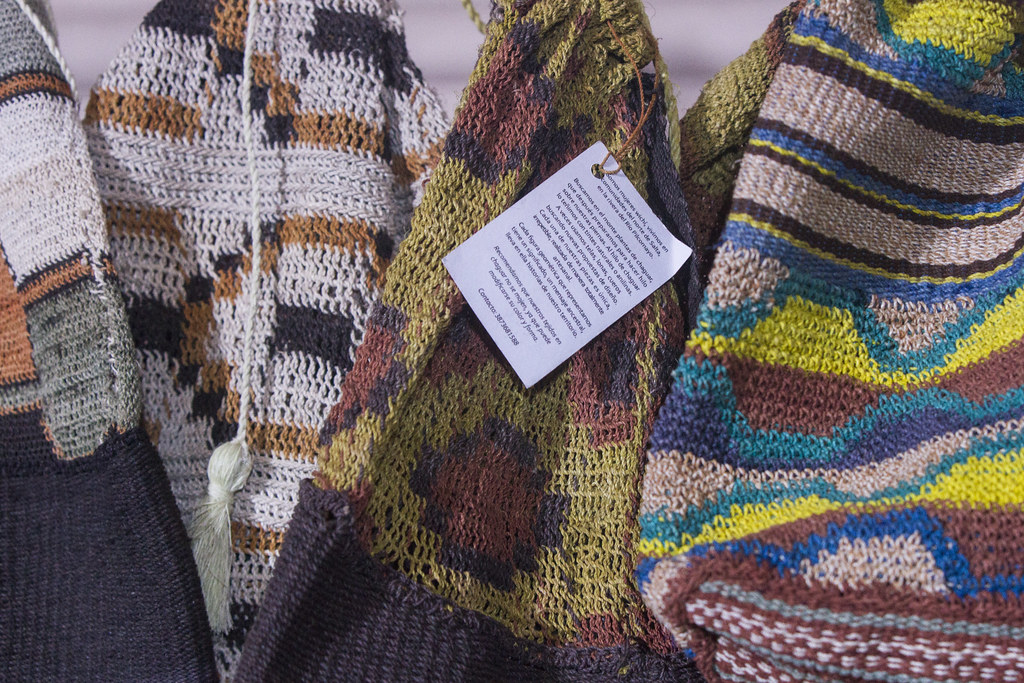
The mesh network technique used and its variations are considered one of the oldest in South America. The interweaving of the thread is done with a bone, wood, cactus thorn or metal needle. By alternating color in the threads, various geometric motifs are created, abstract representations of the community’s worldview, for example,ch’ehnu-t’oj(quirquincho shell) oralhe-t’oj(skin from the iguana’s belly).
An emblematic Wichí object is a type of bag omnipresent in daily life and in mythical stories. Although it is generically known asyica, in the Wichí language it has different names depending on its typology:hile(quadrangular backpack) andsichet(hemispherical bag) and its respective varieties.
In some communities these traditional objects have become a way of life and are sold in urban areas. Many women from the Chaco mountain have gone from a domestic activity to different types of associative forms to disseminate their production, part of which has been incorporated into design and art circuits.
english
Chaguar productsAlso known ascaraguatáin areas of Guarani influence,chaguarrefers to a group of native bromeliads that constitute an important part of the vegetation cover of the Gran Chaco semi-arid region. These plants contribute to soil conservation in this fragile ecosystem, which undergoes a desertification process.
Since pre-Hispanic times Chaguar has been part of the native communities’ culture in this area:Ayoreos, Chorotes, Chulupis, and notablyWichi.
Chaguar has uses in food, medicine, rituals, and textiles. Textile production is traditionally undertaken by women and encompasses a lengthy and labor-intensive process. It begins with the collection of leaves, followed by the removal of the fleshy stem. The process then advances through shredding, spinning, and culminates in weaving the materials into textiles, which are normally colored with natural dyes from bush plants. Chaguar is a hard, highly resistant fiber. It is used to make many practical items, including fishing nets, bags for carrying wild fruits, ropes, hammocks, blankets, mats, and garments.
The mesh netting technique and its variations are considered among the oldest in South America. The thread is woven with a needle made of bone, wood, cactus thorn, or metal. By alternating the colors of the threads, different geometric motifs are woven into abstract symbols of the community cosmovision in the shape of, for example,ch’ehnu-t’oj(Andean hairy armadillo shell) oralhe-t’oj(iguana belly skin).
An emblematic Wichi object is a type of bag that is omnipresent in everyday life and mythical stories. Although it is generically known asyica, in the Wichi language it has different names according to its type, such ashile(quadrangular bag) andsichet(hemispherical bag) and includes the respective varieties.
In certain communities, these traditional objects have evolved into sources of livelihood and are now marketed in urban areas. Many women in the Chaco bush have transitioned from domestic activities to various forms of associational work, aiming to promote their production. Some of these products have been integrated into design and art circuits.
Valoraciones
No hay valoraciones aún.