
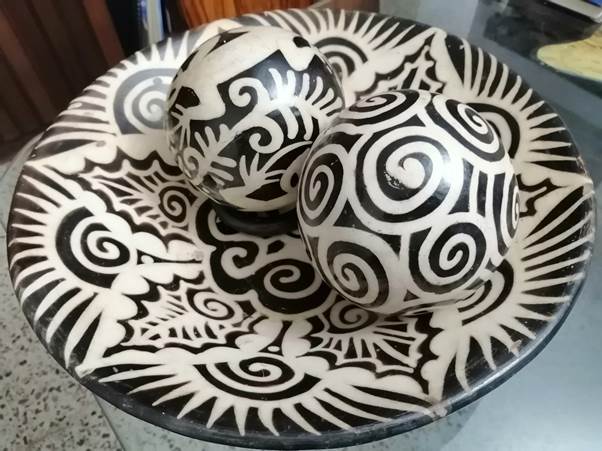
Ceramics in Honduras

La cerámica es de gran tradición. Tiene sus antecedentes en las culturas prehispánicas mesoamericanas, entre ellas, mayans, Aztecs, Incasand others. They are generally made for decorative and ritual purposes, in turn, they are also utilitarian, such as fruit bowls, vases, incense burners, and some, to preserve essences. Its fundamental element is clay, processed and worked […]

Descripción

La cerámica es de gran tradición. Tiene sus antecedentes en las culturas prehispánicas mesoamericanas, entre ellas, mayans, Aztecs, Incasand others. They are generally made for decorative and ritual purposes, in turn, they are also utilitarian, such as fruit bowls, vases, incense burners, and some, to preserve essences. Its fundamental element is clay, processed and worked with great dedication and applying very specific techniques: they knead it with their feet and even test its texture with their tongue to verify the most appropriate consistency and verify that it will withstand the heat of the oven lit with good wood, or in today’s industrial stoves.

Its process is complex, laborious and requires a lot of dedication, therefore, in the techniques of clay treatment, drying and modeling is the secret so that the work is aesthetically beautiful, pleasing and lasting for those who obtain it and more beauty is achieved if there are combinations of clay, white, black, gray and red, in addition to some natural paints.

All clay, whether for pottery or ceramics, is dried in the sun, prepared in small lumps that are subsequently ground and converted into a fine powder. Sand is also processed, ground and transformed into particles. They are joined together and wet, the dough is expected to remain stable until it acquires the necessary plasticity. The already prepared clay is given a cylindrical shape, then it rests for several days, it is observed and then the ceramist announces that everything is ready to begin her creations.

There are small, regular works that are made in one go: pens, spheres, plates of all sizes. Vases and larger works are made in phases: the base of the “vase”   to the waist. It is left to rest while it hardens, then they continue to shape the upper body and finally, they outline the neck and give it style. It returns for another rest, dries and there begins the smoothing of the skin of the work, rubbing it with specific flints that they call, “lightning stones.” The designs of their tradition are immediately drawn: lizards, very common, fish, but also geometric shapesad libitum, figures of nature, suns, clarities, infinities, inflorescences and in this case, Lenca ceramics, are made in black and white and are only made by women. Lastly, comes the baking.

english

CeramicsPottery has a long tradition and has its origins in pre-Hispanic Mesoamerican cultures, including the Mayans, Aztecs, Inkas and others. They are generally made for decorative and ritual purposes, and are also utilitarian, such as fruit bowls, flower vases, and incense burners. Some are used to preserve essences. Their fundamental element is clay, processed and worked with great dedication and applying specific techniques: they knead it with their feet and even test its texture with their tongues to verify the most suitable consistency and to check that it will withstand the heat of a kiln fired with good wood, or in modern industrial cookers.

The process is complex, laborious and requires a great deal of dedication. The secret to an aesthetically beautiful work of art lies in the techniques of clay treatment, drying and modeling, and in the combination of clay, white, black, gray and red, as well as some natural paints.

All clay, dried in the sun, is prepared in small lumps which are then ground into a fine powder. Sand is also processed, ground and transformed into particles. They are joined together and wetted, and the mass is expected to remain stable until it acquires the necessary plasticity. The prepared clay is given a cylindrical shape, then it remains for several days, is observed and then the potter announces that everything is ready to begin her creations.

There are small and regular works such as pencils, spheres, plates of all sizes. Vases and larger works are made in phases: the base of the «vase» up to the waist. It is left to rest while it hardens, then the upper body is shaped and finally the neck is shaped and styled. Another rest returns, it dries and then the smoothing of the skin of the work begins, rubbing it with specific flints that they call «lightning stones».

Then the designs of their tradition are drawn: lizards, fish and also geometric shapes ad libitum, figures of nature, suns, clarities, infinities and in this case, the Lenca pottery is made in black and white and is only made by women, finally, comes the firing.

Valoraciones

No hay valoraciones aún.

Sé el primero en valorar “Ceramics in Honduras”

Tu dirección de correo electrónico no será publicada. Los campos obligatorios están marcados con *

Descripción

La cerámica es de gran tradición. Tiene sus antecedentes en las culturas prehispánicas mesoamericanas, entre ellas, mayans, Aztecs, Incasand others. They are generally made for decorative and ritual purposes, in turn, they are also utilitarian, such as fruit bowls, vases, incense burners, and some, to preserve essences. Its fundamental element is clay, processed and worked with great dedication and applying very specific techniques: they knead it with their feet and even test its texture with their tongue to verify the most appropriate consistency and verify that it will withstand the heat of the oven lit with good wood, or in today’s industrial stoves.

Its process is complex, laborious and requires a lot of dedication, therefore, in the techniques of clay treatment, drying and modeling is the secret so that the work is aesthetically beautiful, pleasing and lasting for those who obtain it and more beauty is achieved if there are combinations of clay, white, black, gray and red, in addition to some natural paints.

All clay, whether for pottery or ceramics, is dried in the sun, prepared in small lumps that are subsequently ground and converted into a fine powder. Sand is also processed, ground and transformed into particles. They are joined together and wet, the dough is expected to remain stable until it acquires the necessary plasticity. The already prepared clay is given a cylindrical shape, then it rests for several days, it is observed and then the ceramist announces that everything is ready to begin her creations.

There are small, regular works that are made in one go: pens, spheres, plates of all sizes. Vases and larger works are made in phases: the base of the “vase”   to the waist. It is left to rest while it hardens, then they continue to shape the upper body and finally, they outline the neck and give it style. It returns for another rest, dries and there begins the smoothing of the skin of the work, rubbing it with specific flints that they call, “lightning stones.” The designs of their tradition are immediately drawn: lizards, very common, fish, but also geometric shapesad libitum, figures of nature, suns, clarities, infinities, inflorescences and in this case, Lenca ceramics, are made in black and white and are only made by women. Lastly, comes the baking.

english

CeramicsPottery has a long tradition and has its origins in pre-Hispanic Mesoamerican cultures, including the Mayans, Aztecs, Inkas and others. They are generally made for decorative and ritual purposes, and are also utilitarian, such as fruit bowls, flower vases, and incense burners. Some are used to preserve essences. Their fundamental element is clay, processed and worked with great dedication and applying specific techniques: they knead it with their feet and even test its texture with their tongues to verify the most suitable consistency and to check that it will withstand the heat of a kiln fired with good wood, or in modern industrial cookers.

The process is complex, laborious and requires a great deal of dedication. The secret to an aesthetically beautiful work of art lies in the techniques of clay treatment, drying and modeling, and in the combination of clay, white, black, gray and red, as well as some natural paints.

All clay, dried in the sun, is prepared in small lumps which are then ground into a fine powder. Sand is also processed, ground and transformed into particles. They are joined together and wetted, and the mass is expected to remain stable until it acquires the necessary plasticity. The prepared clay is given a cylindrical shape, then it remains for several days, is observed and then the potter announces that everything is ready to begin her creations.

There are small and regular works such as pencils, spheres, plates of all sizes. Vases and larger works are made in phases: the base of the «vase» up to the waist. It is left to rest while it hardens, then the upper body is shaped and finally the neck is shaped and styled. Another rest returns, it dries and then the smoothing of the skin of the work begins, rubbing it with specific flints that they call «lightning stones».

Then the designs of their tradition are drawn: lizards, fish and also geometric shapes ad libitum, figures of nature, suns, clarities, infinities and in this case, the Lenca pottery is made in black and white and is only made by women, finally, comes the firing.

Valoraciones

No hay valoraciones aún.

Sé el primero en valorar “Ceramics in Honduras”

Tu dirección de correo electrónico no será publicada. Los campos obligatorios están marcados con *

Descripción

Ceramics are of great tradition. It has its antecedents in pre-Hispanic Mesoamerican cultures, including the Mayans, Aztecs, Incas and others. They are generally made for decorative and ritual purposes, in turn, they are also utilitarian, such as fruit bowls, vases, incense burners, and some, to preserve essences. Its fundamental element is clay, processed and worked with great dedication and applying very specific techniques: they knead it with their feet and even test its texture with their tongue to verify the most appropriate consistency and verify that it will withstand the heat of the oven lit with good wood, or in today's industrial stoves.

Its process is complex, laborious and requires a lot of dedication, therefore, in the techniques of clay treatment, drying and modeling is the secret so that the work is aesthetically beautiful, pleasing and lasting for those who obtain it and more beauty is achieved if there are combinations of clay, white, black, gray and red, in addition to some natural paints.

All clay, whether for pottery or ceramics, is dried in the sun, prepared in small lumps that are subsequently ground and converted into a fine powder. Sand is also processed, ground and transformed into particles. They are joined together and wet, the dough is expected to remain stable until it acquires the necessary plasticity. The already prepared clay is given a cylindrical shape, then it rests for several days, it is observed and then the ceramist announces that everything is ready to begin her creations.

There are small, regular works that are made in one go: pens, spheres, plates of all sizes. Vases and larger works are made in phases: the base of the “vase”   to the waist. It is left to rest while it hardens, then they continue to shape the upper body and finally, they outline the neck and give it style. It returns for another rest, dries and there begins the smoothing of the skin of the work, rubbing it with specific flints that they call, “lightning stones.” Immediately the designs of their tradition are drawn: lizards, very frequent, fish, but also ad libitum geometric shapes, figures of nature, suns, clarities, infinities, inflorescences and in this case, Lenca ceramics, are made in black and white and are only made by women. Lastly, comes the baking.

englishCeramics

Pottery has a long tradition and has its origins in pre-Hispanic Mesoamerican cultures, including the Mayans, Aztecs, Inkas and others. They are generally made for decorative and ritual purposes, and are also utilitarian, such as fruit bowls, flower vases, and incense burners. Some are used to preserve essences. Their fundamental element is clay, processed and worked with great dedication and applying specific techniques: they knead it with their feet and even test its texture with their tongues to verify the most suitable consistency and to check that it will withstand the heat of a kiln fired with good wood, or in modern industrial cookers.

The process is complex, laborious and requires a great deal of dedication. The secret to an aesthetically beautiful work of art lies in the techniques of clay treatment, drying and modeling, and in the combination of clay, white, black, gray and red, as well as some natural paints.

All clay, dried in the sun, is prepared in small lumps which are then ground into a fine powder. Sand is also processed, ground and transformed into particles. They are joined together and wetted, and the mass is expected to remain stable until it acquires the necessary plasticity. The prepared clay is given a cylindrical shape, then it remains for several days, is observed and then the potter announces that everything is ready to begin her creations.

There are small and regular works such as pencils, spheres, plates of all sizes. Vases and larger works are made in phases: the base of the "vase" up to the waist. It is left to rest while it hardens, then the upper body is shaped and finally the neck is shaped and styled. Another rest returns, it dries and then the smoothing of the skin of the work begins, rubbing it with specific flints that they call "lightning stones".

Then the designs of their tradition are drawn: lizards, fish and also geometric shapes ad libitum, figures of nature, suns, clarities, infinities and in this case, the Lenca pottery is made in black and white and is only made by women, finally, comes the firing.

Valoraciones

No hay valoraciones aún.

Sé el primero en valorar “Ceramics in Honduras”

Tu dirección de correo electrónico no será publicada. Los campos obligatorios están marcados con *

Descripción

La cerámica es de gran tradición. Tiene sus antecedentes en las culturas prehispánicas mesoamericanas, entre ellas, mayas, aztecas, inkas y otras. Por lo general se fabrican con fines decorativos, rituales, a su vez, también son utilitarios, como fruteros, floreros, incensarios, y algunos, para conservar esencias. Su elemento fundamental es la arcilla, procesada y trabajada con gran dedicación y aplicando técnicas muy específicas: la amasan con los pies y hasta prueban con la lengua su textura para verificar la consistencia más adecuada y comprobar que soportará el calor del horno encendido con buena leña, o en fogones industriales de la actualidad.

Su proceso es complejo, laborioso y mucha dedicación, pues, en las técnicas del tratamiento de la arcilla, secado y modelado está el secreto para que la obra sea estéticamente bella, guste y tenga duración para quienes la obtengan y se logra más belleza si hay combinaciones de barros, blanco, negro, gris y rojo, además de algunas pinturas naturales.

Toda arcilla, sea para alfarería o cerámica es secada al sol, se prepara en pequeños terrones que posteriormente son molidos y convertidos en fino polvo. También se procesa la arena, molida y transformada en partículas. Se unen y se mojan, se espera que la masa permanezca estable hasta adquirir la plasticidad necesaria. Al barro ya preparado se le da forma cilíndrica, luego reposa por varios días, se observa y luego, la ceramista anuncia que todo está listo para comenzar sus creaciones.

Hay obras pequeñas y regulares que se hacen de una sola vez: lapiceros, esferas, platos de todos los tamaños. Jarrones y obras mayores, se elaboran por fases: la base del “jarrón”   hasta la cintura. Se deja en reposo mientras endurece, luego siguen dando forma al cuerpo superior y por último, perfilan el cuello y le dan estilo. Vuelve otro reposo, seca y allí comienza el alisamiento de la piel de la obra, frotándola con pedernales específicos que llaman, “piedras de rayo”. Enseguida se dibujan los diseños de su tradición: lagartijas, muy frecuentes, peces, pero también, formas geométricas ad libitum, figuras de la naturaleza, soles, claridades, infinitos, inflorescencias y en este caso, la cerámica Lenca, es elaborada en blanco y negro y sólo es confeccionada por mujeres. Por último, viene el horneado.

english

Ceramics

Pottery has a long tradition and has its origins in pre-Hispanic Mesoamerican cultures, including the Mayas, Aztecs, Inkas and others. They are generally made for decorative and ritual purposes, and are also utilitarian, such as fruit bowls, flower vases, and incense burners. Some are used to preserve essences. Their fundamental element is clay, processed and worked with great dedication and applying specific techniques: they knead it with their feet and even test its texture with their tongues to verify the most suitable consistency and to check that it will withstand the heat of a kiln fired with good wood, or in modern industrial cookers.

The process is complex, laborious and requires a great deal of dedication. The secret to an aesthetically beautiful work of art lies in the techniques of clay treatment, drying and modelling, and in the combination of clay, white, black, grey and red, as well as some natural paints.

All clay, dried in the sun, is prepared in small lumps which are then ground into a fine powder. Sand is also processed, ground and transformed into particles. They are joined together and wetted, and the mass is expected to remain stable until it acquires the necessary plasticity. The prepared clay is given a cylindrical shape, then it rests for several days, is observed and then the potter announces that everything is ready to begin her creations.

There are small and regular works such as pencils, spheres, plates of all sizes. Vases and larger works are made in phases: the base of the «vase» up to the waist. It is left to rest while it hardens, then the upper body is shaped and finally the neck is shaped and styled. Another rest returns, it dries and then the smoothing of the skin of the work begins, rubbing it with specific flints that they call «lightning stones».

Then the designs of their tradition are drawn: lizards, fish and also geometric shapes ad libitum, figures of nature, suns, clarities, infinities and in this case, the Lenca pottery is made in black and white and is only made by women, finally, comes the firing.

Valoraciones

No hay valoraciones aún.

Sé el primero en valorar “Cerámica en honduras”

Tu dirección de correo electrónico no será publicada. Los campos obligatorios están marcados con *