
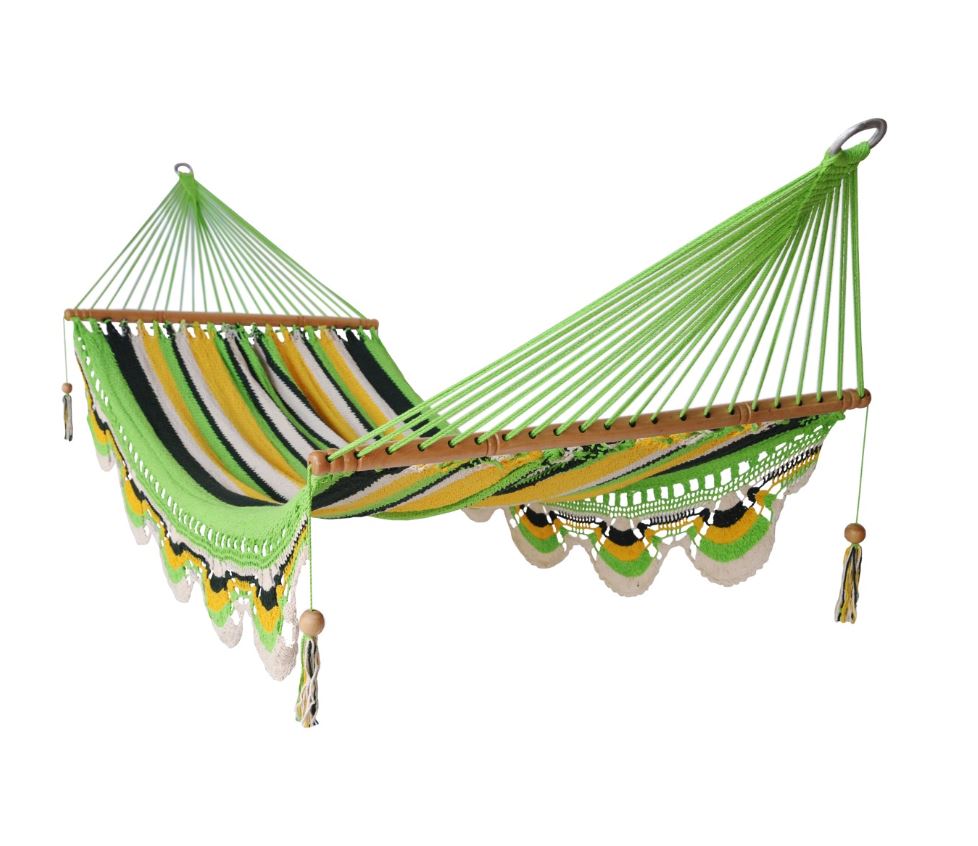
Nicaraguan hammock

La hamaca es un producto emblemático de la cultura nicaragüense. Es tejida a mano por artesanos expertos, conglomerados en pequeñas empresas familiares de la ciudad de Masaya. En la actualidad es elaborada principalmente con algodón; es suave y duradera, y se presenta en una amplia variedad de diseños, colores y tamaños. Originalmente la hamaca nicaragüense, […]

Descripción

La hamaca es un producto emblemático de la cultura nicaragüense. Es tejida a mano por artesanos expertos, conglomerados en pequeñas empresas familiares de la ciudad de Masaya. En la actualidad es elaborada principalmente con algodón; es suave y duradera, y se presenta en una amplia variedad de diseños, colores y tamaños.

Originalmente la hamaca nicaragüense, era elaborada con henequén o cabuya. En la cordelería del señor Esteban Flores de la ciudad de Masaya, se elaboraban todo tipo de productos de mecate y también hamacas. En los años 60´s un grupo de trabajadores, encabezados por los señores Félix Suazo, Vicente Suazo, Alfonso Suárez y Ramiro Suazo, se independizaron de la fábrica e introdujeron, a modo de innovación, la elaboración de hamacas a partir de cuerdas elaboradas de hilos de algodón. Los hilos eran comprados en conos en las fábricas y le encargaban a los mismos cordeleros que producían cuerdas torciendo fibras de henequén, producir las cuerdas que llamarían “manila” torciendo hilos de algodón.  Para obtener los colores deseados se teñía la manila con colorantes Putnam (los del caballito). Desde esos años ´60, se introduce entonces la hamaca de algodón.

En los años 70´s se empieza a sofisticar el diseño tradicional de la hamaca.  Se le agrega los “bolillos” que son dos barras torneadas de madera, uno a cada lado del cuerpo de la hamaca, con el fin de mantenerla abierta. También se introducen los “guardacabos”, los cuales son elaborados con aluminio en la ciudad de Granada, esto último con el fin de proteger los extremos del desgaste. Hoy en día, además de la tradicional “hamaca montañera” y de la “hamaca con bolillos”, se elaboran “hamacas sillas” también llamadas “chinos” o “columpios”, “hamacas para bebé” de macramé o “hamacas miniatura” como juguetes.

Las hamacas nicaragüenses son piezas infaltables en los hogares nicaragüenses, y productos de exportación codiciados por los conocedores y amantes de la comodidad, de la belleza y del lujo.

englishNicaraguan hammock

The hammock is an emblematic product of Nicaraguan culture. It is hand-woven by skilled artisans who are clustered in small family businesses in the city of Masaya. Nowadays it is mainly made of cotton. It is soft and durable, and comes in a wide variety of designs, colors and sizes.

Originally, the hammock was made with «henequen» or «cabuya». In the «cordelería» of Mr. Esteban Flores in the city of Masaya, all kinds of rope products and hammocks were made. In the 1960s, a group of workers, headed by Félix Suazo, Vicente Suazo, Alfonso Suárez and Ramiro Suazo, became independent of the factory and introduced, as an innovation, the production of hammocks from strings made from cotton yarn. The threads were bought in cones from the factories and they commissioned the same «cordeleros» who produced ropes by twisting «henequen» fibers, to produce the ropes that they would call «manila» by twisting cotton threads.

To obtain the desired colors, the «manila» was dyed with «Putnam» dyes. From the ’60s onwards, the cotton hammock was introduced. In the ’70s the traditional hammock design became more sophisticated.  In the ’70s the traditional hammock design became more sophisticated.  The «thimble guards» are also introduced, which are made of aluminum in the city of Granada, in order to protect the ends of the hammock from wear and tear. Nowadays, besides the traditional «mountain hammock» and the «hamaca with bobbins», «hamaca chairs» also called «chinos» or «columpios», «baby hammocks» made of macramé or «miniature hammocks» are made as toys.

Nicaraguan hammocks are a must in every home and are a coveted export product for connoisseurs and lovers of comfort, beauty and luxury.

Valoraciones

No hay valoraciones aún.

Sé el primero en valorar “Nicaraguan hammock”

Tu dirección de correo electrónico no será publicada. Los campos obligatorios están marcados con *

Descripción

The hammock is an emblematic product of Nicaraguan culture. It is hand-woven by expert artisans, conglomerates in small family businesses in the city of Masaya. Currently it is made mainly with cotton; It is soft and durable, and comes in a wide variety of designs, colors and sizes.

Originally the Nicaraguan hammock was made with henequen or cabuya. In Mr. Esteban Flores' rope shop in the city of Masaya, all types of rope products and also hammocks were made. In the 60's a group of workers, led by Messrs. Félix Suazo, Vicente Suazo, Alfonso Suárez and Ramiro Suazo, became independent of the factory and introduced, as an innovation, the production of hammocks from ropes made of cotton threads. The threads were bought in cones in the factories and the same ropemakers who produced ropes by twisting henequen fibers were commissioned to produce the ropes that they would call “manila” by twisting cotton threads.  To obtain the desired colors, the manila was dyed with Putnam dyes (horse dyes). Since those 60s, the cotton hammock was introduced.

In the 70's the traditional hammock design began to become more sophisticated.  The “bolillos” are added, which are two turned wooden bars, one on each side of the body of the hammock, in order to keep it open. The “thimbles” are also introduced, which are made of aluminum in the city of Granada, the latter in order to protect the ends from wear. Nowadays, in addition to the traditional “mountain hammock” and the “hammock with bobbins”, “chair hammocks” also called “Chinese” or “swings”, macramé “baby hammocks” or “miniature hammocks” are made as toys.

Nicaraguan hammocks are essential pieces in Nicaraguan homes, and export products coveted by connoisseurs and lovers of comfort, beauty and luxury.

english

Nicaraguan hammockThe hammock is an emblematic product of Nicaraguan culture. It is hand-woven by skilled artisans who are clustered in small family businesses in the city of Masaya. Nowadays it is mainly made of cotton. It is soft and durable, and comes in a wide variety of designs, colors and sizes.

Originally, the hammock was made with "henequen" or "cabuya". In the "cordelería" of Mr. Esteban Flores in the city of Masaya, all kinds of rope products and hammocks were made. In the 1960s, a group of workers, headed by Félix Suazo, Vicente Suazo, Alfonso Suárez and Ramiro Suazo, became independent of the factory and introduced, as an innovation, the production of hammocks from strings made from cotton yarn. The threads were bought in cones from the factories and they commissioned the same "cordeleros" who produced ropes by twisting "henequen" fibers, to produce the ropes that they would call "manila" by twisting cotton threads.

To obtain the desired colors, the "manila" was dyed with "Putnam" dyes. From the '60s onwards, the cotton hammock was introduced. In the '70s the traditional hammock design became more sophisticated.  In the '70s the traditional hammock design became more sophisticated.  The "thimble guards" are also introduced, which are made of aluminum in the city of Granada, in order to protect the ends of the hammock from wear and tear. Nowadays, besides the traditional "mountain hammock" and the "hamaca with bobbins", "hamaca chairs" also called "chinos" or "columpios", "baby hammocks" made of macramé or "miniature hammocks" are made as toys.

Nicaraguan hammocks are a must in every home and are a coveted export product for connoisseurs and lovers of comfort, beauty and luxury.

Valoraciones

No hay valoraciones aún.

Sé el primero en valorar “Nicaraguan hammock”

Tu dirección de correo electrónico no será publicada. Los campos obligatorios están marcados con *

Descripción

La hamaca es un producto emblemático de la cultura nicaragüense. Es tejida a mano por artesanos expertos, conglomerados en pequeñas empresas familiares de la ciudad de Masaya. En la actualidad es elaborada principalmente con algodón; es suave y duradera, y se presenta en una amplia variedad de diseños, colores y tamaños.

Originalmente la hamaca nicaragüense, era elaborada con henequén o cabuya. En la cordelería del señor Esteban Flores de la ciudad de Masaya, se elaboraban todo tipo de productos de mecate y también hamacas. En los años 60´s un grupo de trabajadores, encabezados por los señores Félix Suazo, Vicente Suazo, Alfonso Suárez y Ramiro Suazo, se independizaron de la fábrica e introdujeron, a modo de innovación, la elaboración de hamacas a partir de cuerdas elaboradas de hilos de algodón. Los hilos eran comprados en conos en las fábricas y le encargaban a los mismos cordeleros que producían cuerdas torciendo fibras de henequén, producir las cuerdas que llamarían “manila” torciendo hilos de algodón.  Para obtener los colores deseados se teñía la manila con colorantes Putnam (los del caballito). Desde esos años ´60, se introduce entonces la hamaca de algodón.

En los años 70´s se empieza a sofisticar el diseño tradicional de la hamaca.  Se le agrega los “bolillos” que son dos barras torneadas de madera, uno a cada lado del cuerpo de la hamaca, con el fin de mantenerla abierta. También se introducen los “guardacabos”, los cuales son elaborados con aluminio en la ciudad de Granada, esto último con el fin de proteger los extremos del desgaste. Hoy en día, además de la tradicional “hamaca montañera” y de la “hamaca con bolillos”, se elaboran “hamacas sillas” también llamadas “chinos” o “columpios”, “hamacas para bebé” de macramé o “hamacas miniatura” como juguetes.

Las hamacas nicaragüenses son piezas infaltables en los hogares nicaragüenses, y productos de exportación codiciados por los conocedores y amantes de la comodidad, de la belleza y del lujo.

english

Nicaraguan hammock

The hammock is an emblematic product of Nicaraguan culture. It is hand-woven by skilled artisans who are clustered in small family businesses in the city of Masaya. Nowadays it is mainly made of cotton. It is soft and durable, and comes in a wide variety of designs, colours and sizes.

Originally, the hammock was made with «henequen» or «cabuya». In the «cordelería» of Mr. Esteban Flores in the city of Masaya, all kinds of rope products and hammocks were made. In the 1960s, a group of workers, headed by Félix Suazo, Vicente Suazo, Alfonso Suárez and Ramiro Suazo, became independent of the factory and introduced, as an innovation, the production of hammocks from strings made from cotton yarn. The threads were bought in cones from the factories and they commissioned the same «cordeleros» who produced ropes by twisting «henequen» fibres, to produce the ropes that they would call «manila» by twisting cotton threads.

To obtain the desired colours, the «manila» was dyed with «Putnam» dyes. From the ’60s onwards, the cotton hammock was introduced. In the ’70s the traditional hammock design became more sophisticated.  In the ’70s the traditional hammock design became more sophisticated.  The «guardacabos» are also introduced, which are made of aluminium in the city of Granada, in order to protect the ends of the hammock from wear and tear. Nowadays, besides the traditional «hamaca montañera» and the «hamaca con bolillos», «hamaca sillas» also called «chinos» or «columpios», «hamacas para bebé» made of macramé or «hamacas miniatura» are made as toys.

Nicaraguan hammocks are a must in every home and are a coveted export product for connoisseurs and lovers of comfort, beauty and luxury.

Valoraciones

No hay valoraciones aún.

Sé el primero en valorar “Hamaca nicaragüense”

Tu dirección de correo electrónico no será publicada. Los campos obligatorios están marcados con *