
Descripción
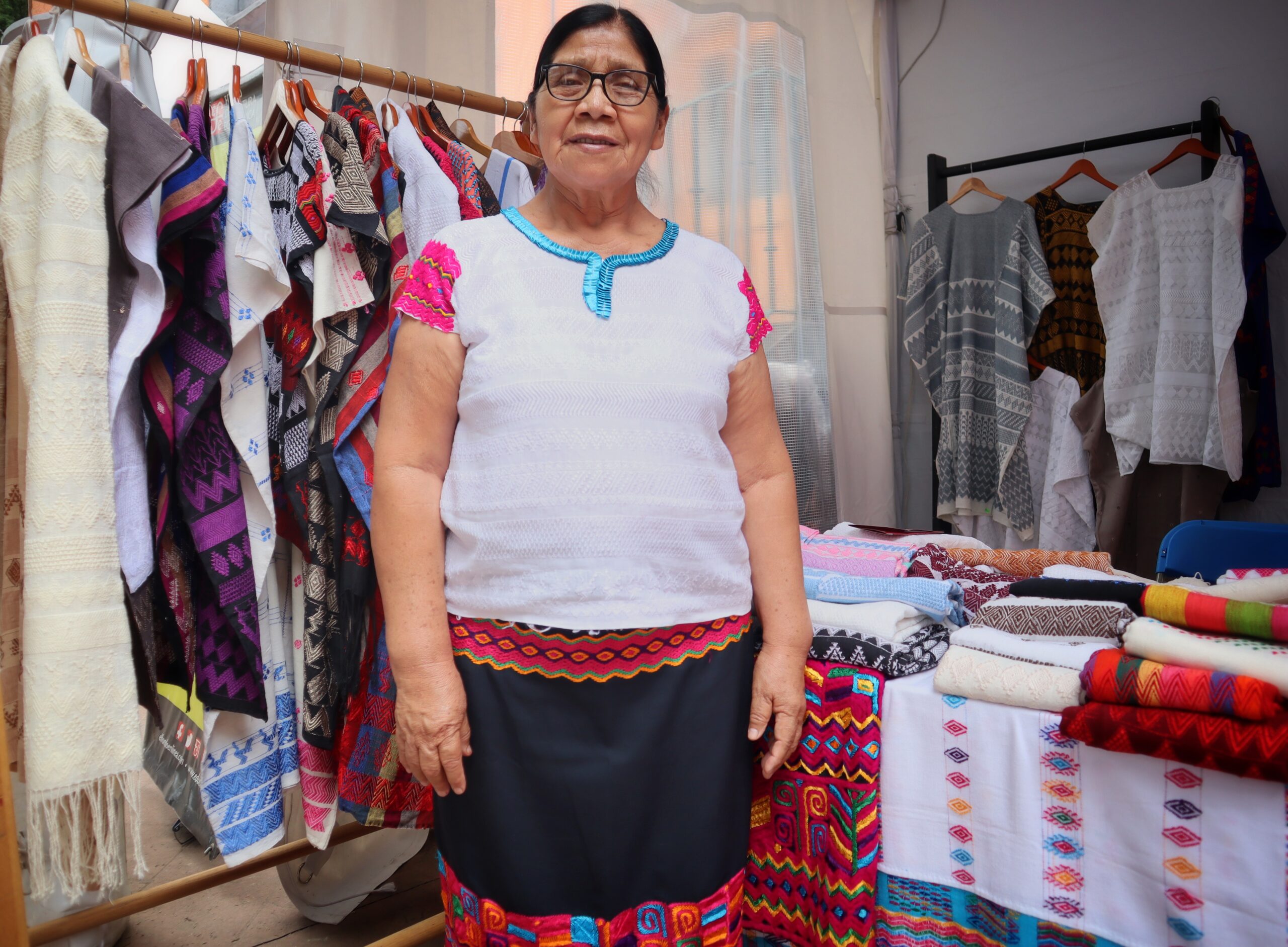
En México hay muchas mujeres, generalmente miembros de comunidades indígenas que tejen huipiles como parte de su indumentaria y otros para la venta. Esto sucede, por ejemplo, en Puebla, Yucatán, Campeche, Chiapas, Oaxaca o Guerrero.
El huipil es una prenda de origen prehispánico, como atestiguan esculturas, códices y pinturas murales precolombinas. Aunque algunos grupos incorporaron la lana y el telar de pedal, y luego el algodón importado o los hilos comerciales, el sentido original del huipil no se ha alterado.
Hoy, son son muchas las mujeres que continúan usando el coyuchi, a native cotton, so called because its color refers to the fur of a coyote. They know how to grow it, harvest it and clean it, then beat it down so that the fibers, which are very short, are integrated into longer strips. Generally old women spin because, as they say, “to do it they don’t need eyes, but fingers and heart.” They boil the thread with nixtamal to prevent it from breaking and they dye it using bark, roots, plants, iron, indigo or cochineal and weave it on backstrap looms and with traditional iconography, with which they represent their environment and their worldview. Each huipil shows the sensitivity and vision of each artisan.
Good examples are the huipils made by an Amuzga woman named Victorina López Hilario, from Xochisltahuaca, on the Costa Chica of Guerrero, as well as those made by a Tzotzil woman, Carmen Vázquez Hernández, from Venustiano Carranza, Chiapas. Both have received national awards and recognition. Also notable are the huipils woven by Francisca Palafox, a Huave indigenous person from San Mateo del Mar, Oaxaca.
To see quality huipils you can go to the Museum of Popular Art or the Banamex Cultural Foundation Store, located in the Iturbide Palace, both in Mexico City; or in Sna Jolobil, in the Textile Center of the Mayan World, in San Cristóbal de las Casas, Chiapas or the Textile Museum of Oaxaca.
english
HuipilesIn Mexico there are many women, generally members of indigenous communities, who weave huipils as part of their clothing and others for sale. This happens, for example, in Puebla, Yucatán, Campeche, Chiapas, Oaxaca or Guerrero. The «huipil» is a garment of pre-Hispanic origin, as attested by pre-Columbian sculptures, codices and mural paintings. Although some groups incorporated wool and the treadle loom, and later imported cotton or commercial threads, the original meaning of the «huipil» has not been altered.
Today, only a few women continue to wear the «coyuchi,» a native cotton, so called because its color is reminiscent of a coyote’s fur. They know how to cultivate, harvest and clean it, then beat it so that the fibers, which are very short, are integrated into longer strips. Generally, the old women spin the yarn because, as they say, «to do so they don’t need eyes, but fingers and a heart.» They boil the thread with «nixtamal» to prevent it from breaking and dye it using bark, roots, plants, iron, indigo or «grana cochineal» and weave it on backstrap looms and with traditional iconography, with which they represent their environment and their worldview. Each «huipil» shows the sensitivity and vision of each artisan.
Good examples are the huipils made by an Amuzga woman named Victorina López Hilario, from Xochistlahuaca, in the Costa Chica of Guerrero, as well as those made by a Tzotzil woman, Carmen Vázquez Hernández, from Venustiano Carranza, Chiapas. Both have received national awards and recognition. Also noteworthy are the huipils woven by Francisca Palafox, a Huave indigenous woman from San Mateo del Mar, State of Oaxaca.
To see quality huipils you can go to the Museo de Arte Popular or the Tienda de la Fundación Cultural Banamex, located in the Palacio de Iturbide, both in Mexico City; or to Sna Jolobil, in the Centro de Textiles del Mundo Maya, in San Cristóbal de las Casas, Chiapas and the Textile Museum of Oaxaca.
Valoraciones
No hay valoraciones aún.