
Descripción
En México, desde el tiempo prehispánico, se aprovechan fibras naturales -como tule, palma, bejuco, ixtle, henequén, mimbre, cáñamo o pita- para elaborar objetos útiles o decorativos. Los artesanos recolectan estas fibras, las limpian, las secan y con ellas tejen petates, sombreros y canastos de todos tamaños, así como chiquihuites, colotes, tecolpetes, tancolotes o tenates para las tortillas.
Los petates, son algunas de las artesanías más representativas; piezas rectangulares, tejidas con palma que a lo largo de la historia han servido para dormir sobre ellos, para sentarse, o hincarse a moler. Hoy, siguen presentes en la mayoría de las casas mexicanas.
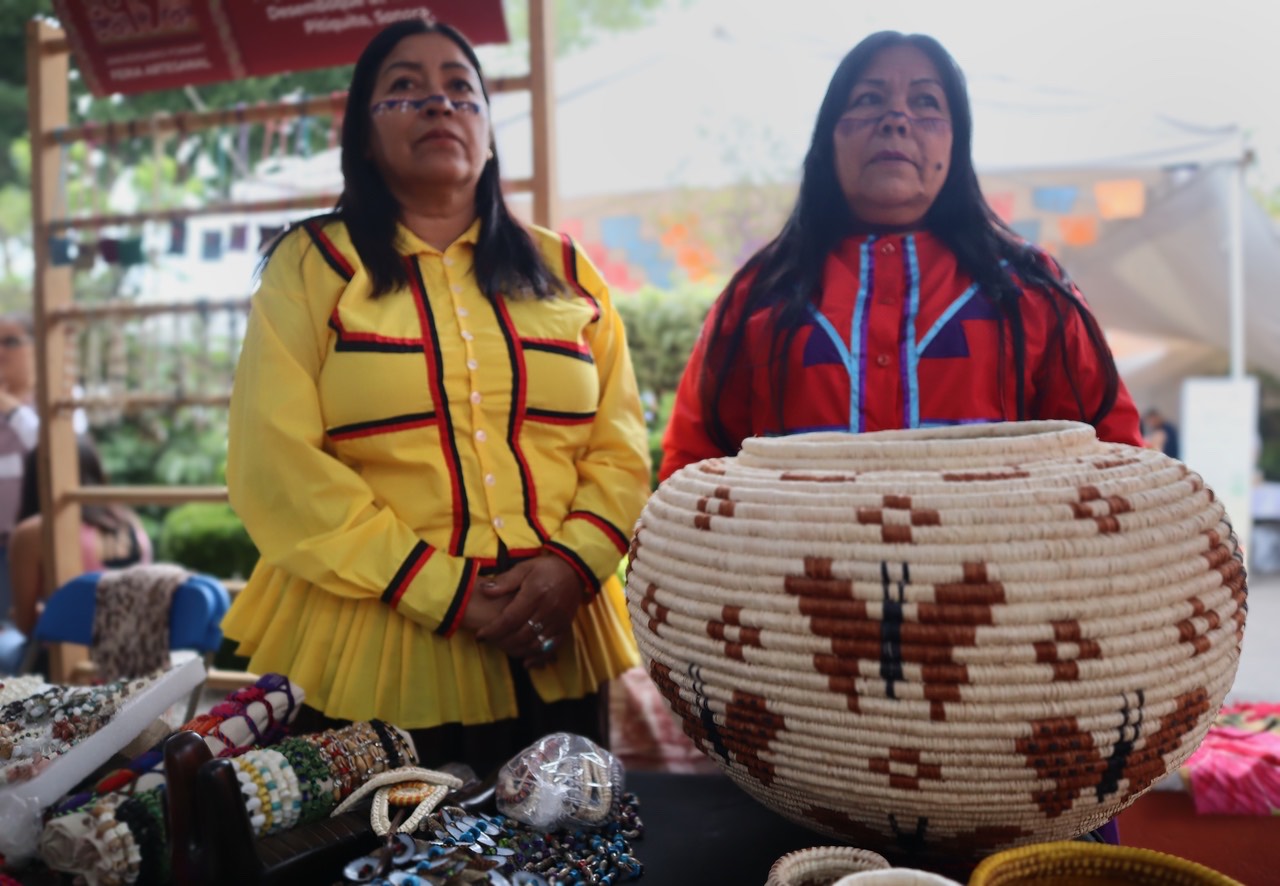
También destacan los canastos elaborados por los seris, un grupo étnico que habita en el norte. Ellos tejen coritasfor everyday use and some baskets calledsaptim, which are ceremonial objects whose production requires up to two years of work. To make it, they collect bullock sticks and dye them using anilines or dyes extracted from plants. With the thicker strips they make “the soul of the basket” and cover it by rolling up the softer strips. The latter are extracted from the inside of the sticks using their teeth, fingers and a punch. The weave is so closed that these baskets can hold water without the liquid spilling. One of these baskets can be admired in the National Museum of Anthropology in Mexico City.
Alma Rosa Montaño, Ana Alicia López and Mirna Francisca Herrera are three artisans from Punta Chueca, Sonora, winners of the Second National Vegetable Fiber Contest convened by the National Fund for Crafts in 2009.
Pita is a fiber that is extracted from a bromeliad. The artisans separate and twist them to form very fine threads, with which they embroider hats, saddles, suits and leather belts, following a drawing previously made with a chisel. Objects embroidered with pita are found in the Charrería Museum, in the Regional Museum and Museum of Popular Cultures, both in Durango.
english
Natural Fiber and BasketsIn Mexico, since pre-Hispanic times, natural fibers such as tule, palm, vine, ixtle, henequen, wicker, hemp or pita have been used to make useful or decorative objects. The producers collect these fibers, clean them, dry them and use them to weave mats, hats and baskets of all sizes, as well as chiquihuites, colotes, tecolpetes, tancolotes or tenates for tortillas.
“Petates” are some of the most representative handicrafts; rectangular pieces, woven with palm that throughout history have been used to sleep on, to sit on, or to kneel to grind. Today, they are still present in most Mexican homes.
Also noteworthy are the baskets made by the Seris, an ethnic group that lives in the north. They weave coritas for everyday use and baskets called saptim, which are ceremonial objects that require up to two years of work to make. To make them, they collect bull sticks and dye them using anilines or dyes extracted from plants.
With the thicker strips, they assemble «the soul of the basket» and cover it by rolling the softer strips. The latter are extracted from the inside of the rods using their teeth, fingers, and an awl.
The fabric is so closed that these baskets can hold water without spilling the liquid. One of these baskets can be admired at the National Museum of Anthropology in Mexico City.
Alma Rosa Montaño, Ana Alicia López and Mirna Francisca Herrera are three artisans from Punta Chueca, Sonora who won the Second National Vegetable Fiber Contest organized by the National Fund for Crafts in 2009.
“Pita” is a fiber that is extracted from a bromeliad. The artisans separate them and twist them to form very fine threads, with which they embroider – hats, saddles, suits and leather belts – following a drawing previously made with a chisel. Objects embroidered with pita can be found in the Charrería Museum, the Regional Museum and the Museum of Popular Cultures, both in Durango state.
Valoraciones
No hay valoraciones aún.