
Descripción
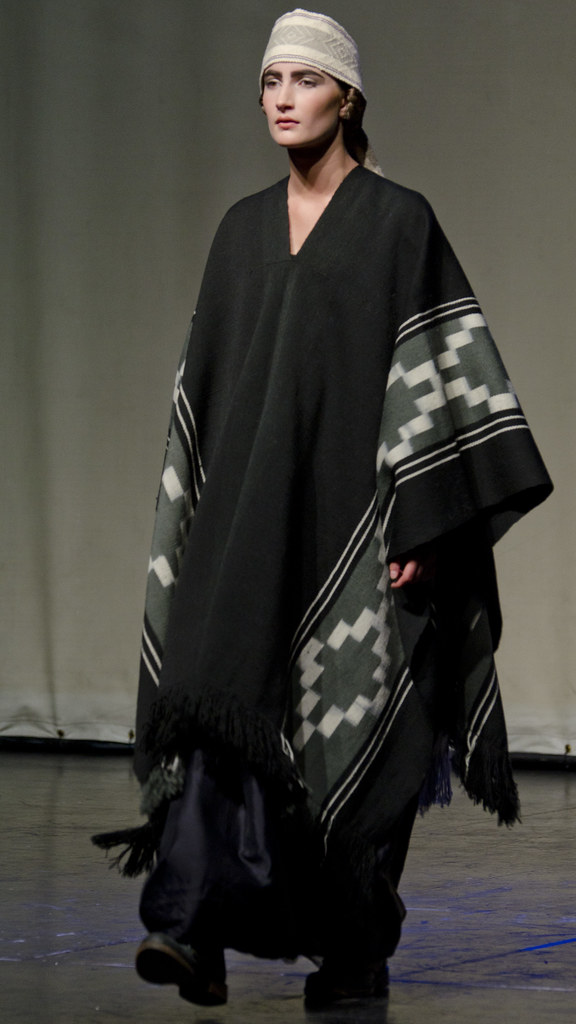
Poncho. Del mapudungun(Mapuche language), “pontro” (type of cloth or wool). Emblematic garment and main artisan product of the country whose origin dates back to pre-Columbian clothing. Adopted by the Creole population, it became a fundamental garment for the gaucho. Currently, it maintains not only its traditional use but has been incorporated into contemporary design collections and is celebrated every year at the National Poncho Festival in the province of Catamarca.
It consists of a rectangular or square cloth or two joined cloths, with an opening in the center to pass the head through. Artisanal production, in which women predominate, is passed down from generation to generation and can take several months. Depending on the region of the country, sheep, llama or vicuña wool is used. The yarn can be handmade, made with a Creole or Andean spindle (puska) or spinning wheel, or semi-artisanal.
As for the looms, the vertical Mapuche (witral), the pampa and the criollo alternate.
In relation to the motifs, they vary from plain ponchos, striped ones and those with geometric designs of different complexity that appear in the form of endpapers. In those of vicuña or fine llama, the different natural tones of the animal are used to generate striped designs. In those made of sheep wool, the designs of the endpapers are formed by three types of technique. “Working” produces warp face designs by combining colors at the crossing of threads. The tied guard involves the reservation by tying following the distribution of the motif and subsequent dyeing of the warp threads (ikat). Finally, the less frequent “ring” motifs are made by tie dyeing (shibori) of the already woven piece.
As for the finishes, there are fringes, trims, trims or embroidery. The joining seams on two-panel ponchos are also used as a decorative element.
Although some communities dye the material with anilines, the use of natural dyes is more popular since the resources of each area are used.
english
PonchosPoncho. FromMapudungun(Mapuche language)pontro(cloth or wool), this item of clothing, whose origin dates back to pre-Columbian clothing, is an emblematic product of national artisanship. Adopted by the Creole population, it became a key garment for the gaucho (Argentinian cowboy). Nowadays, the poncho not only maintains its traditional use, but is also incorporated into contemporary design collections as a fashion piece. The poncho is celebrated every year in the National Poncho Festival in the province of Catamarca.
This garment consists of a single rectangular or square piece of cloth or two pieces joined together, with an opening in the center for the wearer’s head. The handmade production, which can take several months and is predominantly carried out by women, is an art that is passed down from generation to generation. Depending on the region, sheep, llama or vicuña wool is used and spun by hand using a creole or Andean spindle (puska), or alternately, a semi-handmade spinning wheel.
As for the looms, weavers may prefer any of the three: the Mapuche vertical loom (witral), the pampa loom, and the creole loom.
The motifs on the ponchos vary from plain to stripes and geometric patterns of varying complexity that appear along the borders of the garment. In those made of vicuña or llama wool, the different natural tones of the animal are used to create striped designs. In those of lambswool, the designs of the stripes are formed by three types of techniques. The first one,laboreo, involves the production of warp-face designs by combining colors in the crossing of yarns. The second,Tied fringe,involves reservation by tying following the pattern distribution and subsequent dyeing of the warp threads (ikat). Finally, the less frequent ‘ring’ motifs are made by tie-dyeing (shibori) the already woven piece.
The finishing may be fringed, edged, twisted-fringed or embroidered. The joined seams on ponchos made of two cloths are also used as a decorative element.
Although some communities dye the material with chemical dyes, natural dyes are more popular as artisans use the resources found locally in each area.
Valoraciones
No hay valoraciones aún.