
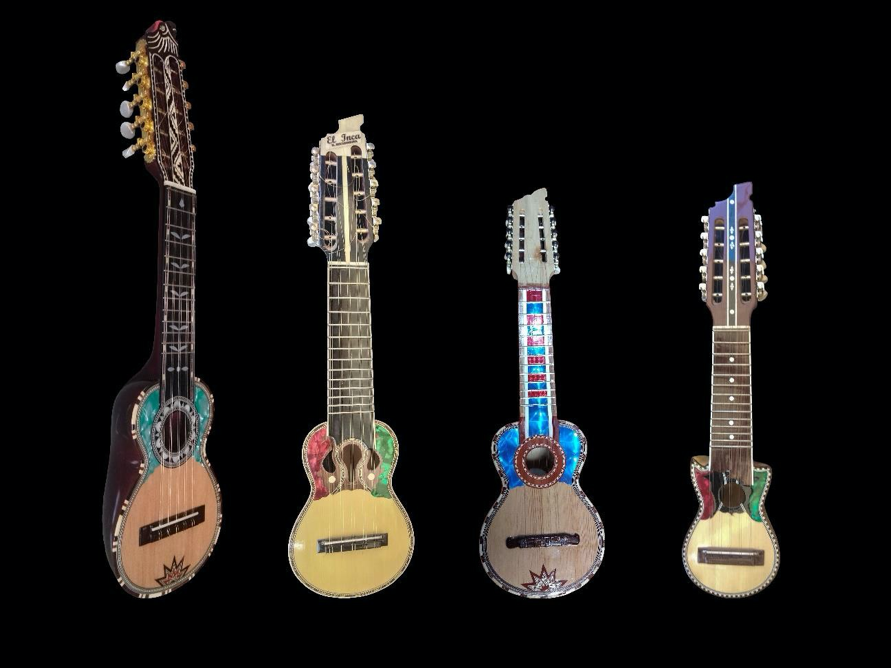
Charango

CHARANGO is a Bolivian musical instrument of the chordophone family. There is a hypothesis that its origin is related to the introduction ofvihuelaSpanish in colonial times, which was imitated by the indigenous populations, adapting it to their cultural context. As a result we have thecharango. Currently, it is an instrument widely used, mainly in the […]

Descripción

CHARANGO is a Bolivian musical instrument of the chordophone family. There is a hypothesis that its origin is related to the introduction ofvihuelaSpanish in colonial times, which was imitated by the indigenous populations, adapting it to their cultural context. As a result we have thecharango. Currently, it is an instrument widely used, mainly in the high areas of Bolivia, in the departments of Potosí, Chuquisaca, Cochabamba, Oruro and La Paz.

The instrument has three parts: the headstock, the arm or neck, and the sound box. The body of the charango is built from a single piece of wood or by assembling three different pieces. The woods used are: carob, naranjillo, jacaranda, tarco, among others. The fingerboard is placed on the neck, which is a thin sheet of ebony or jacaranda wood, into which the metal frets (bronze or nickel silver) are inserted. The sound box is carved into the wood until a concavity is obtained and is shaped like an eight. The box is covered by a soundboard made of spruce pine, white pine or Oregon pine; It has a circular opening called a mouth, which serves to amplify sound. The charango has five double strings (10 in total), made of metal or plastic.

There are different varieties of charangos, differentiated by their scale (size between the bridge and the neck of the headstock, that is, the extension of the tensioned strings) and by their tuning. In general, two classes are recognized:the original or indigenous charango(rural) andthe standard charango(urban). The first is typical of rural and popular music known as “k’alampeo”, implies subvariations according to the scale (between 25 and 35cm) and the tuning (Temple Diablo tuning,kimsatempera and false natural, among others); The particular thing about these charangos is that they necessarily have metal strings. The standard charango is for more urban use and is used for folk music, its common scale is 37 and 38cm, and the standard tuning is based on the notes:Mi La Mi Do Sol; The author of this standardization, in the version of Bolivian musicians, would be Maestro Ernesto Cavour (Bolivian musician and researcher). The standard charango has plastic strings.

There are various construction sites for Charangos, among which the town of Aiquile (Cochabamba) and the North of Potosí stand out. The most recognized workshops are: “Charangos Achá” (La Paz), “Charangos Chaskis” (Cochabamba), “Charangos Serrudo” (Cochabamba), among others. The charango is a central instrument in Bolivian music, with a large number of performers of all ages; currently there is theBolivian Charango Society(founded 1973) with approximately 3,000 members. In 2006, through Law No. 3451, it was recognized as Cultural Heritage of the Bolivian State.

Glossary

K’alampeo = Style of interpretation of the original charango.

Kimsa = Number 3.

References

Gutiérrez, R. and Gutiérrez, E. (2017)Dictionary of traditional music and dances of Bolivia. La Paz: Art and Science SRL.

Interviews

Juan Achá Campos, master builder and researcher of the Bolivian Charango (07/18/2023). Rodni Muñoz Revollo, president of the Bolivian Charango Society, Oruro Branch (07/20/2023). José Villarroel, musical instrument store in the city of Oruro (07/21/2023).

Photographs: Marcelo Lara

english

Charangois a Bolivian musical instrument of the chordophone family. There is a hypothesis that its origin is related to the introduction of the Spanish vihuela in colonial times, which was imitated by the indigenous populations adapting it to their cultural context. The result is the charango. Today, it is a widely used instrument, mainly in the highlands of Bolivia, in the departments of Potosí, Chuquisaca, Cochabamba, Oruro and La Paz. The instrument has three parts: the pegbox, the arm or neck and the sound box. The body of the charango is made from a single piece of wood or by assembling three different pieces. The woods used are: algarrobo, naranjillo, jacaranda, tarco, among others. The fingerboard is placed on the neck, which is a thin sheet of ebony or jacaranda wood, into which the metal frets (bronze or nickel silver) are inserted. The soundboard is carved into the wood to obtain a concavity and is shaped like a figure of eight. The sound box is covered by a spruce, white pine or oregon pine soundboard; it has a circular opening called «boca», which serves to amplify the sound. The charango has five double strings (10 in total), made of metal or plastic.

There are different varieties of charangos, differentiated by their scale (size between the bridge and the pegbox eyebrow, i.e. the extension of the strings) and by their tuning. In general, two types are recognized: the original or indigenous charango (rural) and the standard charango (urban). The former is typical of the rural and popular music known as «k’alampeo», and involves sub-variations according to the scale (between 25 and 35cm) and the tuning (temple diablo, kimsa temple and false natural tuning, among others); The particularity of these charangos is that they must have metal strings. The standard charango is of more urban use and is used for folk music, its common scale is 37 and 38cm, and the standard tuning is based on the notes: Mi La Mi Do Sol; the author of this standardisation, in the Bolivian musicians’ version, would be the Maestro Ernesto Cavour (Bolivian musician and researcher). The standard charango has plastic strings.

There are several places where Charangos are made, among which the locality of Aiquile (Cochabamba) and the North of Potosí stand out. The most renowned workshops are: «Charangos Achá» (La Paz), «Charangos Chaskis» (Cochabamba), «Charangos Serrudo» (Cochabamba), among others. The charango is a central instrument in Bolivian music, with a large number of players of all ages; Currently, there is the Bolivian Charango Society (founded in 1973) with approximately 3000 members. In 2006, by means of Law Nº 3451, it was recognized as Cultural Heritage of the Bolivian State.

Valoraciones

No hay valoraciones aún.

Sé el primero en valorar “Charango”

Tu dirección de correo electrónico no será publicada. Los campos obligatorios están marcados con *

Descripción

CHARANGO is a Bolivian musical instrument of the chordophone family. There is a hypothesis that its origin is related to the introduction ofvihuelaSpanish in colonial times, which was imitated by the indigenous populations, adapting it to their cultural context. As a result we have thecharango. Currently, it is an instrument widely used, mainly in the high areas of Bolivia, in the departments of Potosí, Chuquisaca, Cochabamba, Oruro and La Paz.

The instrument has three parts: the headstock, the arm or neck, and the sound box. The body of the charango is built from a single piece of wood or by assembling three different pieces. The woods used are: carob, naranjillo, jacaranda, tarco, among others. The fingerboard is placed on the neck, which is a thin sheet of ebony or jacaranda wood, into which the metal frets (bronze or nickel silver) are inserted. The sound box is carved into the wood until a concavity is obtained and is shaped like an eight. The box is covered by a soundboard made of spruce pine, white pine or Oregon pine; It has a circular opening called a mouth, which serves to amplify sound. The charango has five double strings (10 in total), made of metal or plastic.

There are different varieties of charangos, differentiated by their scale (size between the bridge and the neck of the headstock, that is, the extension of the tensioned strings) and by their tuning. In general, two classes are recognized:the original or indigenous charango(rural) andthe standard charango(urban). The first is typical of rural and popular music known as “k’alampeo”, implies subvariations according to the scale (between 25 and 35cm) and the tuning (Temple Diablo tuning,kimsatempera and false natural, among others); The particular thing about these charangos is that they necessarily have metal strings. The standard charango is for more urban use and is used for folk music, its common scale is 37 and 38cm, and the standard tuning is based on the notes:Mi La Mi Do Sol; The author of this standardization, in the version of Bolivian musicians, would be Maestro Ernesto Cavour (Bolivian musician and researcher). The standard charango has plastic strings.

There are various construction sites for Charangos, among which the town of Aiquile (Cochabamba) and the North of Potosí stand out. The most recognized workshops are: “Charangos Achá” (La Paz), “Charangos Chaskis” (Cochabamba), “Charangos Serrudo” (Cochabamba), among others. The charango is a central instrument in Bolivian music, with a large number of performers of all ages; currently there is theBolivian Charango Society(founded 1973) with approximately 3,000 members. In 2006, through Law No. 3451, it was recognized as Cultural Heritage of the Bolivian State.

Glossary

K’alampeo = Style of interpretation of the original charango.

Kimsa = Number 3.

References

Gutiérrez, R. and Gutiérrez, E. (2017)Dictionary of traditional music and dances of Bolivia. La Paz: Art and Science SRL.

Interviews

Juan Achá Campos, master builder and researcher of the Bolivian Charango (07/18/2023). Rodni Muñoz Revollo, president of the Bolivian Charango Society, Oruro Branch (07/20/2023). José Villarroel, musical instrument store in the city of Oruro (07/21/2023).

Photographs: Marcelo Lara

english

Charangois a Bolivian musical instrument of the chordophone family. There is a hypothesis that its origin is related to the introduction of the Spanish vihuela in colonial times, which was imitated by the indigenous populations adapting it to their cultural context. The result is the charango. Today, it is a widely used instrument, mainly in the highlands of Bolivia, in the departments of Potosí, Chuquisaca, Cochabamba, Oruro and La Paz. The instrument has three parts: the pegbox, the arm or neck and the sound box. The body of the charango is made from a single piece of wood or by assembling three different pieces. The woods used are: algarrobo, naranjillo, jacaranda, tarco, among others. The fingerboard is placed on the neck, which is a thin sheet of ebony or jacaranda wood, into which the metal frets (bronze or nickel silver) are inserted. The soundboard is carved into the wood to obtain a concavity and is shaped like a figure of eight. The sound box is covered by a spruce, white pine or oregon pine soundboard; it has a circular opening called «boca», which serves to amplify the sound. The charango has five double strings (10 in total), made of metal or plastic.

There are different varieties of charangos, differentiated by their scale (size between the bridge and the pegbox eyebrow, i.e. the extension of the strings) and by their tuning. In general, two types are recognized: the original or indigenous charango (rural) and the standard charango (urban). The former is typical of the rural and popular music known as «k’alampeo», and involves sub-variations according to the scale (between 25 and 35cm) and the tuning (temple diablo, kimsa temple and false natural tuning, among others); The particularity of these charangos is that they must have metal strings. The standard charango is of more urban use and is used for folk music, its common scale is 37 and 38cm, and the standard tuning is based on the notes: Mi La Mi Do Sol; the author of this standardisation, in the Bolivian musicians’ version, would be the Maestro Ernesto Cavour (Bolivian musician and researcher). The standard charango has plastic strings.

There are several places where Charangos are made, among which the locality of Aiquile (Cochabamba) and the North of Potosí stand out. The most renowned workshops are: «Charangos Achá» (La Paz), «Charangos Chaskis» (Cochabamba), «Charangos Serrudo» (Cochabamba), among others. The charango is a central instrument in Bolivian music, with a large number of players of all ages; Currently, there is the Bolivian Charango Society (founded in 1973) with approximately 3000 members. In 2006, by means of Law Nº 3451, it was recognized as Cultural Heritage of the Bolivian State.

Valoraciones

No hay valoraciones aún.

Sé el primero en valorar “Charango”

Tu dirección de correo electrónico no será publicada. Los campos obligatorios están marcados con *

Descripción

CHARANGO is a Bolivian musical instrument of the chordophone family. There is a hypothesis that its origin is related to the introduction ofvihuelaSpanish in colonial times, which was imitated by the indigenous populations, adapting it to their cultural context. As a result we have thecharango. Currently, it is an instrument widely used, mainly in the high areas of Bolivia, in the departments of Potosí, Chuquisaca, Cochabamba, Oruro and La Paz.

The instrument has three parts: the headstock, the arm or neck, and the sound box. The body of the charango is built from a single piece of wood or by assembling three different pieces. The woods used are: carob, naranjillo, jacaranda, tarco, among others. The fingerboard is placed on the neck, which is a thin sheet of ebony or jacaranda wood, into which the metal frets (bronze or nickel silver) are inserted. The sound box is carved into the wood until a concavity is obtained and is shaped like an eight. The box is covered by a soundboard made of spruce pine, white pine or Oregon pine; It has a circular opening called a mouth, which serves to amplify sound. The charango has five double strings (10 in total), made of metal or plastic.

There are different varieties of charangos, differentiated by their scale (size between the bridge and the neck of the headstock, that is, the extension of the tensioned strings) and by their tuning. In general, two classes are recognized:the original or indigenous charango(rural) andthe standard charango(urban). The first is typical of rural and popular music known as “k’alampeo”, implies subvariations according to the scale (between 25 and 35cm) and the tuning (Temple Diablo tuning,kimsatempera and false natural, among others); The particular thing about these charangos is that they necessarily have metal strings. The standard charango is for more urban use and is used for folk music, its common scale is 37 and 38cm, and the standard tuning is based on the notes:Mi La Mi Do Sol; The author of this standardization, in the version of Bolivian musicians, would be Maestro Ernesto Cavour (Bolivian musician and researcher). The standard charango has plastic strings.

There are various construction sites for Charangos, among which the town of Aiquile (Cochabamba) and the North of Potosí stand out. The most recognized workshops are: “Charangos Achá” (La Paz), “Charangos Chaskis” (Cochabamba), “Charangos Serrudo” (Cochabamba), among others. The charango is a central instrument in Bolivian music, with a large number of performers of all ages; currently there is theBolivian Charango Society(founded 1973) with approximately 3,000 members. In 2006, through Law No. 3451, it was recognized as Cultural Heritage of the Bolivian State.

Glossary

K’alampeo = Style of interpretation of the original charango.

Kimsa = Number 3.

References

Gutiérrez, R. and Gutiérrez, E. (2017)Dictionary of traditional music and dances of Bolivia. La Paz: Art and Science SRL.

Interviews

Juan Achá Campos, master builder and researcher of the Bolivian Charango (07/18/2023). Rodni Muñoz Revollo, president of the Bolivian Charango Society, Oruro Branch (07/20/2023). José Villarroel, musical instrument store in the city of Oruro (07/21/2023).

Photographs: Marcelo Lara

english

Charangois a Bolivian musical instrument of the chordophone family. There is a hypothesis that its origin is related to the introduction of the Spanish vihuela in colonial times, which was imitated by the indigenous populations adapting it to their cultural context. The result is the charango. Today, it is a widely used instrument, mainly in the highlands of Bolivia, in the departments of Potosí, Chuquisaca, Cochabamba, Oruro and La Paz. The instrument has three parts: the pegbox, the arm or neck and the sound box. The body of the charango is made from a single piece of wood or by assembling three different pieces. The woods used are: algarrobo, naranjillo, jacaranda, tarco, among others. The fingerboard is placed on the neck, which is a thin sheet of ebony or jacaranda wood, into which the metal frets (bronze or nickel silver) are inserted. The soundboard is carved into the wood to obtain a concavity and is shaped like a figure of eight. The sound box is covered by a spruce, white pine or oregon pine soundboard; it has a circular opening called «boca», which serves to amplify the sound. The charango has five double strings (10 in total), made of metal or plastic.

There are different varieties of charangos, differentiated by their scale (size between the bridge and the pegbox eyebrow, i.e. the extension of the strings) and by their tuning. In general, two types are recognized: the original or indigenous charango (rural) and the standard charango (urban). The former is typical of the rural and popular music known as «k’alampeo», and involves sub-variations according to the scale (between 25 and 35cm) and the tuning (temple diablo, kimsa temple and false natural tuning, among others); The particularity of these charangos is that they must have metal strings. The standard charango is of more urban use and is used for folk music, its common scale is 37 and 38cm, and the standard tuning is based on the notes: Mi La Mi Do Sol; the author of this standardisation, in the Bolivian musicians’ version, would be the Maestro Ernesto Cavour (Bolivian musician and researcher). The standard charango has plastic strings.

There are several places where Charangos are made, among which the locality of Aiquile (Cochabamba) and the North of Potosí stand out. The most renowned workshops are: «Charangos Achá» (La Paz), «Charangos Chaskis» (Cochabamba), «Charangos Serrudo» (Cochabamba), among others. The charango is a central instrument in Bolivian music, with a large number of players of all ages; Currently, there is the Bolivian Charango Society (founded in 1973) with approximately 3000 members. In 2006, by means of Law Nº 3451, it was recognized as Cultural Heritage of the Bolivian State.

Valoraciones

No hay valoraciones aún.

Sé el primero en valorar “Charango”

Tu dirección de correo electrónico no será publicada. Los campos obligatorios están marcados con *

Descripción

CHARANGO is a Bolivian musical instrument of the chordophone family. There is a hypothesis that its origin is related to the introduction ofvihuelaSpanish in colonial times, which was imitated by the indigenous populations, adapting it to their cultural context. As a result we have thecharango. Currently, it is an instrument widely used, mainly in the high areas of Bolivia, in the departments of Potosí, Chuquisaca, Cochabamba, Oruro and La Paz.

The instrument has three parts: the headstock, the arm or neck, and the sound box. The body of the charango is built from a single piece of wood or by assembling three different pieces. The woods used are: carob, naranjillo, jacaranda, tarco, among others. The fingerboard is placed on the neck, which is a thin sheet of ebony or jacaranda wood, into which the metal frets (bronze or nickel silver) are inserted. The sound box is carved into the wood until a concavity is obtained and is shaped like an eight. The box is covered by a soundboard made of spruce pine, white pine or Oregon pine; It has a circular opening called a mouth, which serves to amplify sound. The charango has five double strings (10 in total), made of metal or plastic.

There are different varieties of charangos, differentiated by their scale (size between the bridge and the neck of the headstock, that is, the extension of the tensioned strings) and by their tuning. In general, two classes are recognized:the original or indigenous charango(rural) andthe standard charango(urban). The first is typical of rural and popular music known as “k’alampeo”, implies subvariations according to the scale (between 25 and 35cm) and the tuning (Temple Diablo tuning,kimsatempera and false natural, among others); The particular thing about these charangos is that they necessarily have metal strings. The standard charango is for more urban use and is used for folk music, its common scale is 37 and 38cm, and the standard tuning is based on the notes:Mi La Mi Do Sol; The author of this standardization, in the version of Bolivian musicians, would be Maestro Ernesto Cavour (Bolivian musician and researcher). The standard charango has plastic strings.

There are various construction sites for Charangos, among which the town of Aiquile (Cochabamba) and the North of Potosí stand out. The most recognized workshops are: “Charangos Achá” (La Paz), “Charangos Chaskis” (Cochabamba), “Charangos Serrudo” (Cochabamba), among others. The charango is a central instrument in Bolivian music, with a large number of performers of all ages; currently there is theBolivian Charango Society(founded 1973) with approximately 3,000 members. In 2006, through Law No. 3451, it was recognized as Cultural Heritage of the Bolivian State.

Glossary

K’alampeo = Style of interpretation of the original charango.

Kimsa = Number 3.

References

Gutiérrez, R. and Gutiérrez, E. (2017)Dictionary of traditional music and dances of Bolivia. La Paz: Art and Science SRL.

Interviews

Juan Achá Campos, master builder and researcher of the Bolivian Charango (07/18/2023). Rodni Muñoz Revollo, president of the Bolivian Charango Society, Oruro Branch (07/20/2023). José Villarroel, musical instrument store in the city of Oruro (07/21/2023).

Photographs: Marcelo Lara

english

Charangois a Bolivian musical instrument of the chordophone family. There is a hypothesis that its origin is related to the introduction of the Spanish vihuela in colonial times, which was imitated by the indigenous populations adapting it to their cultural context. The result is the charango. Today, it is a widely used instrument, mainly in the highlands of Bolivia, in the departments of Potosí, Chuquisaca, Cochabamba, Oruro and La Paz. The instrument has three parts: the pegbox, the arm or neck and the sound box. The body of the charango is made from a single piece of wood or by assembling three different pieces. The woods used are: algarrobo, naranjillo, jacaranda, tarco, among others. The fingerboard is placed on the neck, which is a thin sheet of ebony or jacaranda wood, into which the metal frets (bronze or nickel silver) are inserted. The soundboard is carved into the wood to obtain a concavity and is shaped like a figure of eight. The sound box is covered by a spruce, white pine or oregon pine soundboard; it has a circular opening called «boca», which serves to amplify the sound. The charango has five double strings (10 in total), made of metal or plastic.

There are different varieties of charangos, differentiated by their scale (size between the bridge and the pegbox eyebrow, i.e. the extension of the strings) and by their tuning. In general, two types are recognized: the original or indigenous charango (rural) and the standard charango (urban). The former is typical of the rural and popular music known as «k’alampeo», and involves sub-variations according to the scale (between 25 and 35cm) and the tuning (temple diablo, kimsa temple and false natural tuning, among others); The particularity of these charangos is that they must have metal strings. The standard charango is of more urban use and is used for folk music, its common scale is 37 and 38cm, and the standard tuning is based on the notes: Mi La Mi Do Sol; the author of this standardisation, in the Bolivian musicians’ version, would be the Maestro Ernesto Cavour (Bolivian musician and researcher). The standard charango has plastic strings.

There are several places where Charangos are made, among which the locality of Aiquile (Cochabamba) and the North of Potosí stand out. The most renowned workshops are: «Charangos Achá» (La Paz), «Charangos Chaskis» (Cochabamba), «Charangos Serrudo» (Cochabamba), among others. The charango is a central instrument in Bolivian music, with a large number of players of all ages; Currently, there is the Bolivian Charango Society (founded in 1973) with approximately 3000 members. In 2006, by means of Law Nº 3451, it was recognized as Cultural Heritage of the Bolivian State.

Valoraciones

No hay valoraciones aún.

Sé el primero en valorar “Charango”

Tu dirección de correo electrónico no será publicada. Los campos obligatorios están marcados con *

Descripción

CHARANGO is a Bolivian musical instrument of the chordophone family. There is a hypothesis that its origin is related to the introduction ofvihuelaSpanish in colonial times, which was imitated by the indigenous populations, adapting it to their cultural context. As a result we have thecharango. Currently, it is an instrument widely used, mainly in the high areas of Bolivia, in the departments of Potosí, Chuquisaca, Cochabamba, Oruro and La Paz.

The instrument has three parts: the headstock, the arm or neck, and the sound box. The body of the charango is built from a single piece of wood or by assembling three different pieces. The woods used are: carob, naranjillo, jacaranda, tarco, among others. The fingerboard is placed on the neck, which is a thin sheet of ebony or jacaranda wood, into which the metal frets (bronze or nickel silver) are inserted. The sound box is carved into the wood until a concavity is obtained and is shaped like an eight. The box is covered by a soundboard made of spruce pine, white pine or Oregon pine; It has a circular opening called a mouth, which serves to amplify sound. The charango has five double strings (10 in total), made of metal or plastic.

There are different varieties of charangos, differentiated by their scale (size between the bridge and the neck of the headstock, that is, the extension of the tensioned strings) and by their tuning. In general, two classes are recognized:the original or indigenous charango(rural) andthe standard charango(urban). The first is typical of rural and popular music known as “k’alampeo”, implies subvariations according to the scale (between 25 and 35cm) and the tuning (Temple Diablo tuning,kimsatempera and false natural, among others); The particular thing about these charangos is that they necessarily have metal strings. The standard charango is for more urban use and is used for folk music, its common scale is 37 and 38cm, and the standard tuning is based on the notes:Mi La Mi Do Sol; The author of this standardization, in the version of Bolivian musicians, would be Maestro Ernesto Cavour (Bolivian musician and researcher). The standard charango has plastic strings.

There are various construction sites for Charangos, among which the town of Aiquile (Cochabamba) and the North of Potosí stand out. The most recognized workshops are: “Charangos Achá” (La Paz), “Charangos Chaskis” (Cochabamba), “Charangos Serrudo” (Cochabamba), among others. The charango is a central instrument in Bolivian music, with a large number of performers of all ages; currently there is theBolivian Charango Society(founded 1973) with approximately 3,000 members. In 2006, through Law No. 3451, it was recognized as Cultural Heritage of the Bolivian State.

Glossary

K’alampeo = Style of interpretation of the original charango.

Kimsa = Number 3.

References

Gutiérrez, R. and Gutiérrez, E. (2017)Dictionary of traditional music and dances of Bolivia. La Paz: Art and Science SRL.

Interviews

Juan Achá Campos, master builder and researcher of the Bolivian Charango (07/18/2023). Rodni Muñoz Revollo, president of the Bolivian Charango Society, Oruro Branch (07/20/2023). José Villarroel, musical instrument store in the city of Oruro (07/21/2023).

Photographs: Marcelo Lara

english

Charangois a Bolivian musical instrument of the chordophone family. There is a hypothesis that its origin is related to the introduction of the Spanish vihuela in colonial times, which was imitated by the indigenous populations adapting it to their cultural context. The result is the charango. Today, it is a widely used instrument, mainly in the highlands of Bolivia, in the departments of Potosí, Chuquisaca, Cochabamba, Oruro and La Paz. The instrument has three parts: the pegbox, the arm or neck and the sound box. The body of the charango is made from a single piece of wood or by assembling three different pieces. The woods used are: algarrobo, naranjillo, jacaranda, tarco, among others. The fingerboard is placed on the neck, which is a thin sheet of ebony or jacaranda wood, into which the metal frets (bronze or nickel silver) are inserted. The soundboard is carved into the wood to obtain a concavity and is shaped like a figure of eight. The sound box is covered by a spruce, white pine or oregon pine soundboard; it has a circular opening called «boca», which serves to amplify the sound. The charango has five double strings (10 in total), made of metal or plastic.

There are different varieties of charangos, differentiated by their scale (size between the bridge and the pegbox eyebrow, i.e. the extension of the strings) and by their tuning. In general, two types are recognized: the original or indigenous charango (rural) and the standard charango (urban). The former is typical of the rural and popular music known as «k’alampeo», and involves sub-variations according to the scale (between 25 and 35cm) and the tuning (temple diablo, kimsa temple and false natural tuning, among others); The particularity of these charangos is that they must have metal strings. The standard charango is of more urban use and is used for folk music, its common scale is 37 and 38cm, and the standard tuning is based on the notes: Mi La Mi Do Sol; the author of this standardisation, in the Bolivian musicians’ version, would be the Maestro Ernesto Cavour (Bolivian musician and researcher). The standard charango has plastic strings.

There are several places where Charangos are made, among which the locality of Aiquile (Cochabamba) and the North of Potosí stand out. The most renowned workshops are: «Charangos Achá» (La Paz), «Charangos Chaskis» (Cochabamba), «Charangos Serrudo» (Cochabamba), among others. The charango is a central instrument in Bolivian music, with a large number of players of all ages; Currently, there is the Bolivian Charango Society (founded in 1973) with approximately 3000 members. In 2006, by means of Law Nº 3451, it was recognized as Cultural Heritage of the Bolivian State.

Valoraciones

No hay valoraciones aún.

Sé el primero en valorar “Charango”

Tu dirección de correo electrónico no será publicada. Los campos obligatorios están marcados con *

Descripción

CHARANGO is a Bolivian musical instrument of the chordophone family. There is a hypothesis that its origin is related to the introduction ofvihuelaSpanish in colonial times, which was imitated by the indigenous populations, adapting it to their cultural context. As a result we have thecharango. Currently, it is an instrument widely used, mainly in the high areas of Bolivia, in the departments of Potosí, Chuquisaca, Cochabamba, Oruro and La Paz.

The instrument has three parts: the headstock, the arm or neck, and the sound box. The body of the charango is built from a single piece of wood or by assembling three different pieces. The woods used are: carob, naranjillo, jacaranda, tarco, among others. The fingerboard is placed on the neck, which is a thin sheet of ebony or jacaranda wood, into which the metal frets (bronze or nickel silver) are inserted. The sound box is carved into the wood until a concavity is obtained and is shaped like an eight. The box is covered by a soundboard made of spruce pine, white pine or Oregon pine; It has a circular opening called a mouth, which serves to amplify sound. The charango has five double strings (10 in total), made of metal or plastic.

There are different varieties of charangos, differentiated by their scale (size between the bridge and the neck of the headstock, that is, the extension of the tensioned strings) and by their tuning. In general, two classes are recognized:the original or indigenous charango(rural) andthe standard charango(urban). The first is typical of rural and popular music known as “k’alampeo”, implies subvariations according to the scale (between 25 and 35cm) and the tuning (Temple Diablo tuning,kimsatempera and false natural, among others); The particular thing about these charangos is that they necessarily have metal strings. The standard charango is for more urban use and is used for folk music, its common scale is 37 and 38cm, and the standard tuning is based on the notes:Mi La Mi Do Sol; The author of this standardization, in the version of Bolivian musicians, would be Maestro Ernesto Cavour (Bolivian musician and researcher). The standard charango has plastic strings.

There are various construction sites for Charangos, among which the town of Aiquile (Cochabamba) and the North of Potosí stand out. The most recognized workshops are: “Charangos Achá” (La Paz), “Charangos Chaskis” (Cochabamba), “Charangos Serrudo” (Cochabamba), among others. The charango is a central instrument in Bolivian music, with a large number of performers of all ages; currently there is theBolivian Charango Society(founded 1973) with approximately 3,000 members. In 2006, through Law No. 3451, it was recognized as Cultural Heritage of the Bolivian State.

Glossary

K’alampeo = Style of interpretation of the original charango.

Kimsa = Number 3.

References

Gutiérrez, R. and Gutiérrez, E. (2017)Dictionary of traditional music and dances of Bolivia. La Paz: Art and Science SRL.

Interviews

Juan Achá Campos, master builder and researcher of the Bolivian Charango (07/18/2023). Rodni Muñoz Revollo, president of the Bolivian Charango Society, Oruro Branch (07/20/2023). José Villarroel, musical instrument store in the city of Oruro (07/21/2023).

Photographs: Marcelo Lara

english

Charangois a Bolivian musical instrument of the chordophone family. There is a hypothesis that its origin is related to the introduction of the Spanish vihuela in colonial times, which was imitated by the indigenous populations adapting it to their cultural context. The result is the charango. Today, it is a widely used instrument, mainly in the highlands of Bolivia, in the departments of Potosí, Chuquisaca, Cochabamba, Oruro and La Paz. The instrument has three parts: the pegbox, the arm or neck and the sound box. The body of the charango is made from a single piece of wood or by assembling three different pieces. The woods used are: algarrobo, naranjillo, jacaranda, tarco, among others. The fingerboard is placed on the neck, which is a thin sheet of ebony or jacaranda wood, into which the metal frets (bronze or nickel silver) are inserted. The soundboard is carved into the wood to obtain a concavity and is shaped like a figure of eight. The sound box is covered by a spruce, white pine or oregon pine soundboard; it has a circular opening called «boca», which serves to amplify the sound. The charango has five double strings (10 in total), made of metal or plastic.

There are different varieties of charangos, differentiated by their scale (size between the bridge and the pegbox eyebrow, i.e. the extension of the strings) and by their tuning. In general, two types are recognized: the original or indigenous charango (rural) and the standard charango (urban). The former is typical of the rural and popular music known as «k’alampeo», and involves sub-variations according to the scale (between 25 and 35cm) and the tuning (temple diablo, kimsa temple and false natural tuning, among others); The particularity of these charangos is that they must have metal strings. The standard charango is of more urban use and is used for folk music, its common scale is 37 and 38cm, and the standard tuning is based on the notes: Mi La Mi Do Sol; the author of this standardisation, in the Bolivian musicians’ version, would be the Maestro Ernesto Cavour (Bolivian musician and researcher). The standard charango has plastic strings.

There are several places where Charangos are made, among which the locality of Aiquile (Cochabamba) and the North of Potosí stand out. The most renowned workshops are: «Charangos Achá» (La Paz), «Charangos Chaskis» (Cochabamba), «Charangos Serrudo» (Cochabamba), among others. The charango is a central instrument in Bolivian music, with a large number of players of all ages; Currently, there is the Bolivian Charango Society (founded in 1973) with approximately 3000 members. In 2006, by means of Law Nº 3451, it was recognized as Cultural Heritage of the Bolivian State.

Valoraciones

No hay valoraciones aún.

Sé el primero en valorar “Charango”

Tu dirección de correo electrónico no será publicada. Los campos obligatorios están marcados con *

Descripción

CHARANGO is a Bolivian musical instrument of the chordophone family. There is a hypothesis that its origin is related to the introduction ofvihuelaSpanish in colonial times, which was imitated by the indigenous populations, adapting it to their cultural context. As a result we have thecharango. Currently, it is an instrument widely used, mainly in the high areas of Bolivia, in the departments of Potosí, Chuquisaca, Cochabamba, Oruro and La Paz.

The instrument has three parts: the headstock, the arm or neck, and the sound box. The body of the charango is built from a single piece of wood or by assembling three different pieces. The woods used are: carob, naranjillo, jacaranda, tarco, among others. The fingerboard is placed on the neck, which is a thin sheet of ebony or jacaranda wood, into which the metal frets (bronze or nickel silver) are inserted. The sound box is carved into the wood until a concavity is obtained and is shaped like an eight. The box is covered by a soundboard made of spruce pine, white pine or Oregon pine; It has a circular opening called a mouth, which serves to amplify sound. The charango has five double strings (10 in total), made of metal or plastic.

There are different varieties of charangos, differentiated by their scale (size between the bridge and the neck of the headstock, that is, the extension of the tensioned strings) and by their tuning. In general, two classes are recognized:the original or indigenous charango(rural) andthe standard charango(urban). The first is typical of rural and popular music known as “k’alampeo”, implies subvariations according to the scale (between 25 and 35cm) and the tuning (Temple Diablo tuning,kimsatempera and false natural, among others); The particular thing about these charangos is that they necessarily have metal strings. The standard charango is for more urban use and is used for folk music, its common scale is 37 and 38cm, and the standard tuning is based on the notes:Mi La Mi Do Sol; The author of this standardization, in the version of Bolivian musicians, would be Maestro Ernesto Cavour (Bolivian musician and researcher). The standard charango has plastic strings.

There are various construction sites for Charangos, among which the town of Aiquile (Cochabamba) and the North of Potosí stand out. The most recognized workshops are: “Charangos Achá” (La Paz), “Charangos Chaskis” (Cochabamba), “Charangos Serrudo” (Cochabamba), among others. The charango is a central instrument in Bolivian music, with a large number of performers of all ages; currently there is theBolivian Charango Society(founded 1973) with approximately 3,000 members. In 2006, through Law No. 3451, it was recognized as Cultural Heritage of the Bolivian State.

Glossary

K’alampeo = Style of interpretation of the original charango.

Kimsa = Number 3.

References

Gutiérrez, R. and Gutiérrez, E. (2017)Dictionary of traditional music and dances of Bolivia. La Paz: Art and Science SRL.

Interviews

Juan Achá Campos, master builder and researcher of the Bolivian Charango (07/18/2023). Rodni Muñoz Revollo, president of the Bolivian Charango Society, Oruro Branch (07/20/2023). José Villarroel, musical instrument store in the city of Oruro (07/21/2023).

Photographs: Marcelo Lara

english

Charangois a Bolivian musical instrument of the chordophone family. There is a hypothesis that its origin is related to the introduction of the Spanish vihuela in colonial times, which was imitated by the indigenous populations adapting it to their cultural context. The result is the charango. Today, it is a widely used instrument, mainly in the highlands of Bolivia, in the departments of Potosí, Chuquisaca, Cochabamba, Oruro and La Paz. The instrument has three parts: the pegbox, the arm or neck and the sound box. The body of the charango is made from a single piece of wood or by assembling three different pieces. The woods used are: algarrobo, naranjillo, jacaranda, tarco, among others. The fingerboard is placed on the neck, which is a thin sheet of ebony or jacaranda wood, into which the metal frets (bronze or nickel silver) are inserted. The soundboard is carved into the wood to obtain a concavity and is shaped like a figure of eight. The sound box is covered by a spruce, white pine or oregon pine soundboard; it has a circular opening called «boca», which serves to amplify the sound. The charango has five double strings (10 in total), made of metal or plastic.

There are different varieties of charangos, differentiated by their scale (size between the bridge and the pegbox eyebrow, i.e. the extension of the strings) and by their tuning. In general, two types are recognized: the original or indigenous charango (rural) and the standard charango (urban). The former is typical of the rural and popular music known as «k’alampeo», and involves sub-variations according to the scale (between 25 and 35cm) and the tuning (temple diablo, kimsa temple and false natural tuning, among others); The particularity of these charangos is that they must have metal strings. The standard charango is of more urban use and is used for folk music, its common scale is 37 and 38cm, and the standard tuning is based on the notes: Mi La Mi Do Sol; the author of this standardisation, in the Bolivian musicians’ version, would be the Maestro Ernesto Cavour (Bolivian musician and researcher). The standard charango has plastic strings.

There are several places where Charangos are made, among which the locality of Aiquile (Cochabamba) and the North of Potosí stand out. The most renowned workshops are: «Charangos Achá» (La Paz), «Charangos Chaskis» (Cochabamba), «Charangos Serrudo» (Cochabamba), among others. The charango is a central instrument in Bolivian music, with a large number of players of all ages; Currently, there is the Bolivian Charango Society (founded in 1973) with approximately 3000 members. In 2006, by means of Law Nº 3451, it was recognized as Cultural Heritage of the Bolivian State.

Valoraciones

No hay valoraciones aún.

Sé el primero en valorar “Charango”

Tu dirección de correo electrónico no será publicada. Los campos obligatorios están marcados con *

Descripción

CHARANGO is a Bolivian musical instrument of the chordophone family. There is a hypothesis that its origin is related to the introduction ofvihuelaSpanish in colonial times, which was imitated by the indigenous populations, adapting it to their cultural context. As a result we have thecharango. Currently, it is an instrument widely used, mainly in the high areas of Bolivia, in the departments of Potosí, Chuquisaca, Cochabamba, Oruro and La Paz.

The instrument has three parts: the headstock, the arm or neck, and the sound box. The body of the charango is built from a single piece of wood or by assembling three different pieces. The woods used are: carob, naranjillo, jacaranda, tarco, among others. The fingerboard is placed on the neck, which is a thin sheet of ebony or jacaranda wood, into which the metal frets (bronze or nickel silver) are inserted. The sound box is carved into the wood until a concavity is obtained and is shaped like an eight. The box is covered by a soundboard made of spruce pine, white pine or Oregon pine; It has a circular opening called a mouth, which serves to amplify sound. The charango has five double strings (10 in total), made of metal or plastic.

There are different varieties of charangos, differentiated by their scale (size between the bridge and the neck of the headstock, that is, the extension of the tensioned strings) and by their tuning. In general, two classes are recognized:the original or indigenous charango(rural) andthe standard charango(urban). The first is typical of rural and popular music known as “k’alampeo”, implies subvariations according to the scale (between 25 and 35cm) and the tuning (Temple Diablo tuning,kimsatempera and false natural, among others); The particular thing about these charangos is that they necessarily have metal strings. The standard charango is for more urban use and is used for folk music, its common scale is 37 and 38cm, and the standard tuning is based on the notes:Mi La Mi Do Sol; The author of this standardization, in the version of Bolivian musicians, would be Maestro Ernesto Cavour (Bolivian musician and researcher). The standard charango has plastic strings.

There are various construction sites for Charangos, among which the town of Aiquile (Cochabamba) and the North of Potosí stand out. The most recognized workshops are: “Charangos Achá” (La Paz), “Charangos Chaskis” (Cochabamba), “Charangos Serrudo” (Cochabamba), among others. The charango is a central instrument in Bolivian music, with a large number of performers of all ages; currently there is theBolivian Charango Society(founded 1973) with approximately 3,000 members. In 2006, through Law No. 3451, it was recognized as Cultural Heritage of the Bolivian State.

Glossary

K’alampeo = Style of interpretation of the original charango.

Kimsa = Number 3.

References

Gutiérrez, R. and Gutiérrez, E. (2017)Dictionary of traditional music and dances of Bolivia. La Paz: Art and Science SRL.

Interviews

Juan Achá Campos, master builder and researcher of the Bolivian Charango (07/18/2023). Rodni Muñoz Revollo, president of the Bolivian Charango Society, Oruro Branch (07/20/2023). José Villarroel, musical instrument store in the city of Oruro (07/21/2023).

Photographs: Marcelo Lara

english

Charangois a Bolivian musical instrument of the chordophone family. There is a hypothesis that its origin is related to the introduction of the Spanish vihuela in colonial times, which was imitated by the indigenous populations adapting it to their cultural context. The result is the charango. Today, it is a widely used instrument, mainly in the highlands of Bolivia, in the departments of Potosí, Chuquisaca, Cochabamba, Oruro and La Paz. The instrument has three parts: the pegbox, the arm or neck and the sound box. The body of the charango is made from a single piece of wood or by assembling three different pieces. The woods used are: algarrobo, naranjillo, jacaranda, tarco, among others. The fingerboard is placed on the neck, which is a thin sheet of ebony or jacaranda wood, into which the metal frets (bronze or nickel silver) are inserted. The soundboard is carved into the wood to obtain a concavity and is shaped like a figure of eight. The sound box is covered by a spruce, white pine or oregon pine soundboard; it has a circular opening called «boca», which serves to amplify the sound. The charango has five double strings (10 in total), made of metal or plastic.

There are different varieties of charangos, differentiated by their scale (size between the bridge and the pegbox eyebrow, i.e. the extension of the strings) and by their tuning. In general, two types are recognized: the original or indigenous charango (rural) and the standard charango (urban). The former is typical of the rural and popular music known as «k’alampeo», and involves sub-variations according to the scale (between 25 and 35cm) and the tuning (temple diablo, kimsa temple and false natural tuning, among others); The particularity of these charangos is that they must have metal strings. The standard charango is of more urban use and is used for folk music, its common scale is 37 and 38cm, and the standard tuning is based on the notes: Mi La Mi Do Sol; the author of this standardisation, in the Bolivian musicians’ version, would be the Maestro Ernesto Cavour (Bolivian musician and researcher). The standard charango has plastic strings.

There are several places where Charangos are made, among which the locality of Aiquile (Cochabamba) and the North of Potosí stand out. The most renowned workshops are: «Charangos Achá» (La Paz), «Charangos Chaskis» (Cochabamba), «Charangos Serrudo» (Cochabamba), among others. The charango is a central instrument in Bolivian music, with a large number of players of all ages; Currently, there is the Bolivian Charango Society (founded in 1973) with approximately 3000 members. In 2006, by means of Law Nº 3451, it was recognized as Cultural Heritage of the Bolivian State.

Valoraciones

No hay valoraciones aún.

Sé el primero en valorar “Charango”

Tu dirección de correo electrónico no será publicada. Los campos obligatorios están marcados con *

Descripción

CHARANGO is a Bolivian musical instrument of the chordophone family. There is a hypothesis that its origin is related to the introduction ofvihuelaSpanish in colonial times, which was imitated by the indigenous populations, adapting it to their cultural context. As a result we have thecharango. Currently, it is an instrument widely used, mainly in the high areas of Bolivia, in the departments of Potosí, Chuquisaca, Cochabamba, Oruro and La Paz.

The instrument has three parts: the headstock, the arm or neck, and the sound box. The body of the charango is built from a single piece of wood or by assembling three different pieces. The woods used are: carob, naranjillo, jacaranda, tarco, among others. The fingerboard is placed on the neck, which is a thin sheet of ebony or jacaranda wood, into which the metal frets (bronze or nickel silver) are inserted. The sound box is carved into the wood until a concavity is obtained and is shaped like an eight. The box is covered by a soundboard made of spruce pine, white pine or Oregon pine; It has a circular opening called a mouth, which serves to amplify sound. The charango has five double strings (10 in total), made of metal or plastic.

There are different varieties of charangos, differentiated by their scale (size between the bridge and the neck of the headstock, that is, the extension of the tensioned strings) and by their tuning. In general, two classes are recognized:the original or indigenous charango(rural) andthe standard charango(urban). The first is typical of rural and popular music known as “k’alampeo”, implies subvariations according to the scale (between 25 and 35cm) and the tuning (Temple Diablo tuning,kimsatempera and false natural, among others); The particular thing about these charangos is that they necessarily have metal strings. The standard charango is for more urban use and is used for folk music, its common scale is 37 and 38cm, and the standard tuning is based on the notes:Mi La Mi Do Sol; The author of this standardization, in the version of Bolivian musicians, would be Maestro Ernesto Cavour (Bolivian musician and researcher). The standard charango has plastic strings.

There are various construction sites for Charangos, among which the town of Aiquile (Cochabamba) and the North of Potosí stand out. The most recognized workshops are: “Charangos Achá” (La Paz), “Charangos Chaskis” (Cochabamba), “Charangos Serrudo” (Cochabamba), among others. The charango is a central instrument in Bolivian music, with a large number of performers of all ages; currently there is theBolivian Charango Society(founded 1973) with approximately 3,000 members. In 2006, through Law No. 3451, it was recognized as Cultural Heritage of the Bolivian State.

Glossary

K’alampeo = Style of interpretation of the original charango.

Kimsa = Number 3.

References

Gutiérrez, R. and Gutiérrez, E. (2017)Dictionary of traditional music and dances of Bolivia. La Paz: Art and Science SRL.

Interviews

Juan Achá Campos, master builder and researcher of the Bolivian Charango (07/18/2023). Rodni Muñoz Revollo, president of the Bolivian Charango Society, Oruro Branch (07/20/2023). José Villarroel, musical instrument store in the city of Oruro (07/21/2023).

Photographs: Marcelo Lara

english

Charangois a Bolivian musical instrument of the chordophone family. There is a hypothesis that its origin is related to the introduction of the Spanish vihuela in colonial times, which was imitated by the indigenous populations adapting it to their cultural context. The result is the charango. Today, it is a widely used instrument, mainly in the highlands of Bolivia, in the departments of Potosí, Chuquisaca, Cochabamba, Oruro and La Paz. The instrument has three parts: the pegbox, the arm or neck and the sound box. The body of the charango is made from a single piece of wood or by assembling three different pieces. The woods used are: algarrobo, naranjillo, jacaranda, tarco, among others. The fingerboard is placed on the neck, which is a thin sheet of ebony or jacaranda wood, into which the metal frets (bronze or nickel silver) are inserted. The soundboard is carved into the wood to obtain a concavity and is shaped like a figure of eight. The sound box is covered by a spruce, white pine or oregon pine soundboard; it has a circular opening called «boca», which serves to amplify the sound. The charango has five double strings (10 in total), made of metal or plastic.

There are different varieties of charangos, differentiated by their scale (size between the bridge and the pegbox eyebrow, i.e. the extension of the strings) and by their tuning. In general, two types are recognized: the original or indigenous charango (rural) and the standard charango (urban). The former is typical of the rural and popular music known as «k’alampeo», and involves sub-variations according to the scale (between 25 and 35cm) and the tuning (temple diablo, kimsa temple and false natural tuning, among others); The particularity of these charangos is that they must have metal strings. The standard charango is of more urban use and is used for folk music, its common scale is 37 and 38cm, and the standard tuning is based on the notes: Mi La Mi Do Sol; the author of this standardisation, in the Bolivian musicians’ version, would be the Maestro Ernesto Cavour (Bolivian musician and researcher). The standard charango has plastic strings.

There are several places where Charangos are made, among which the locality of Aiquile (Cochabamba) and the North of Potosí stand out. The most renowned workshops are: «Charangos Achá» (La Paz), «Charangos Chaskis» (Cochabamba), «Charangos Serrudo» (Cochabamba), among others. The charango is a central instrument in Bolivian music, with a large number of players of all ages; Currently, there is the Bolivian Charango Society (founded in 1973) with approximately 3000 members. In 2006, by means of Law Nº 3451, it was recognized as Cultural Heritage of the Bolivian State.

Valoraciones

No hay valoraciones aún.

Sé el primero en valorar “Charango”

Tu dirección de correo electrónico no será publicada. Los campos obligatorios están marcados con *

Descripción

CHARANGO is a Bolivian musical instrument of the chordophone family. There is a hypothesis that its origin is related to the introduction ofvihuelaSpanish in colonial times, which was imitated by the indigenous populations, adapting it to their cultural context. As a result we have thecharango. Currently, it is an instrument widely used, mainly in the high areas of Bolivia, in the departments of Potosí, Chuquisaca, Cochabamba, Oruro and La Paz.

The instrument has three parts: the headstock, the arm or neck, and the sound box. The body of the charango is built from a single piece of wood or by assembling three different pieces. The woods used are: carob, naranjillo, jacaranda, tarco, among others. The fingerboard is placed on the neck, which is a thin sheet of ebony or jacaranda wood, into which the metal frets (bronze or nickel silver) are inserted. The sound box is carved into the wood until a concavity is obtained and is shaped like an eight. The box is covered by a soundboard made of spruce pine, white pine or Oregon pine; It has a circular opening called a mouth, which serves to amplify sound. The charango has five double strings (10 in total), made of metal or plastic.

There are different varieties of charangos, differentiated by their scale (size between the bridge and the neck of the headstock, that is, the extension of the tensioned strings) and by their tuning. In general, two classes are recognized:the original or indigenous charango(rural) andthe standard charango(urban). The first is typical of rural and popular music known as “k’alampeo”, implies subvariations according to the scale (between 25 and 35cm) and the tuning (Temple Diablo tuning,kimsatempera and false natural, among others); The particular thing about these charangos is that they necessarily have metal strings. The standard charango is for more urban use and is used for folk music, its common scale is 37 and 38cm, and the standard tuning is based on the notes:Mi La Mi Do Sol; The author of this standardization, in the version of Bolivian musicians, would be Maestro Ernesto Cavour (Bolivian musician and researcher). The standard charango has plastic strings.

There are various construction sites for Charangos, among which the town of Aiquile (Cochabamba) and the North of Potosí stand out. The most recognized workshops are: “Charangos Achá” (La Paz), “Charangos Chaskis” (Cochabamba), “Charangos Serrudo” (Cochabamba), among others. The charango is a central instrument in Bolivian music, with a large number of performers of all ages; currently there is theBolivian Charango Society(founded 1973) with approximately 3,000 members. In 2006, through Law No. 3451, it was recognized as Cultural Heritage of the Bolivian State.

Glossary

K’alampeo = Style of interpretation of the original charango.

Kimsa = Number 3.

References

Gutiérrez, R. and Gutiérrez, E. (2017)Dictionary of traditional music and dances of Bolivia. La Paz: Art and Science SRL.

Interviews

Juan Achá Campos, master builder and researcher of the Bolivian Charango (07/18/2023). Rodni Muñoz Revollo, president of the Bolivian Charango Society, Oruro Branch (07/20/2023). José Villarroel, musical instrument store in the city of Oruro (07/21/2023).

Photographs: Marcelo Lara

english

Charangois a Bolivian musical instrument of the chordophone family. There is a hypothesis that its origin is related to the introduction of the Spanish vihuela in colonial times, which was imitated by the indigenous populations adapting it to their cultural context. The result is the charango. Today, it is a widely used instrument, mainly in the highlands of Bolivia, in the departments of Potosí, Chuquisaca, Cochabamba, Oruro and La Paz. The instrument has three parts: the pegbox, the arm or neck and the sound box. The body of the charango is made from a single piece of wood or by assembling three different pieces. The woods used are: algarrobo, naranjillo, jacaranda, tarco, among others. The fingerboard is placed on the neck, which is a thin sheet of ebony or jacaranda wood, into which the metal frets (bronze or nickel silver) are inserted. The soundboard is carved into the wood to obtain a concavity and is shaped like a figure of eight. The sound box is covered by a spruce, white pine or oregon pine soundboard; it has a circular opening called «boca», which serves to amplify the sound. The charango has five double strings (10 in total), made of metal or plastic.

There are different varieties of charangos, differentiated by their scale (size between the bridge and the pegbox eyebrow, i.e. the extension of the strings) and by their tuning. In general, two types are recognized: the original or indigenous charango (rural) and the standard charango (urban). The former is typical of the rural and popular music known as «k’alampeo», and involves sub-variations according to the scale (between 25 and 35cm) and the tuning (temple diablo, kimsa temple and false natural tuning, among others); The particularity of these charangos is that they must have metal strings. The standard charango is of more urban use and is used for folk music, its common scale is 37 and 38cm, and the standard tuning is based on the notes: Mi La Mi Do Sol; the author of this standardisation, in the Bolivian musicians’ version, would be the Maestro Ernesto Cavour (Bolivian musician and researcher). The standard charango has plastic strings.

There are several places where Charangos are made, among which the locality of Aiquile (Cochabamba) and the North of Potosí stand out. The most renowned workshops are: «Charangos Achá» (La Paz), «Charangos Chaskis» (Cochabamba), «Charangos Serrudo» (Cochabamba), among others. The charango is a central instrument in Bolivian music, with a large number of players of all ages; Currently, there is the Bolivian Charango Society (founded in 1973) with approximately 3000 members. In 2006, by means of Law Nº 3451, it was recognized as Cultural Heritage of the Bolivian State.

Valoraciones

No hay valoraciones aún.

Sé el primero en valorar “Charango”

Tu dirección de correo electrónico no será publicada. Los campos obligatorios están marcados con *

Descripción

CHARANGO is a Bolivian musical instrument of the chordophone family. There is a hypothesis that its origin is related to the introduction ofvihuelaSpanish in colonial times, which was imitated by the indigenous populations, adapting it to their cultural context. As a result we have thecharango. Currently, it is an instrument widely used, mainly in the high areas of Bolivia, in the departments of Potosí, Chuquisaca, Cochabamba, Oruro and La Paz.

The instrument has three parts: the headstock, the arm or neck, and the sound box. The body of the charango is built from a single piece of wood or by assembling three different pieces. The woods used are: carob, naranjillo, jacaranda, tarco, among others. The fingerboard is placed on the neck, which is a thin sheet of ebony or jacaranda wood, into which the metal frets (bronze or nickel silver) are inserted. The sound box is carved into the wood until a concavity is obtained and is shaped like an eight. The box is covered by a soundboard made of spruce pine, white pine or Oregon pine; It has a circular opening called a mouth, which serves to amplify sound. The charango has five double strings (10 in total), made of metal or plastic.

There are different varieties of charangos, differentiated by their scale (size between the bridge and the neck of the headstock, that is, the extension of the tensioned strings) and by their tuning. In general, two classes are recognized:the original or indigenous charango(rural) andthe standard charango(urban). The first is typical of rural and popular music known as “k’alampeo”, implies subvariations according to the scale (between 25 and 35cm) and the tuning (Temple Diablo tuning,kimsatempera and false natural, among others); The particular thing about these charangos is that they necessarily have metal strings. The standard charango is for more urban use and is used for folk music, its common scale is 37 and 38cm, and the standard tuning is based on the notes:Mi La Mi Do Sol; The author of this standardization, in the version of Bolivian musicians, would be Maestro Ernesto Cavour (Bolivian musician and researcher). The standard charango has plastic strings.

There are various construction sites for Charangos, among which the town of Aiquile (Cochabamba) and the North of Potosí stand out. The most recognized workshops are: “Charangos Achá” (La Paz), “Charangos Chaskis” (Cochabamba), “Charangos Serrudo” (Cochabamba), among others. The charango is a central instrument in Bolivian music, with a large number of performers of all ages; currently there is theBolivian Charango Society(founded 1973) with approximately 3,000 members. In 2006, through Law No. 3451, it was recognized as Cultural Heritage of the Bolivian State.

Glossary

K’alampeo = Style of interpretation of the original charango.

Kimsa = Number 3.

References

Gutiérrez, R. and Gutiérrez, E. (2017)Dictionary of traditional music and dances of Bolivia. La Paz: Art and Science SRL.

Interviews

Juan Achá Campos, master builder and researcher of the Bolivian Charango (07/18/2023). Rodni Muñoz Revollo, president of the Bolivian Charango Society, Oruro Branch (07/20/2023). José Villarroel, musical instrument store in the city of Oruro (07/21/2023).

Photographs: Marcelo Lara

english

Charangois a Bolivian musical instrument of the chordophone family. There is a hypothesis that its origin is related to the introduction of the Spanish vihuela in colonial times, which was imitated by the indigenous populations adapting it to their cultural context. The result is the charango. Today, it is a widely used instrument, mainly in the highlands of Bolivia, in the departments of Potosí, Chuquisaca, Cochabamba, Oruro and La Paz. The instrument has three parts: the pegbox, the arm or neck and the sound box. The body of the charango is made from a single piece of wood or by assembling three different pieces. The woods used are: algarrobo, naranjillo, jacaranda, tarco, among others. The fingerboard is placed on the neck, which is a thin sheet of ebony or jacaranda wood, into which the metal frets (bronze or nickel silver) are inserted. The soundboard is carved into the wood to obtain a concavity and is shaped like a figure of eight. The sound box is covered by a spruce, white pine or oregon pine soundboard; it has a circular opening called «boca», which serves to amplify the sound. The charango has five double strings (10 in total), made of metal or plastic.

There are different varieties of charangos, differentiated by their scale (size between the bridge and the pegbox eyebrow, i.e. the extension of the strings) and by their tuning. In general, two types are recognized: the original or indigenous charango (rural) and the standard charango (urban). The former is typical of the rural and popular music known as «k’alampeo», and involves sub-variations according to the scale (between 25 and 35cm) and the tuning (temple diablo, kimsa temple and false natural tuning, among others); The particularity of these charangos is that they must have metal strings. The standard charango is of more urban use and is used for folk music, its common scale is 37 and 38cm, and the standard tuning is based on the notes: Mi La Mi Do Sol; the author of this standardisation, in the Bolivian musicians’ version, would be the Maestro Ernesto Cavour (Bolivian musician and researcher). The standard charango has plastic strings.

There are several places where Charangos are made, among which the locality of Aiquile (Cochabamba) and the North of Potosí stand out. The most renowned workshops are: «Charangos Achá» (La Paz), «Charangos Chaskis» (Cochabamba), «Charangos Serrudo» (Cochabamba), among others. The charango is a central instrument in Bolivian music, with a large number of players of all ages; Currently, there is the Bolivian Charango Society (founded in 1973) with approximately 3000 members. In 2006, by means of Law Nº 3451, it was recognized as Cultural Heritage of the Bolivian State.

Valoraciones

No hay valoraciones aún.

Sé el primero en valorar “Charango”

Tu dirección de correo electrónico no será publicada. Los campos obligatorios están marcados con *

Descripción

CHARANGO is a Bolivian musical instrument of the chordophone family. There is a hypothesis that its origin is related to the introduction ofvihuelaSpanish in colonial times, which was imitated by the indigenous populations, adapting it to their cultural context. As a result we have thecharango. Currently, it is an instrument widely used, mainly in the high areas of Bolivia, in the departments of Potosí, Chuquisaca, Cochabamba, Oruro and La Paz.

The instrument has three parts: the headstock, the arm or neck, and the sound box. The body of the charango is built from a single piece of wood or by assembling three different pieces. The woods used are: carob, naranjillo, jacaranda, tarco, among others. The fingerboard is placed on the neck, which is a thin sheet of ebony or jacaranda wood, into which the metal frets (bronze or nickel silver) are inserted. The sound box is carved into the wood until a concavity is obtained and is shaped like an eight. The box is covered by a soundboard made of spruce pine, white pine or Oregon pine; It has a circular opening called a mouth, which serves to amplify sound. The charango has five double strings (10 in total), made of metal or plastic.

There are different varieties of charangos, differentiated by their scale (size between the bridge and the neck of the headstock, that is, the extension of the tensioned strings) and by their tuning. In general, two classes are recognized:the original or indigenous charango(rural) andthe standard charango(urban). The first is typical of rural and popular music known as “k’alampeo”, implies subvariations according to the scale (between 25 and 35cm) and the tuning (Temple Diablo tuning,kimsatempera and false natural, among others); The particular thing about these charangos is that they necessarily have metal strings. The standard charango is for more urban use and is used for folk music, its common scale is 37 and 38cm, and the standard tuning is based on the notes:Mi La Mi Do Sol; The author of this standardization, in the version of Bolivian musicians, would be Maestro Ernesto Cavour (Bolivian musician and researcher). The standard charango has plastic strings.

There are various construction sites for Charangos, among which the town of Aiquile (Cochabamba) and the North of Potosí stand out. The most recognized workshops are: “Charangos Achá” (La Paz), “Charangos Chaskis” (Cochabamba), “Charangos Serrudo” (Cochabamba), among others. The charango is a central instrument in Bolivian music, with a large number of performers of all ages; currently there is theBolivian Charango Society(founded 1973) with approximately 3,000 members. In 2006, through Law No. 3451, it was recognized as Cultural Heritage of the Bolivian State.

Glossary

K’alampeo = Style of interpretation of the original charango.

Kimsa = Number 3.

References

Gutiérrez, R. and Gutiérrez, E. (2017)Dictionary of traditional music and dances of Bolivia. La Paz: Art and Science SRL.

Interviews

Juan Achá Campos, master builder and researcher of the Bolivian Charango (07/18/2023). Rodni Muñoz Revollo, president of the Bolivian Charango Society, Oruro Branch (07/20/2023). José Villarroel, musical instrument store in the city of Oruro (07/21/2023).

Photographs: Marcelo Lara

english

Charangois a Bolivian musical instrument of the chordophone family. There is a hypothesis that its origin is related to the introduction of the Spanish vihuela in colonial times, which was imitated by the indigenous populations adapting it to their cultural context. The result is the charango. Today, it is a widely used instrument, mainly in the highlands of Bolivia, in the departments of Potosí, Chuquisaca, Cochabamba, Oruro and La Paz. The instrument has three parts: the pegbox, the arm or neck and the sound box. The body of the charango is made from a single piece of wood or by assembling three different pieces. The woods used are: algarrobo, naranjillo, jacaranda, tarco, among others. The fingerboard is placed on the neck, which is a thin sheet of ebony or jacaranda wood, into which the metal frets (bronze or nickel silver) are inserted. The soundboard is carved into the wood to obtain a concavity and is shaped like a figure of eight. The sound box is covered by a spruce, white pine or oregon pine soundboard; it has a circular opening called «boca», which serves to amplify the sound. The charango has five double strings (10 in total), made of metal or plastic.

There are different varieties of charangos, differentiated by their scale (size between the bridge and the pegbox eyebrow, i.e. the extension of the strings) and by their tuning. In general, two types are recognized: the original or indigenous charango (rural) and the standard charango (urban). The former is typical of the rural and popular music known as «k’alampeo», and involves sub-variations according to the scale (between 25 and 35cm) and the tuning (temple diablo, kimsa temple and false natural tuning, among others); The particularity of these charangos is that they must have metal strings. The standard charango is of more urban use and is used for folk music, its common scale is 37 and 38cm, and the standard tuning is based on the notes: Mi La Mi Do Sol; the author of this standardisation, in the Bolivian musicians’ version, would be the Maestro Ernesto Cavour (Bolivian musician and researcher). The standard charango has plastic strings.

There are several places where Charangos are made, among which the locality of Aiquile (Cochabamba) and the North of Potosí stand out. The most renowned workshops are: «Charangos Achá» (La Paz), «Charangos Chaskis» (Cochabamba), «Charangos Serrudo» (Cochabamba), among others. The charango is a central instrument in Bolivian music, with a large number of players of all ages; Currently, there is the Bolivian Charango Society (founded in 1973) with approximately 3000 members. In 2006, by means of Law Nº 3451, it was recognized as Cultural Heritage of the Bolivian State.

Valoraciones

No hay valoraciones aún.

Sé el primero en valorar “Charango”

Tu dirección de correo electrónico no será publicada. Los campos obligatorios están marcados con *

Descripción

CHARANGO es un instrumento musical boliviano de la familia de los cordófonos. Existe la hipótesis que su origen está relacionado con la introducción de la vihuela española en la época de la colonia, que fue imitada por las poblaciones indígenas adaptándola a su contexto cultural. Como resultado se tiene el charango. Actualmente, es un instrumento de uso muy extendido, principalmente en las zonas altas de Bolivia, en los departamentos de Potosí, Chuquisaca, Cochabamba, Oruro y La Paz.

El instrumento tiene tres partes: el clavijero, el brazo o mástil y la caja de resonancia. El cuerpo del charango se construye de una sola pieza de madera o ensamblando tres piezas diferentes. Las maderas que se usan son: algarrobo, naranjillo, jacarandá, tarco, entre otras. Sobre el mástil se coloca el diapasón, que es una lámina delgada de madera ébano o jacaranda, en la que se inserta los trastes metálicos (bronce o alpaca). La caja de resonancia es labrada en la madera hasta obtener una concavidad y tiene forma de ocho. La caja es cubierta por una tapa armónica de pino abeto, pino blanco o pino oregón; lleva una abertura circular llamada boca, que sirve para amplificar el sonido. El charango lleva cinco cuerdas dobles (10 en total), de metal o plástico.

Hay diferentes variedades de charangos, diferenciándose por su escala (tamaño entre el puente y la ceja del clavijero, es decir, la extensión de las cuerdas tesadas) y por su afinación. En general, se reconocen dos clases: el charango originario o indígena (rural) y el charango estándar (urbano). El primero, es propio de la música rural y popular conocida con el nombre de “k’alampeo”, implica subvariaciones de acuerdo a la escala (entre 25 y 35cm) y la afinación (afinación temple diablo, kimsa temple y falso natural, entre otras); lo particular de estos charangos es que llevan obligatoriamente cuerdas metálicas. El charango estándar es de uso más urbano y se usa para la música folklórica, su escala común es de 37 y 38cm, y la afinación estándar es a partir de las notas: Mi La Mi Do Sol; el autor de esta estandarización, en versión de músicos bolivianos, sería el Maestro Ernesto Cavour (músico e investigador boliviano). El charango estándar lleva cuerdas de plástico.

Existen diversos lugares de construcción de Charangos, entre los que desatacan la localidad de Aiquile (Cochabamba) y el Norte de Potosí. Los talleres más reconocidos son: “Charangos Achá” (La Paz), “Charangos Chaskis” (Cochabamba), “Charangos Serrudo” (Cochabamba), entre otros. El charango es un instrumento central en la música boliviana, con una gran cantidad de intérpretes de todas las edades; en la actualidad existe la Sociedad Boliviana del Charango (fundada en 1973) con aproximadamente 3000 miembros. El 2006, mediante Ley Nº 3451, fue reconocido como Patrimonio Cultural del Estado Boliviano.

Glosario

K’alampeo = Estilo de interpretación del charango originario.

Kimsa = Número 3.

Referencias

Gutiérrez, R. y Gutiérrez, E. (2017) Diccionario de música y danzas tradicionales de Bolivia. La Paz: Arte y Ciencia SRL.

Entrevistas

Juan Achá Campos, maestro constructor e investigador del Charango boliviano (18/07/2023). Rodni Muñoz Revollo, presidente de la Sociedad Boliviana del Charango, Filial Oruro (20/07/2023). José Villarroel, tienda de instrumentos musicales en la ciudad de Oruro (21/07/2023).

Fotografías: Marcelo Lara

english

Charango is a Bolivian musical instrument of the chordophone family. There is a hypothesis that its origin is related to the introduction of the Spanish vihuela in colonial times, which was imitated by the indigenous populations adapting it to their cultural context. The result is the charango. Today, it is a widely used instrument, mainly in the highlands of Bolivia, in the departments of Potosí, Chuquisaca, Cochabamba, Oruro and La Paz. The instrument has three parts: the pegbox, the arm or neck and the sound box. The body of the charango is made from a single piece of wood or by assembling three different pieces. The woods used are: algarrobo, naranjillo, jacaranda, tarco, among others. The fingerboard is placed on the neck, which is a thin sheet of ebony or jacaranda wood, into which the metal frets (bronze or alpaca) are inserted. The soundboard is carved into the wood to obtain a concavity and is shaped like a figure of eight. The sound box is covered by a spruce, white pine or oregon pine soundboard; it has a circular opening called «boca», which serves to amplify the sound. The charango has five double strings (10 in total), made of metal or plastic.

There are different varieties of charangos, differentiated by their scale (size between the bridge and the pegbox eyebrow, i.e. the extension of the strings) and by their tuning. In general, two types are recognised: the original or indigenous charango (rural) and the standard charango (urban). The former is typical of the rural and popular music known as «k’alampeo», and involves sub-variations according to the scale (between 25 and 35cm) and the tuning (temple diablo, kimsa temple and falso natural tuning, among others); the particularity of these charangos is that they must have metal strings. The standard charango is of more urban use and is used for folk music, its common scale is 37 and 38cm, and the standard tuning is based on the notes: Mi La Mi Do Sol; the author of this standardisation, in the Bolivian musicians’ version, would be the Maestro Ernesto Cavour (Bolivian musician and researcher). The standard charango has plastic strings.

There are several places where Charangos are made, among which the locality of Aiquile (Cochabamba) and the North of Potosí stand out. The most renowned workshops are: «Charangos Achá» (La Paz), «Charangos Chaskis» (Cochabamba), «Charangos Serrudo» (Cochabamba), among others. The charango is a central instrument in Bolivian music, with a large number of players of all ages; currently, there is the Bolivian Charango Society (founded in 1973) with approximately 3000 members. In 2006, by means of Law Nº 3451, it was recognised as Cultural Heritage of the Bolivian State.

Valoraciones

No hay valoraciones aún.

Sé el primero en valorar “Charango”

Tu dirección de correo electrónico no será publicada. Los campos obligatorios están marcados con *