
Descripción
A la época de la conquista hispana en el territorio sur de Chile habitaban los mapuches, pueblo que se componía de una serie de grupos independientes que compartían un mismo territorio, idioma y ciertos rasgos culturales.
Su sistema económico tradicional, era basado en la caza y la horticultura, luego en los siglos XVIII y XIX se adaptaron a un sistema campesino de agricultura y ganadería.
Actualmente el pueblo mapuche presenta un gran fraccionamiento cultural, con una migrationtowards the big cities, mainly in Santiago andTemuco, although linked to different degrees with their communities of origin.
Likewise, they experience certain racial and social discrimination in their relations with Chilean society, which is manifested in lower rates of education, income and higher unemployment, and their poverty rates are higher than the Chilean national average.
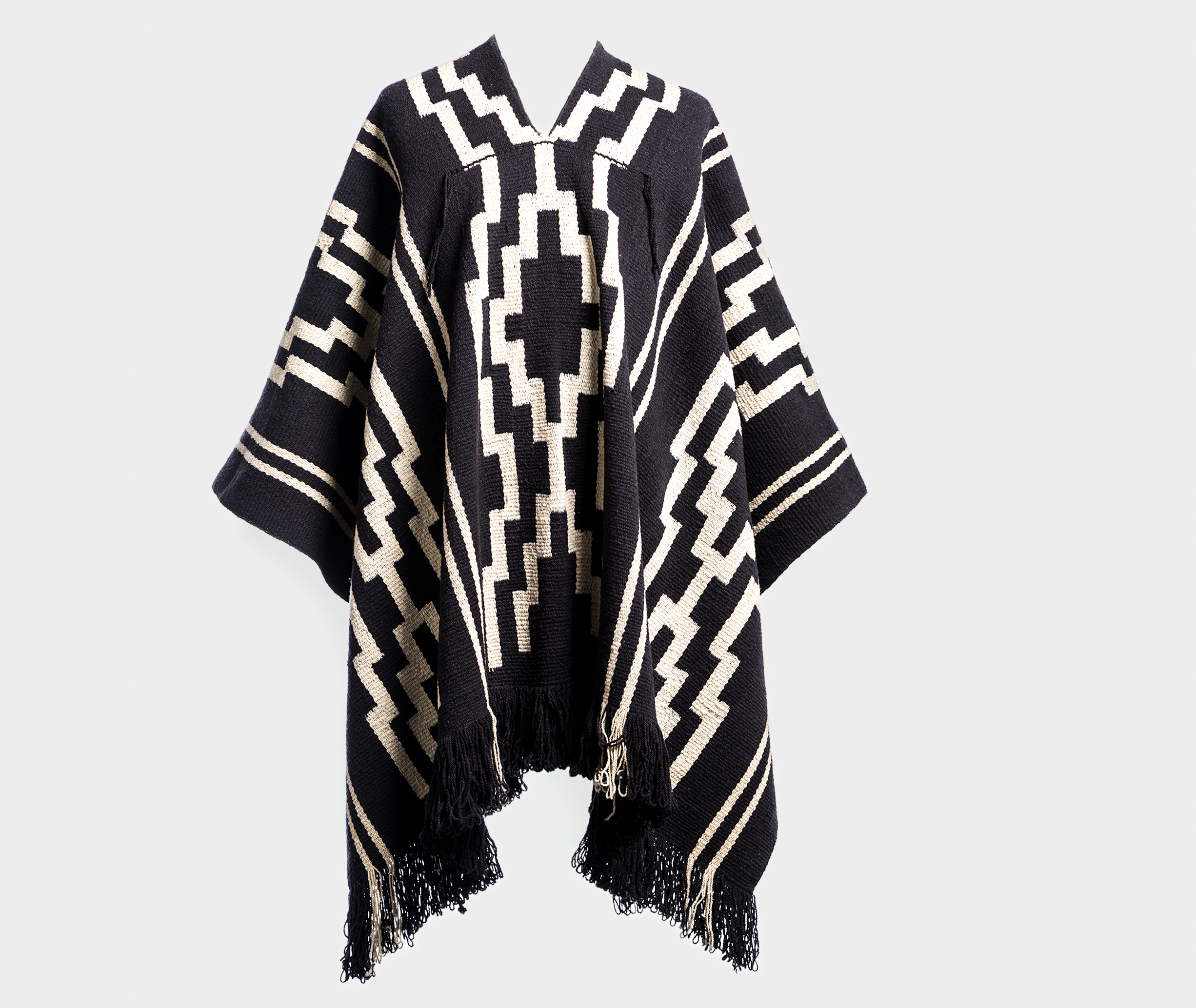
The Mapuche textile tradition dates back to pre-Columbian times, when they made fabrics with camelid fibers dyed with dyes of vegetable and mineral origin. Then the rapid incorporation of sheep, and the arrival of artificial dyes, brought by the Spanish, produced many changes. Woven garments became exchange and marketing items of great importance,
The instrument used for weaving is the vertical loom called “witral” and is made up of a frame of four beams, one to lift the warp, another to tighten the weft, a shuttle and a reed to hold the threads that lift a plane of the warp.
The textile process begins with the shearing of the animal, spinning, dyeing until the production of the fabric. The garments made today are mainly various types of ponchos, sashes and blankets, in which a variety of figures and colors are recognized associated with a symbolism specific to each garment, which expresses their worldview, always related to their spirituality and the natural environment of their ancestral territories.
English
Mapuche TextilesAt the time of the Hispanic conquest, the Mapuche inhabited the southern territory of Chile, a people made up of a series of independent groups that shared the same territory, language and certain cultural traits. Their traditional economic system was based on hunting and horticulture, then in the 18th and 19th centuries they adapted to a peasant system of agriculture and livestock farming. Today they suffer some racial and social discrimination in their relations with Chilean society, which is manifested in lower rates of education, income and higher unemployment, and their poverty rates are higher than the Chilean national average.
The Mapuche textile tradition dates back to pre-Columbian times, when they wove textiles from camelid fibers dyed with vegetable and mineral dyes. Then the rapid incorporation of sheep and the arrival of artificial dyes brought by the Spaniards brought about many changes. The woven garments became very important items of trade and commerce,
The instrument used for weaving is the vertical loom called the «witral» and is made up of a frame of four timbers, one to raise the warp, another to tighten the weft, a shuttle and a reed to hold the threads that raise a plane of the warp. The textile process begins with the shearing of the animal, the spinning, the dyeing and the production of the fabric. The garments that are made today are mainly different types of ponchos, sashes and blankets, in which a variety of figures and colors can be recognized, associated with a symbolism specific to each garment, which expresses their cosmovision, always related
Valoraciones
No hay valoraciones aún.