Descripción
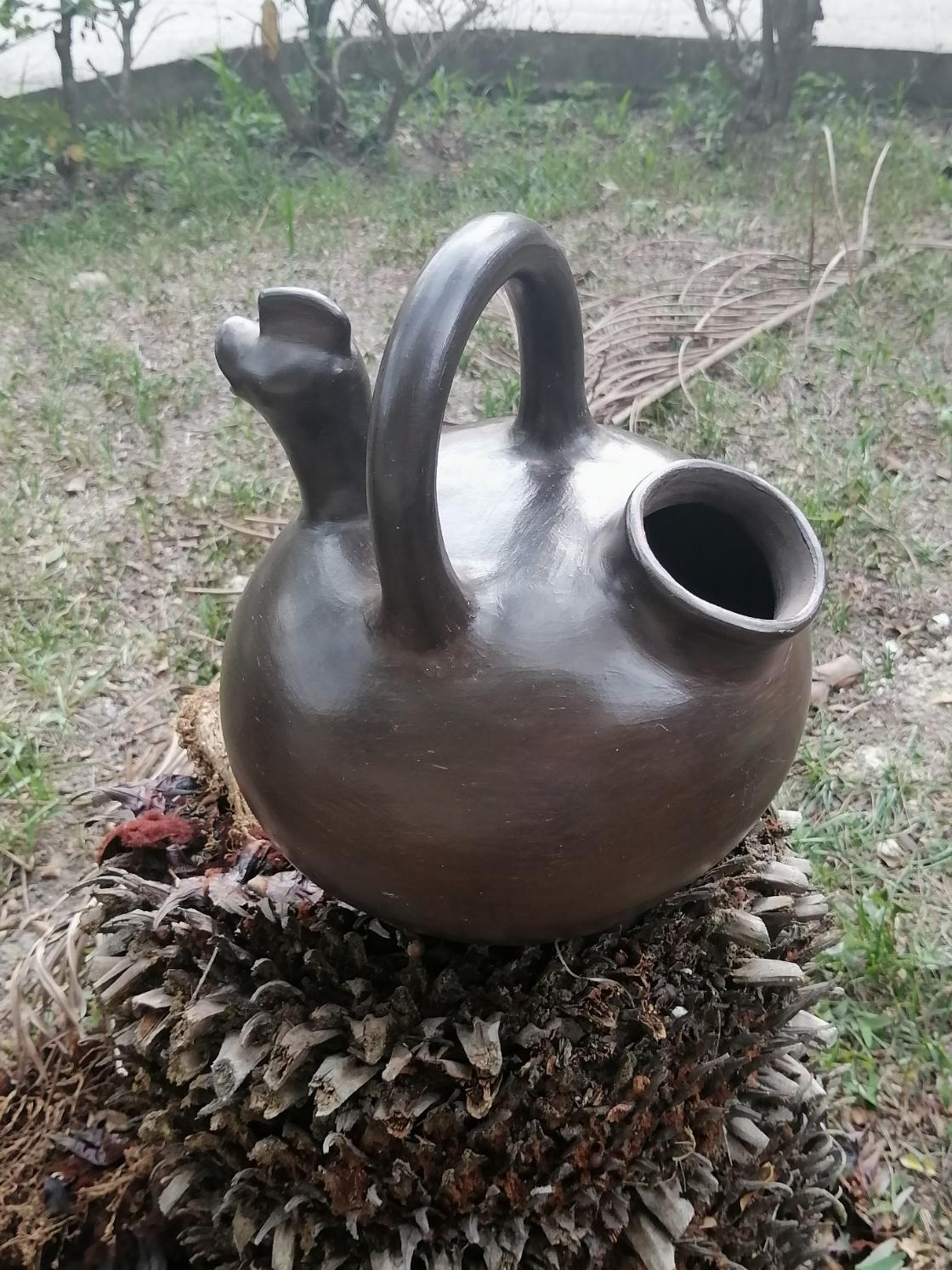
La alfarería en Honduras es muy común, es energética en el pueblo como arte y por su uso ya que es una tradición procedente del conocimiento indígena Lenca, que lamentablemente, aunque ha desaparecido el idioma, su cultura material y cosmogónica está muy viva. En el pueblo Balibrea, municipio Siguatepeque, vive la Sra. Eliza Euceda, dedicated to the art of pottery all her life, as she comes from traditional pottery families. Thousands of women from other regions where there is clay make various works of pottery for utilitarian, devotional and aesthetic value purposes.
Honduran society, to this day, values pottery and just as production is abundant, demand is permanent among the population. Moldable dough is abundant, also the sand and the water they use is from rivers, streams, rain, or from the town aqueduct service.
The oven in which the pieces are burned is also made of clay, earth and bricks, the fuel is firewood, which can be from special trees, pieces of wood, boards and even waste from a sawmill, as long as they are suitable for good combustion.
Clay, sand, water and kneading are the fundamental key to a good work. If this is not met, the pieces will crack during molding or in the process of burning in the kiln. Therefore, producing a piece of pottery is, as a whole, a harmonious whole and is therefore an art that does not allow mistakes.
There is no potter in Honduras who makes a piece – be it a plate, comal, water jug, glass, candelabra, cookware or ornaments, among other works – who makes them only, for commercial purposes, there is an ethic in her art, she does it with love, with taste, pleasure and her satisfaction is that whoever obtains it, by direct purchase or gift, is valued in its aesthetics. That contentment and pleasure in her own art spreads throughout the country and sometimes, internationally, whose pride is expressed by each potter. A bad work, created by his hands, would have no reason to exist.
english
Pottery in HondurasPottery in Honduras is very common. It is valued in the village as an art and for its use as it is a tradition coming from the Lenca indigenous knowledge. Unfortunately, although the language has disappeared, its material and cosmogonic culture is very much alive.
In the village of Balibrea, municipality of Siguatepeque, lives Mrs. Eliza Euceda, who has been dedicated to the art of pottery all her life, as she comes from a family of potters. Thousands of women from other regions where there is clay make various pottery works for utilitarian, devotional and aesthetic purposes.
The kiln in which the pieces are burned is also made of clay, earth and bricks. The fuel is wood, which can be from special trees, pieces of wood, boards and even waste from a sawmill, as long as it is suitable for good combustion.
Clay, sand, water and kneading are the fundamental keys to a good piece of work. If this is not done, the pieces crack in the molding or in the process of burning in the kiln. For all these reasons, producing a piece of pottery is, as a whole, a harmonious whole and is, therefore, an art, which admits of no mistakes.
There is no potter in Honduras who makes a piece, be it a plate, «comal», water jug, vase, candelabra, «anafres» or ornaments, who makes them only for commercial purposes. There is an ethic in her art. She does it with love, with taste, pleasure and her satisfaction is that whoever obtains it, by direct purchase or gift, values it in its aesthetics.
This pleasure in their own art spreads throughout the country and sometimes internationally, and pride is expressed by each potter.
Valoraciones
No hay valoraciones aún.