
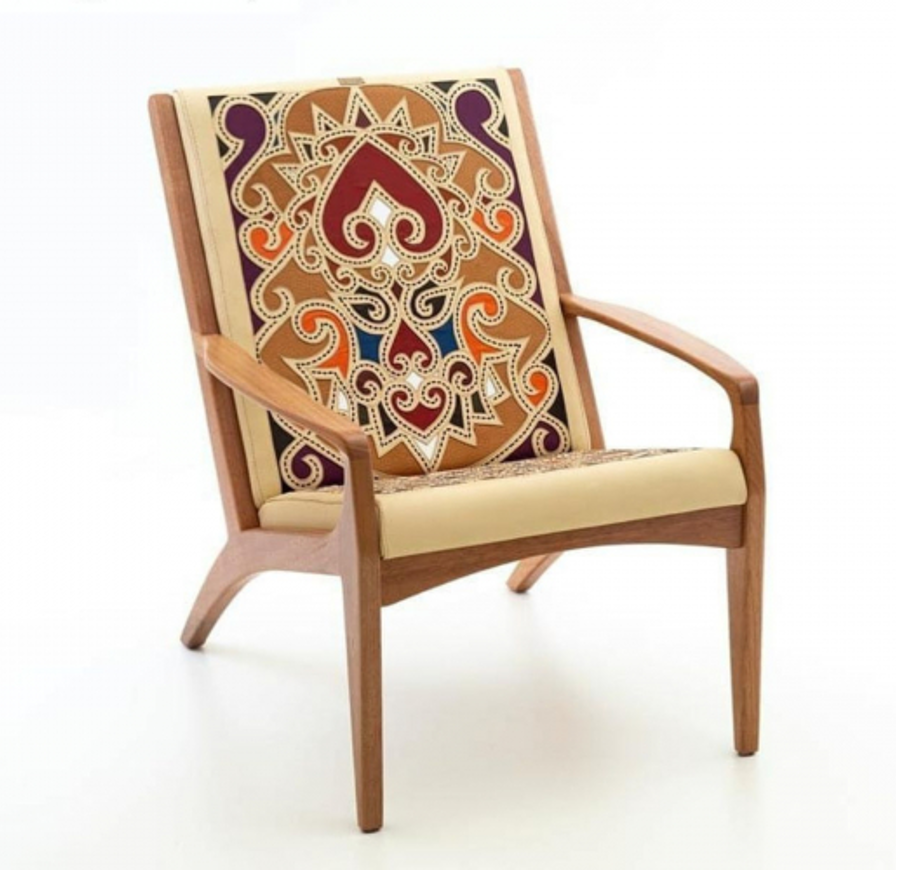
Descripción
O artesanato em couro é realizado em pequenas cidades do interior do Nordeste do Brasil há várias décadas e inicialmente voltado exclusivamente para roupas e acessórios de vaqueiro devido à vegetação seca e espinhosa típica da caatinga.
Um de seus artesãos mais destacados é o Mestre Espedito Seleiro (nascido em 1939 em Aneiroz, Ceará) trabalhando com couro, ofício que aprendeu com o pai aos oito anos de idade. Pertence à 5ª geração de artesãos que trabalham com couro na cidade de Nova Olinda, região do Cariri, Ceará. Um dia, Mestre Espedito se deu conta de que, com o falecimento do pai, o conhecimento que vinha sendo passado desde seu tataravô poderia morrer com o seu próprio falecimento. Decidiu, assim, ensinar o ofício aos seus irmãos, depois seus filhos e mais recentemente os netos. Mais tarde, fundou a Oficina Escola Espedito Seleiro que passa para os mais jovens além do ofício, a percepção de que esse saber-fazer é parte de uma cultura, de um modo de viver. Hoje, Espedito Seleiro é mestre da cultura, reconhecido oficialmente pelo Governo do Estado do Ceará e pelo Ministério da Cultura.
Em 2017, recebeu o título de Notório Saber pela Universidade Estadual do Ceará. Seu trabalho é reconhecido mundialmente, sendo considerado um dos mais expressivos e representativos expoentes do artesanato brasileiro, inspirando artistas e designers. Seu portfólio de produtos abrange desde acessórios de uso pessoal (sandálias, sapatos, cintos, bolsas, mochilas, coletes, chapéus, jaquetas, etc.) . Tornou-se um investigador de pigmentos naturais e técnicas de tingimento de couro e assim, descobriu o angico que tinge de marrom, o urucum que traz o vermelho, a cinza da capimbeira que colore de branco. Com o tempo, criou uma estética própria que valoriza os desenhos geométricos e as cores vivas.
Artesão: Espedito Seleiro (Espedito Velozo de Carvalho)
Spanish
Leather craftsLeather craftsmanship has been carried out in small towns in the interior of Northeast Brazil for several decades and initially focused exclusively on clothing and accessories for cowboys due to the dry and thorny vegetation typical of the caatinga.
One of its most notable artisans is the master Espedito Seleiro (born in 1939 in Aneiroz, Ceará) who works with leather, a trade he learned from his father at the age of eight. He belongs to the 5th generation of artisans who work leather in the city of Nova Olinda, Cariri region, Ceará. One day, Mestre Espedito realized that, with the death of his father, the knowledge that had been transmitted to him from his great-great-grandfather could die with his own death. That is why he decided to teach the trade to his brothers, then to his children and more recently to his grandchildren. Later he founded the Escola Espedito Seleiro Office, which transmits to the youngest, in addition to the trade, the perception that this know-how is part of a culture, a way of life. Today, Espedito Seleiro is a master of culture, officially recognized by the Government of the State of Ceará and the Ministry of Culture.
In 2017, he received the title of Notorious Knowledge from the State University of Ceará. His work is recognized worldwide, being considered one of the most expressive and representative exponents of Brazilian craftsmanship, inspiring artists and designers. Its product portfolio ranges from accessories for personal use (sandals, shoes, belts, bags, backpacks, vests, hats, jackets, etc.). He became a researcher of natural pigments and leather dyeing techniques and thus discovered angico that dyes brown, annatto that provides red and ash that colors white. Over time, he created his own aesthetic that values geometric designs and bright colors.
English
Leather handicraftsLeather craftsmanship has been carried out in small villages in the interior of the Northeast of Brazil for several decades and initially focused exclusively on clothing and accessories for cowboys due to the dry and thorny vegetation typical of the «caatinga».
One of its most prominent craftsmen is master craftsman Espedito Seleiro (born in 1939 in Aneiroz, Ceará) who works with leather, having learned the trade from his father at the age of eight. He belongs to the 5th generation of leather craftsmen in the city of Nova Olinda, in the region of Cariri, Ceará. One day, Mestre Espedito realized that, with the death of his father, the knowledge he had passed down to him from his great-great-grandfather could die with his own death. He therefore decided to teach the trade to his brothers, then to his children and more recently to his grandchildren. He subsequently founded the Oficina Escola Espedito Seleiro, which transmits to the younger ones, in addition to the craft, the perception that this know-how is part of a culture, of a way of life. Today, Espedito Seleiro is a master of culture, officially recognized by the Government of the State of Ceará and the Brazilian Ministry of Culture.
In 2017, he received the title of Notable Knowledge from the State University of Ceará. His work is recognized worldwide, he is considered one of the most expressive and representative exponents of Brazilian craftsmanship, inspiring artists and designers. His portfolio of products ranges from accessories for personal use (sandals, shoes, belts, bags, backpacks, waistcoats, hats, jackets, etc.). He became a researcher of natural pigments and leather dyeing techniques and thus discovered angico which dyes brown, annatto which gives the color red and ash which colors white. Over time, he created his own aesthetic that values geometric designs and bright colors.
Valoraciones
No hay valoraciones aún.