
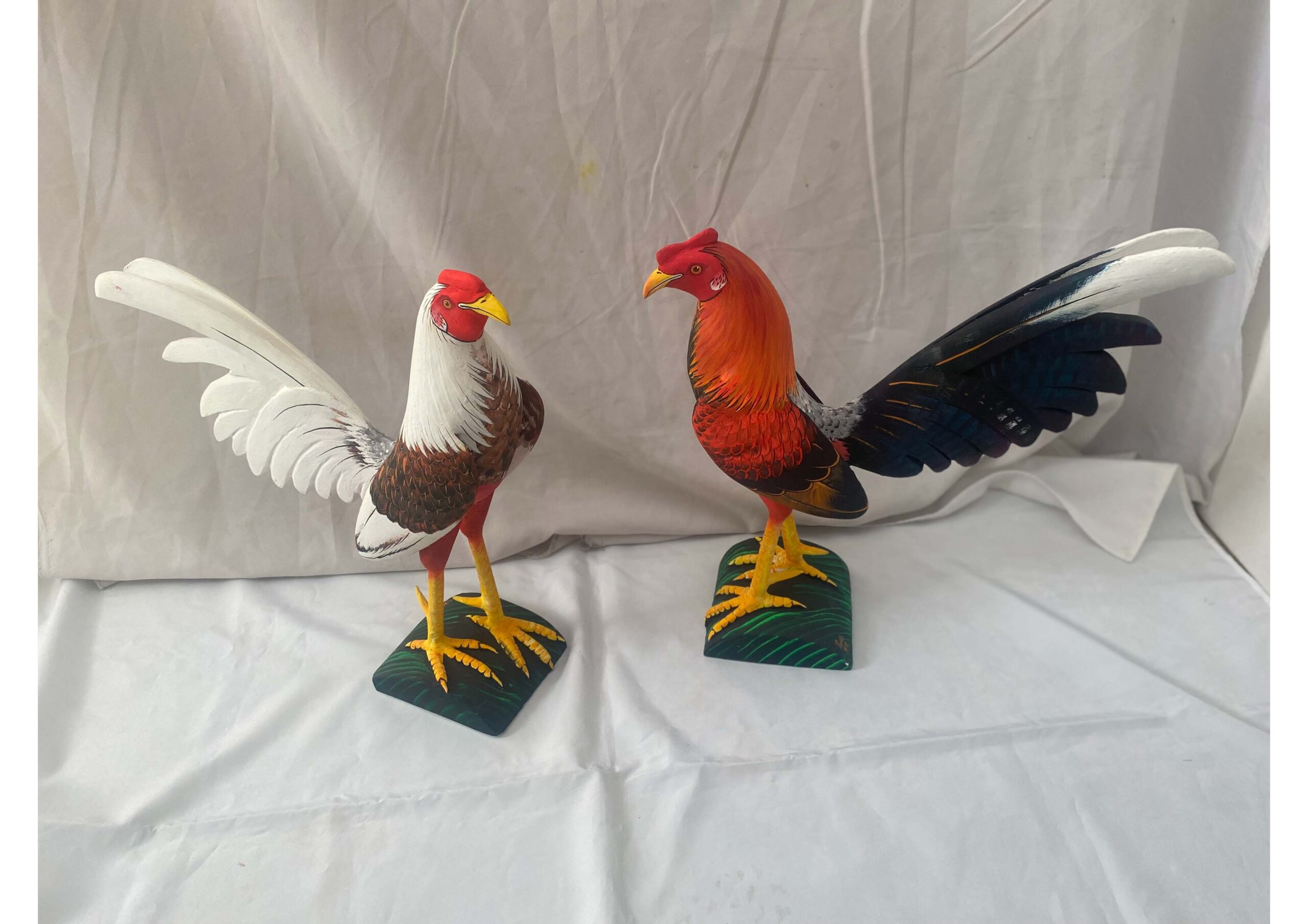
wood carving

Los Tainos, primeros pobladores de la isla Hispaniola hoy Republica Dominicana y Haití, fueron magníficos artífices de tallas de maderas , tanto par su uso utilitario, así como para artefactos ceremoniales. La isla contaba con bosques madereros de importancia destacándose la Caoba (Swietenia mahagoni) Guayacan (Lignum vitae), Oak (Catalpa longissima Pine, (Pinus occidentalis)Cedar,   (Cedrela odorata) and […]

Descripción

Los Tainos, primeros pobladores de la isla Hispaniola hoy Republica Dominicana y Haití, fueron magníficos artífices de tallas de maderas , tanto par su uso utilitario, así como para artefactos ceremoniales.

La isla contaba con bosques madereros de importancia destacándose la Caoba (Swietenia mahagoni) Guayacan (Lignum vitae), Oak (Catalpa longissima Pine, (Pinus occidentalis)Cedar,   (Cedrela odorata) and others. Mahogany is one of the woods that is most used for the manufacture of crafts and furniture with its dark red colors.

As was the case with guayacán (Lignum vitae), mahogany was used in the keels of sailboats because it achieved greater nautical stability, providing more ballast in the keels than other types of wood.

Guayacan carvings are in high demand in the tourist market with designs inspired by Taino artifacts and crafts from Bali, Indonesia, frequently offered in gift shops as of national manufacture as is the case with other imported crafts. Recently there is a wide demand for small guayacan spoons, which are manufactured to sweeten coffee.

The pine, and almacigo, (Bursera simarouba) They are used to make carvings of roosters, parrots, and fish, which were awarded with UNESCO Seals of Excellence, together with the Santos de Palo de Bonao, and the Jícara Butterflies from Coco de Moca. (2006).

During the Colony, wooden saints were made, of Catholic tradition and which were rescued in 2003 by a group of young artisans from the city of Bonao.

Also in the community of Miches, El Seíbo province, there are several workshops that make wooden saints, assisted by its Cayuco Cultural Center.

In Boquerón, Azua, there are about 15 to 25 workshops that make pilons (majadores) made with electric lathes and Baitoa wood, (Phyllostylon brasiliensis)Bayahonda, (Bursera simarouba) and Guayacan.

The rafts, made of fig wood (Ficus carica  and almacigo trace their use back to pre-Columbian cultures and were used for the extraction of alluvial gold (rivers) and for washing clothes in rural areas.

english

Wood CarvingThe Tainos, the first settlers of the island «Hispaniola», today the Dominican Republic and Haiti, were magnificent wood carvers, both for their utilitarian use, as well as for ceremonial artifacts.

The island had important timber forests, notably Mahogany (Swietenia mahagoni), Guayacan (Lignum vitae), Oak (Catalpa longissima), Pine (Pinus occidentalis), Cedar (Cedrela odorata) and others.  Mahogany is one of the most used woods for the manufacture of handicrafts and furniture with its dark red colors.

As with the «guayacán» (Lignum vitae), mahogany was used in the keels of sailing ships because of its greater nautical stability, providing more ballast in the keels than other types of wood. Guayacán» carvings are in high demand in the tourist market with designs inspired by Taino artefacts and handicrafts from Bali, Indonesia, often offered in gift shops as being of national manufacture as with other imported handicrafts, and recently there has been a large demand for small «guayacán» spoons made to sweeten coffee. Pine, and «almacigo» (Bursera simarouba) are used for the manufacture of carvings of roosters, parrots, and fish, which were awarded UNESCO Seals of Excellence, along with the «Santos de Palo de Bonao», and the «Mariposas de Jícara de Coco de Moca» (2006).

During the Colonial period, stick saints were made in the Catholic tradition and were rescued in 2003 by a group of young artisans from the city of Bonao.

Also in the community of Miches, in the province of El Seibo, there are several workshops that make wooden saints, assisted by the Cayuco Cultural Center. In Boquerón, Azua, there are 15 to 25 workshops manufacturing «pilones» (majadores) made with electric lathes and with wood from Baitoa, (Phyllostylon brasiliensis) Bayahonda, (Bursera Simarouba) and «Guayacán».

The «bateas» of fig wood (Ficus carica) date back to pre-Columbian cultures and were used for the extraction of gold from rivers and for washing clothes in rural areas.

Valoraciones

No hay valoraciones aún.

Sé el primero en valorar “wood carving”

Tu dirección de correo electrónico no será publicada. Los campos obligatorios están marcados con *

Descripción

Los Tainos, primeros pobladores de la isla Hispaniola hoy Republica Dominicana y Haití, fueron magníficos artífices de tallas de maderas , tanto par su uso utilitario, así como para artefactos ceremoniales.

La isla contaba con bosques madereros de importancia destacándose la Caoba (Swietenia mahagoni) Guayacan (Lignum vitae), Oak (Catalpa longissima Pine, (Pinus occidentalis)Cedar,   (Cedrela odorata) and others. Mahogany is one of the woods that is most used for the manufacture of crafts and furniture with its dark red colors.

As was the case with guayacán (Lignum vitae), mahogany was used in the keels of sailboats because it achieved greater nautical stability, providing more ballast in the keels than other types of wood.

Guayacan carvings are in high demand in the tourist market with designs inspired by Taino artifacts and crafts from Bali, Indonesia, frequently offered in gift shops as of national manufacture as is the case with other imported crafts. Recently there is a wide demand for small guayacan spoons, which are manufactured to sweeten coffee.

The pine, and almacigo, (Bursera simarouba) They are used to make carvings of roosters, parrots, and fish, which were awarded with UNESCO Seals of Excellence, together with the Santos de Palo de Bonao, and the Jícara Butterflies from Coco de Moca. (2006).

During the Colony, wooden saints were made, of Catholic tradition and which were rescued in 2003 by a group of young artisans from the city of Bonao.

Also in the community of Miches, El Seíbo province, there are several workshops that make wooden saints, assisted by its Cayuco Cultural Center.

In Boquerón, Azua, there are about 15 to 25 workshops that make pilons (majadores) made with electric lathes and Baitoa wood, (Phyllostylon brasiliensis)Bayahonda, (Bursera simarouba) and Guayacan.

The rafts, made of fig wood (Ficus carica  and almacigo trace their use back to pre-Columbian cultures and were used for the extraction of alluvial gold (rivers) and for washing clothes in rural areas.

english

Wood CarvingThe Tainos, the first settlers of the island «Hispaniola», today the Dominican Republic and Haiti, were magnificent wood carvers, both for their utilitarian use, as well as for ceremonial artifacts.

The island had important timber forests, notably Mahogany (Swietenia mahagoni), Guayacan (Lignum vitae), Oak (Catalpa longissima), Pine (Pinus occidentalis), Cedar (Cedrela odorata) and others.  Mahogany is one of the most used woods for the manufacture of handicrafts and furniture with its dark red colors.

As with the «guayacán» (Lignum vitae), mahogany was used in the keels of sailing ships because of its greater nautical stability, providing more ballast in the keels than other types of wood. Guayacán» carvings are in high demand in the tourist market with designs inspired by Taino artefacts and handicrafts from Bali, Indonesia, often offered in gift shops as being of national manufacture as with other imported handicrafts, and recently there has been a large demand for small «guayacán» spoons made to sweeten coffee. Pine, and «almacigo» (Bursera simarouba) are used for the manufacture of carvings of roosters, parrots, and fish, which were awarded UNESCO Seals of Excellence, along with the «Santos de Palo de Bonao», and the «Mariposas de Jícara de Coco de Moca» (2006).

During the Colonial period, stick saints were made in the Catholic tradition and were rescued in 2003 by a group of young artisans from the city of Bonao.

Also in the community of Miches, in the province of El Seibo, there are several workshops that make wooden saints, assisted by the Cayuco Cultural Center. In Boquerón, Azua, there are 15 to 25 workshops manufacturing «pilones» (majadores) made with electric lathes and with wood from Baitoa, (Phyllostylon brasiliensis) Bayahonda, (Bursera Simarouba) and «Guayacán».

The «bateas» of fig wood (Ficus carica) date back to pre-Columbian cultures and were used for the extraction of gold from rivers and for washing clothes in rural areas.

Valoraciones

No hay valoraciones aún.

Sé el primero en valorar “wood carving”

Tu dirección de correo electrónico no será publicada. Los campos obligatorios están marcados con *

Descripción

Los Tainos, primeros pobladores de la isla Hispaniola hoy Republica Dominicana y Haití, fueron magníficos artífices de tallas de maderas , tanto par su uso utilitario, así como para artefactos ceremoniales.

La isla contaba con bosques madereros de importancia destacándose la Caoba (Swietenia mahagoni) Guayacan (Lignum vitae), Oak (Catalpa longissima Pine, (Pinus occidentalis)Cedar,   (Cedrela odorata) and others. Mahogany is one of the woods that is most used for the manufacture of crafts and furniture with its dark red colors.

As was the case with guayacán (Lignum vitae), mahogany was used in the keels of sailboats because it achieved greater nautical stability, providing more ballast in the keels than other types of wood.

Guayacan carvings are in high demand in the tourist market with designs inspired by Taino artifacts and crafts from Bali, Indonesia, frequently offered in gift shops as of national manufacture as is the case with other imported crafts. Recently there is a wide demand for small guayacan spoons, which are manufactured to sweeten coffee.

The pine, and almacigo, (Bursera simarouba) They are used to make carvings of roosters, parrots, and fish, which were awarded with UNESCO Seals of Excellence, together with the Santos de Palo de Bonao, and the Jícara Butterflies from Coco de Moca. (2006).

During the Colony, wooden saints were made, of Catholic tradition and which were rescued in 2003 by a group of young artisans from the city of Bonao.

Also in the community of Miches, El Seíbo province, there are several workshops that make wooden saints, assisted by its Cayuco Cultural Center.

In Boquerón, Azua, there are about 15 to 25 workshops that make pilons (majadores) made with electric lathes and Baitoa wood, (Phyllostylon brasiliensis)Bayahonda, (Bursera simarouba) and Guayacan.

The rafts, made of fig wood (Ficus carica  and almacigo trace their use back to pre-Columbian cultures and were used for the extraction of alluvial gold (rivers) and for washing clothes in rural areas.

english

Wood CarvingThe Tainos, the first settlers of the island «Hispaniola», today the Dominican Republic and Haiti, were magnificent wood carvers, both for their utilitarian use, as well as for ceremonial artifacts.

The island had important timber forests, notably Mahogany (Swietenia mahagoni), Guayacan (Lignum vitae), Oak (Catalpa longissima), Pine (Pinus occidentalis), Cedar (Cedrela odorata) and others.  Mahogany is one of the most used woods for the manufacture of handicrafts and furniture with its dark red colors.

As with the «guayacán» (Lignum vitae), mahogany was used in the keels of sailing ships because of its greater nautical stability, providing more ballast in the keels than other types of wood. Guayacán» carvings are in high demand in the tourist market with designs inspired by Taino artefacts and handicrafts from Bali, Indonesia, often offered in gift shops as being of national manufacture as with other imported handicrafts, and recently there has been a large demand for small «guayacán» spoons made to sweeten coffee. Pine, and «almacigo» (Bursera simarouba) are used for the manufacture of carvings of roosters, parrots, and fish, which were awarded UNESCO Seals of Excellence, along with the «Santos de Palo de Bonao», and the «Mariposas de Jícara de Coco de Moca» (2006).

During the Colonial period, stick saints were made in the Catholic tradition and were rescued in 2003 by a group of young artisans from the city of Bonao.

Also in the community of Miches, in the province of El Seibo, there are several workshops that make wooden saints, assisted by the Cayuco Cultural Center. In Boquerón, Azua, there are 15 to 25 workshops manufacturing «pilones» (majadores) made with electric lathes and with wood from Baitoa, (Phyllostylon brasiliensis) Bayahonda, (Bursera Simarouba) and «Guayacán».

The «bateas» of fig wood (Ficus carica) date back to pre-Columbian cultures and were used for the extraction of gold from rivers and for washing clothes in rural areas.

Valoraciones

No hay valoraciones aún.

Sé el primero en valorar “wood carving”

Tu dirección de correo electrónico no será publicada. Los campos obligatorios están marcados con *

Descripción

Los Tainos, primeros pobladores de la isla Hispaniola hoy Republica Dominicana y Haití, fueron magníficos artífices de tallas de maderas , tanto par su uso utilitario, así como para artefactos ceremoniales.

La isla contaba con bosques madereros de importancia destacándose la Caoba (Swietenia mahagoni) Guayacan (Lignum vitae), Oak (Catalpa longissima Pine, (Pinus occidentalis)Cedar,   (Cedrela odorata) and others. Mahogany is one of the woods that is most used for the manufacture of crafts and furniture with its dark red colors.

As was the case with guayacán (Lignum vitae), mahogany was used in the keels of sailboats because it achieved greater nautical stability, providing more ballast in the keels than other types of wood.

Guayacan carvings are in high demand in the tourist market with designs inspired by Taino artifacts and crafts from Bali, Indonesia, frequently offered in gift shops as of national manufacture as is the case with other imported crafts. Recently there is a wide demand for small guayacan spoons, which are manufactured to sweeten coffee.

The pine, and almacigo, (Bursera simarouba) They are used to make carvings of roosters, parrots, and fish, which were awarded with UNESCO Seals of Excellence, together with the Santos de Palo de Bonao, and the Jícara Butterflies from Coco de Moca. (2006).

During the Colony, wooden saints were made, of Catholic tradition and which were rescued in 2003 by a group of young artisans from the city of Bonao.

Also in the community of Miches, El Seíbo province, there are several workshops that make wooden saints, assisted by its Cayuco Cultural Center.

In Boquerón, Azua, there are about 15 to 25 workshops that make pilons (majadores) made with electric lathes and Baitoa wood, (Phyllostylon brasiliensis)Bayahonda, (Bursera simarouba) and Guayacan.

The rafts, made of fig wood (Ficus carica  and almacigo trace their use back to pre-Columbian cultures and were used for the extraction of alluvial gold (rivers) and for washing clothes in rural areas.

english

Wood CarvingThe Tainos, the first settlers of the island «Hispaniola», today the Dominican Republic and Haiti, were magnificent wood carvers, both for their utilitarian use, as well as for ceremonial artifacts.

The island had important timber forests, notably Mahogany (Swietenia mahagoni), Guayacan (Lignum vitae), Oak (Catalpa longissima), Pine (Pinus occidentalis), Cedar (Cedrela odorata) and others.  Mahogany is one of the most used woods for the manufacture of handicrafts and furniture with its dark red colors.

As with the «guayacán» (Lignum vitae), mahogany was used in the keels of sailing ships because of its greater nautical stability, providing more ballast in the keels than other types of wood. Guayacán» carvings are in high demand in the tourist market with designs inspired by Taino artefacts and handicrafts from Bali, Indonesia, often offered in gift shops as being of national manufacture as with other imported handicrafts, and recently there has been a large demand for small «guayacán» spoons made to sweeten coffee. Pine, and «almacigo» (Bursera simarouba) are used for the manufacture of carvings of roosters, parrots, and fish, which were awarded UNESCO Seals of Excellence, along with the «Santos de Palo de Bonao», and the «Mariposas de Jícara de Coco de Moca» (2006).

During the Colonial period, stick saints were made in the Catholic tradition and were rescued in 2003 by a group of young artisans from the city of Bonao.

Also in the community of Miches, in the province of El Seibo, there are several workshops that make wooden saints, assisted by the Cayuco Cultural Center. In Boquerón, Azua, there are 15 to 25 workshops manufacturing «pilones» (majadores) made with electric lathes and with wood from Baitoa, (Phyllostylon brasiliensis) Bayahonda, (Bursera Simarouba) and «Guayacán».

The «bateas» of fig wood (Ficus carica) date back to pre-Columbian cultures and were used for the extraction of gold from rivers and for washing clothes in rural areas.

Valoraciones

No hay valoraciones aún.

Sé el primero en valorar “wood carving”

Tu dirección de correo electrónico no será publicada. Los campos obligatorios están marcados con *

Descripción

Los Tainos, primeros pobladores de la isla Hispaniola hoy Republica Dominicana y Haití, fueron magníficos artífices de tallas de maderas , tanto par su uso utilitario, así como para artefactos ceremoniales.

La isla contaba con bosques madereros de importancia destacándose la Caoba (Swietenia mahagoni) Guayacan (Lignum vitae), Oak (Catalpa longissima Pine, (Pinus occidentalis)Cedar,   (Cedrela odorata) and others. Mahogany is one of the woods that is most used for the manufacture of crafts and furniture with its dark red colors.

As was the case with guayacán (Lignum vitae), mahogany was used in the keels of sailboats because it achieved greater nautical stability, providing more ballast in the keels than other types of wood.

Guayacan carvings are in high demand in the tourist market with designs inspired by Taino artifacts and crafts from Bali, Indonesia, frequently offered in gift shops as of national manufacture as is the case with other imported crafts. Recently there is a wide demand for small guayacan spoons, which are manufactured to sweeten coffee.

The pine, and almacigo, (Bursera simarouba) They are used to make carvings of roosters, parrots, and fish, which were awarded with UNESCO Seals of Excellence, together with the Santos de Palo de Bonao, and the Jícara Butterflies from Coco de Moca. (2006).

During the Colony, wooden saints were made, of Catholic tradition and which were rescued in 2003 by a group of young artisans from the city of Bonao.

Also in the community of Miches, El Seíbo province, there are several workshops that make wooden saints, assisted by its Cayuco Cultural Center.

In Boquerón, Azua, there are about 15 to 25 workshops that make pilons (majadores) made with electric lathes and Baitoa wood, (Phyllostylon brasiliensis)Bayahonda, (Bursera simarouba) and Guayacan.

The rafts, made of fig wood (Ficus carica  and almacigo trace their use back to pre-Columbian cultures and were used for the extraction of alluvial gold (rivers) and for washing clothes in rural areas.

english

Wood CarvingThe Tainos, the first settlers of the island «Hispaniola», today the Dominican Republic and Haiti, were magnificent wood carvers, both for their utilitarian use, as well as for ceremonial artifacts.

The island had important timber forests, notably Mahogany (Swietenia mahagoni), Guayacan (Lignum vitae), Oak (Catalpa longissima), Pine (Pinus occidentalis), Cedar (Cedrela odorata) and others.  Mahogany is one of the most used woods for the manufacture of handicrafts and furniture with its dark red colors.

As with the «guayacán» (Lignum vitae), mahogany was used in the keels of sailing ships because of its greater nautical stability, providing more ballast in the keels than other types of wood. Guayacán» carvings are in high demand in the tourist market with designs inspired by Taino artefacts and handicrafts from Bali, Indonesia, often offered in gift shops as being of national manufacture as with other imported handicrafts, and recently there has been a large demand for small «guayacán» spoons made to sweeten coffee. Pine, and «almacigo» (Bursera simarouba) are used for the manufacture of carvings of roosters, parrots, and fish, which were awarded UNESCO Seals of Excellence, along with the «Santos de Palo de Bonao», and the «Mariposas de Jícara de Coco de Moca» (2006).

During the Colonial period, stick saints were made in the Catholic tradition and were rescued in 2003 by a group of young artisans from the city of Bonao.

Also in the community of Miches, in the province of El Seibo, there are several workshops that make wooden saints, assisted by the Cayuco Cultural Center. In Boquerón, Azua, there are 15 to 25 workshops manufacturing «pilones» (majadores) made with electric lathes and with wood from Baitoa, (Phyllostylon brasiliensis) Bayahonda, (Bursera Simarouba) and «Guayacán».

The «bateas» of fig wood (Ficus carica) date back to pre-Columbian cultures and were used for the extraction of gold from rivers and for washing clothes in rural areas.

Valoraciones

No hay valoraciones aún.

Sé el primero en valorar “wood carving”

Tu dirección de correo electrónico no será publicada. Los campos obligatorios están marcados con *

Descripción

Los Tainos, primeros pobladores de la isla Hispaniola hoy Republica Dominicana y Haití, fueron magníficos artífices de tallas de maderas , tanto par su uso utilitario, así como para artefactos ceremoniales.

La isla contaba con bosques madereros de importancia destacándose la Caoba (Swietenia mahagoni) Guayacan (Lignum vitae), Oak (Catalpa longissima Pine, (Pinus occidentalis)Cedar,   (Cedrela odorata) and others. Mahogany is one of the woods that is most used for the manufacture of crafts and furniture with its dark red colors.

As was the case with guayacán (Lignum vitae), mahogany was used in the keels of sailboats because it achieved greater nautical stability, providing more ballast in the keels than other types of wood.

Guayacan carvings are in high demand in the tourist market with designs inspired by Taino artifacts and crafts from Bali, Indonesia, frequently offered in gift shops as of national manufacture as is the case with other imported crafts. Recently there is a wide demand for small guayacan spoons, which are manufactured to sweeten coffee.

The pine, and almacigo, (Bursera simarouba) They are used to make carvings of roosters, parrots, and fish, which were awarded with UNESCO Seals of Excellence, together with the Santos de Palo de Bonao, and the Jícara Butterflies from Coco de Moca. (2006).

During the Colony, wooden saints were made, of Catholic tradition and which were rescued in 2003 by a group of young artisans from the city of Bonao.

Also in the community of Miches, El Seíbo province, there are several workshops that make wooden saints, assisted by its Cayuco Cultural Center.

In Boquerón, Azua, there are about 15 to 25 workshops that make pilons (majadores) made with electric lathes and Baitoa wood, (Phyllostylon brasiliensis)Bayahonda, (Bursera simarouba) and Guayacan.

The rafts, made of fig wood (Ficus carica  and almacigo trace their use back to pre-Columbian cultures and were used for the extraction of alluvial gold (rivers) and for washing clothes in rural areas.

english

Wood CarvingThe Tainos, the first settlers of the island «Hispaniola», today the Dominican Republic and Haiti, were magnificent wood carvers, both for their utilitarian use, as well as for ceremonial artifacts.

The island had important timber forests, notably Mahogany (Swietenia mahagoni), Guayacan (Lignum vitae), Oak (Catalpa longissima), Pine (Pinus occidentalis), Cedar (Cedrela odorata) and others.  Mahogany is one of the most used woods for the manufacture of handicrafts and furniture with its dark red colors.

As with the «guayacán» (Lignum vitae), mahogany was used in the keels of sailing ships because of its greater nautical stability, providing more ballast in the keels than other types of wood. Guayacán» carvings are in high demand in the tourist market with designs inspired by Taino artefacts and handicrafts from Bali, Indonesia, often offered in gift shops as being of national manufacture as with other imported handicrafts, and recently there has been a large demand for small «guayacán» spoons made to sweeten coffee. Pine, and «almacigo» (Bursera simarouba) are used for the manufacture of carvings of roosters, parrots, and fish, which were awarded UNESCO Seals of Excellence, along with the «Santos de Palo de Bonao», and the «Mariposas de Jícara de Coco de Moca» (2006).

During the Colonial period, stick saints were made in the Catholic tradition and were rescued in 2003 by a group of young artisans from the city of Bonao.

Also in the community of Miches, in the province of El Seibo, there are several workshops that make wooden saints, assisted by the Cayuco Cultural Center. In Boquerón, Azua, there are 15 to 25 workshops manufacturing «pilones» (majadores) made with electric lathes and with wood from Baitoa, (Phyllostylon brasiliensis) Bayahonda, (Bursera Simarouba) and «Guayacán».

The «bateas» of fig wood (Ficus carica) date back to pre-Columbian cultures and were used for the extraction of gold from rivers and for washing clothes in rural areas.

Valoraciones

No hay valoraciones aún.

Sé el primero en valorar “wood carving”

Tu dirección de correo electrónico no será publicada. Los campos obligatorios están marcados con *

Descripción

Los Tainos, primeros pobladores de la isla Hispaniola hoy Republica Dominicana y Haití, fueron magníficos artífices de tallas de maderas , tanto par su uso utilitario, así como para artefactos ceremoniales.

La isla contaba con bosques madereros de importancia destacándose la Caoba (Swietenia mahagoni) Guayacan (Lignum vitae), Oak (Catalpa longissima Pine, (Pinus occidentalis)Cedar,   (Cedrela odorata) and others. Mahogany is one of the woods that is most used for the manufacture of crafts and furniture with its dark red colors.

As was the case with guayacán (Lignum vitae), mahogany was used in the keels of sailboats because it achieved greater nautical stability, providing more ballast in the keels than other types of wood.

Guayacan carvings are in high demand in the tourist market with designs inspired by Taino artifacts and crafts from Bali, Indonesia, frequently offered in gift shops as of national manufacture as is the case with other imported crafts. Recently there is a wide demand for small guayacan spoons, which are manufactured to sweeten coffee.

The pine, and almacigo, (Bursera simarouba) They are used to make carvings of roosters, parrots, and fish, which were awarded with UNESCO Seals of Excellence, together with the Santos de Palo de Bonao, and the Jícara Butterflies from Coco de Moca. (2006).

During the Colony, wooden saints were made, of Catholic tradition and which were rescued in 2003 by a group of young artisans from the city of Bonao.

Also in the community of Miches, El Seíbo province, there are several workshops that make wooden saints, assisted by its Cayuco Cultural Center.

In Boquerón, Azua, there are about 15 to 25 workshops that make pilons (majadores) made with electric lathes and Baitoa wood, (Phyllostylon brasiliensis)Bayahonda, (Bursera simarouba) and Guayacan.

The rafts, made of fig wood (Ficus carica  and almacigo trace their use back to pre-Columbian cultures and were used for the extraction of alluvial gold (rivers) and for washing clothes in rural areas.

english

Wood CarvingThe Tainos, the first settlers of the island «Hispaniola», today the Dominican Republic and Haiti, were magnificent wood carvers, both for their utilitarian use, as well as for ceremonial artifacts.

The island had important timber forests, notably Mahogany (Swietenia mahagoni), Guayacan (Lignum vitae), Oak (Catalpa longissima), Pine (Pinus occidentalis), Cedar (Cedrela odorata) and others.  Mahogany is one of the most used woods for the manufacture of handicrafts and furniture with its dark red colors.

As with the «guayacán» (Lignum vitae), mahogany was used in the keels of sailing ships because of its greater nautical stability, providing more ballast in the keels than other types of wood. Guayacán» carvings are in high demand in the tourist market with designs inspired by Taino artefacts and handicrafts from Bali, Indonesia, often offered in gift shops as being of national manufacture as with other imported handicrafts, and recently there has been a large demand for small «guayacán» spoons made to sweeten coffee. Pine, and «almacigo» (Bursera simarouba) are used for the manufacture of carvings of roosters, parrots, and fish, which were awarded UNESCO Seals of Excellence, along with the «Santos de Palo de Bonao», and the «Mariposas de Jícara de Coco de Moca» (2006).

During the Colonial period, stick saints were made in the Catholic tradition and were rescued in 2003 by a group of young artisans from the city of Bonao.

Also in the community of Miches, in the province of El Seibo, there are several workshops that make wooden saints, assisted by the Cayuco Cultural Center. In Boquerón, Azua, there are 15 to 25 workshops manufacturing «pilones» (majadores) made with electric lathes and with wood from Baitoa, (Phyllostylon brasiliensis) Bayahonda, (Bursera Simarouba) and «Guayacán».

The «bateas» of fig wood (Ficus carica) date back to pre-Columbian cultures and were used for the extraction of gold from rivers and for washing clothes in rural areas.

Valoraciones

No hay valoraciones aún.

Sé el primero en valorar “wood carving”

Tu dirección de correo electrónico no será publicada. Los campos obligatorios están marcados con *

Descripción

Los Tainos, primeros pobladores de la isla Hispaniola hoy Republica Dominicana y Haití, fueron magníficos artífices de tallas de maderas , tanto par su uso utilitario, así como para artefactos ceremoniales.

La isla contaba con bosques madereros de importancia destacándose la Caoba (Swietenia mahagoni) Guayacan (Lignum vitae), Oak (Catalpa longissima Pine, (Pinus occidentalis)Cedar,   (Cedrela odorata) and others. Mahogany is one of the woods that is most used for the manufacture of crafts and furniture with its dark red colors.

As was the case with guayacán (Lignum vitae), mahogany was used in the keels of sailboats because it achieved greater nautical stability, providing more ballast in the keels than other types of wood.

Guayacan carvings are in high demand in the tourist market with designs inspired by Taino artifacts and crafts from Bali, Indonesia, frequently offered in gift shops as of national manufacture as is the case with other imported crafts. Recently there is a wide demand for small guayacan spoons, which are manufactured to sweeten coffee.

The pine, and almacigo, (Bursera simarouba) They are used to make carvings of roosters, parrots, and fish, which were awarded with UNESCO Seals of Excellence, together with the Santos de Palo de Bonao, and the Jícara Butterflies from Coco de Moca. (2006).

During the Colony, wooden saints were made, of Catholic tradition and which were rescued in 2003 by a group of young artisans from the city of Bonao.

Also in the community of Miches, El Seíbo province, there are several workshops that make wooden saints, assisted by its Cayuco Cultural Center.

In Boquerón, Azua, there are about 15 to 25 workshops that make pilons (majadores) made with electric lathes and Baitoa wood, (Phyllostylon brasiliensis)Bayahonda, (Bursera simarouba) and Guayacan.

The rafts, made of fig wood (Ficus carica  and almacigo trace their use back to pre-Columbian cultures and were used for the extraction of alluvial gold (rivers) and for washing clothes in rural areas.

english

Wood CarvingThe Tainos, the first settlers of the island «Hispaniola», today the Dominican Republic and Haiti, were magnificent wood carvers, both for their utilitarian use, as well as for ceremonial artifacts.

The island had important timber forests, notably Mahogany (Swietenia mahagoni), Guayacan (Lignum vitae), Oak (Catalpa longissima), Pine (Pinus occidentalis), Cedar (Cedrela odorata) and others.  Mahogany is one of the most used woods for the manufacture of handicrafts and furniture with its dark red colors.

As with the «guayacán» (Lignum vitae), mahogany was used in the keels of sailing ships because of its greater nautical stability, providing more ballast in the keels than other types of wood. Guayacán» carvings are in high demand in the tourist market with designs inspired by Taino artefacts and handicrafts from Bali, Indonesia, often offered in gift shops as being of national manufacture as with other imported handicrafts, and recently there has been a large demand for small «guayacán» spoons made to sweeten coffee. Pine, and «almacigo» (Bursera simarouba) are used for the manufacture of carvings of roosters, parrots, and fish, which were awarded UNESCO Seals of Excellence, along with the «Santos de Palo de Bonao», and the «Mariposas de Jícara de Coco de Moca» (2006).

During the Colonial period, stick saints were made in the Catholic tradition and were rescued in 2003 by a group of young artisans from the city of Bonao.

Also in the community of Miches, in the province of El Seibo, there are several workshops that make wooden saints, assisted by the Cayuco Cultural Center. In Boquerón, Azua, there are 15 to 25 workshops manufacturing «pilones» (majadores) made with electric lathes and with wood from Baitoa, (Phyllostylon brasiliensis) Bayahonda, (Bursera Simarouba) and «Guayacán».

The «bateas» of fig wood (Ficus carica) date back to pre-Columbian cultures and were used for the extraction of gold from rivers and for washing clothes in rural areas.

Valoraciones

No hay valoraciones aún.

Sé el primero en valorar “wood carving”

Tu dirección de correo electrónico no será publicada. Los campos obligatorios están marcados con *

Descripción

Los Tainos, primeros pobladores de la isla Hispaniola hoy Republica Dominicana y Haití, fueron magníficos artífices de tallas de maderas , tanto par su uso utilitario, así como para artefactos ceremoniales.

La isla contaba con bosques madereros de importancia destacándose la Caoba (Swietenia mahagoni ) Guayacan (Lignum vitae), Roble (Catalpa longissima  Pino, (Pinus occidentalis) Cedro,   (Cedrela odorata) y otras. La caoba es una de las maderas que mas uso tiene para la fabricación de artesanía y muebles con sus colores de tonalidades rojo oscuro.

Como sucedió con el guayacán (Lignum vitae), la caoba se usaba en las quillas de los barcos de velas debido a que lograban una mayor estabilidad náutica, aportando mas lastre en las quillas que otros tipos de madera.

Las tallas de Guayacán tienen mucha demanda en el mercado turístico con diseños inspirados en artefactos tainos y de artesanias de Bali, Indonesia, ofertados frecuentemente en gift shops como de fabricación nacional como sucede con otras artesanias importadas.Recientemente hay una amplia demanda de cucharas pequeñas de guayacan se fabrican para endulzar café.

El pino, y almacigo ,  (Bursera simarouba)  se utilizan para la fabricación de tallas de gallos, papagayos, y peces, que fueron otorgados con  Sellos de Excelencia UNESCO, conjuntamente con los Santos de Palo de Bonao, y las Mariposas de Jícara de Coco de Moca.(2006).

Durante la Colonia, se fabricaban santos de palo, de tradición católica y que fueron rescatados en el 2003 por un grupo de jóvenes artesanos de la ciudad de Bonao.

También en la comunidad de Miches, provincia El Seíbo , hay varios talleres que fabrican santos de palo, asistidos por su Centro Cultural Cayuco.

En Boquerón, Azua, operan unos 15 a 25 talleres fabricantes de pilones (majadores ) hechos con tornos  electricos y con maderas de Baitoa, ( Phyllostylon brasiliensis) Bayahonda ,  (Bursera simarouba ) y Guayacán.

Las bateas, de maderas de higo (Ficus carica  y almacigo remontan su uso a culturas precolombinas y usadas para la extraccion de oro de aluvion (rios) y para el lavado de ropa en zonas rurales.

english

Wood Carving

The Tainos, the first settlers of the island «Hispaniola», today the Dominican Republic and Haiti, were magnificent wood carvers, both for their utilitarian use, as well as for ceremonial artefacts.

The island had important timber forests, notably Mahogany (Swietenia mahagoni), Guayacan (Lignum vitae), Oak (Catalpa longissima), Pine (Pinus occidentalis), Cedar (Cedrela odorata) and others.  Mahogany is one of the most used woods for the manufacture of handicrafts and furniture with its dark red colours.

As with the «guayacán» (Lignum vitae), mahogany was used in the keels of sailing ships because of its greater nautical stability, providing more ballast in the keels than other types of wood. Guayacán» carvings are in high demand in the tourist market with designs inspired by Taino artefacts and handicrafts from Bali, Indonesia, often offered in gift shops as being of national manufacture as with other imported handicrafts, and recently there has been a large demand for small «guayacán» spoons made to sweeten coffee. Pine, and «almacigo» (Bursera simarouba) are used for the manufacture of carvings of roosters, parrots, and fish, which were awarded UNESCO Seals of Excellence, along with the «Santos de Palo de Bonao», and the «Mariposas de Jícara de Coco de Moca» (2006).

During the Colonial period, stick saints were made in the Catholic tradition and were rescued in 2003 by a group of young artisans from the city of Bonao.

Also in the community of Miches, in the province of El Seibo, there are several workshops that make wooden saints, assisted by the Cayuco Cultural Centre. In Boquerón, Azua, there are 15 to 25 workshops manufacturing «pilones» (majadores) made with electric lathes and with wood from Baitoa, (Phyllostylon brasiliensis) Bayahonda, (Bursera Simarouba) and «Guayacán».

The «bateas» of fig wood (Ficus carica) date back to pre-Columbian cultures and were used for the extraction of gold from rivers and for washing clothes in rural areas.

Valoraciones

No hay valoraciones aún.

Sé el primero en valorar “La talla de madera”

Tu dirección de correo electrónico no será publicada. Los campos obligatorios están marcados con *