
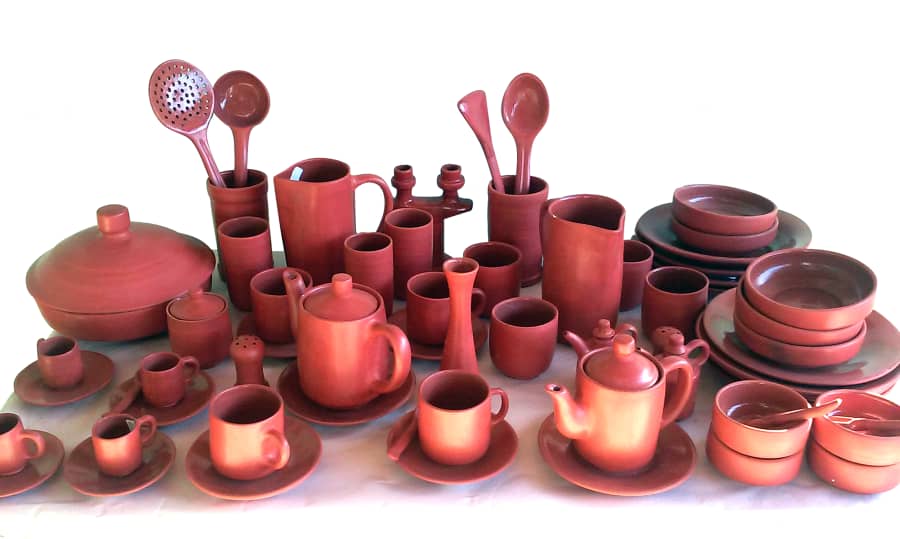
Descripción
La elaboración de piezas cerámicas en Cuba tiene sus antecedentes en las comunidades agro-alfareras que habitaban el archipiélago antes de la llegada de los españoles y que desarrollaron una significativa producción con funciones utilitaria y ritual. Posteriormente, sucesivas oleadas de inmigrantes españoles, africanos y chinos aportaron sus técnicas y conocimientos ancestrales.
En determinadas regiones, sobre todo fuera de los centros urbanos, existieron famosos tejares que desarrollaron un amplio repertorio de vasijas de todas formas y usos para la economía doméstica y local, entre los que se encuentran el “porron»,used to bring water to the field and the ““tinajón”, a large vessel that served to collect and store rainwater, when the aqueduct system did not yet exist.
After the triumph of the Revolution in 1959, with the creation of Art Schools, the rescue of traditional popular culture, and the creation of state workshops in several provinces of the country, ceramics experienced a notable development, both in its traditional aspect and in the so-called artistic ceramics.
Creative experiences of plastic artists such as Wifredo Lam, Amelia Peláez and Alfredo Sosabravo, developed new expressive possibilities of ceramics as art, which had a favorable impact on contemporary Cuban ceramic production in its different aspects, as can be seen in the collection held by the National Museum of Contemporary Cuban Ceramics.
The main decoration techniques are burnishing, enamelling, glazing, chamotte, polychrome and raku. It is also decorated with inlays, incisions, openwork, stampings, etc.
Various ceramic products that use the most varied ornamental techniques, with utilitarian and decorative functions, are offered at craft fairs, markets and tourist stores in all the provinces of the country.
In Cuban homes, it is common to enjoy coffee in artisanal cups and some traditional drinks such as canchánchara, which is made from brandy, citrus and honey, are still served as in the past, in clay bowls.
english
Cuban ceramics
The elaboration of pottery and ceramic pieces in Cuba has its antecedents in the agro-pottery communities that inhabited the archipelago, before the arrival of the Spaniards and that developed a significant production with utilitarian and ritual functions. Subsequently, successive waves of Spanish, African and Chinese immigrants contributed their ancestral techniques and knowledge.
In certain regions, especially outside the urban centers, there were famous “tejares” that developed a wide repertoire of vessels of all shapes and uses for the domestic and local economy, among which are the «porrón», used to carry water to the countryside and the «tinajón», a large vessel that served to collect and store rainwater. when the aqueduct system did not yet exist.
After the triumph of the Revolution in 1959, with the creation of the Art Schools, the rescue of traditional popular culture, and the creation of state workshops, in several provinces of the country, ceramics experienced a remarkable development, both in their traditional aspect and in the so-called artistic ceramics.
Creative experiences of developed new expressive possibilities of ceramics as art, which had a favorable impact on contemporary Cuban ceramic production in its different aspects, as can be seen in the collection treasured by the National Museum of Contemporary Cuban Ceramics.
The main decoration techniques are burnishing, enamelling, glazing, chamotte, polychrome and rakú. It is also decorated with inlays, incisions, fretwork, prints, etc.
Various ceramic products that use the most varied ornamental techniques, with utilitarian and decorative functions, are offered in craft fairs, markets and tourist shops in all the provinces of the country.
In Cuban homes, it is common to enjoy coffee in artisanal cups and some traditional drinks such as canchánchara, which is made from brandy, citrus and honey, are still served as in the past, in clay bowls.
Valoraciones
No hay valoraciones aún.