
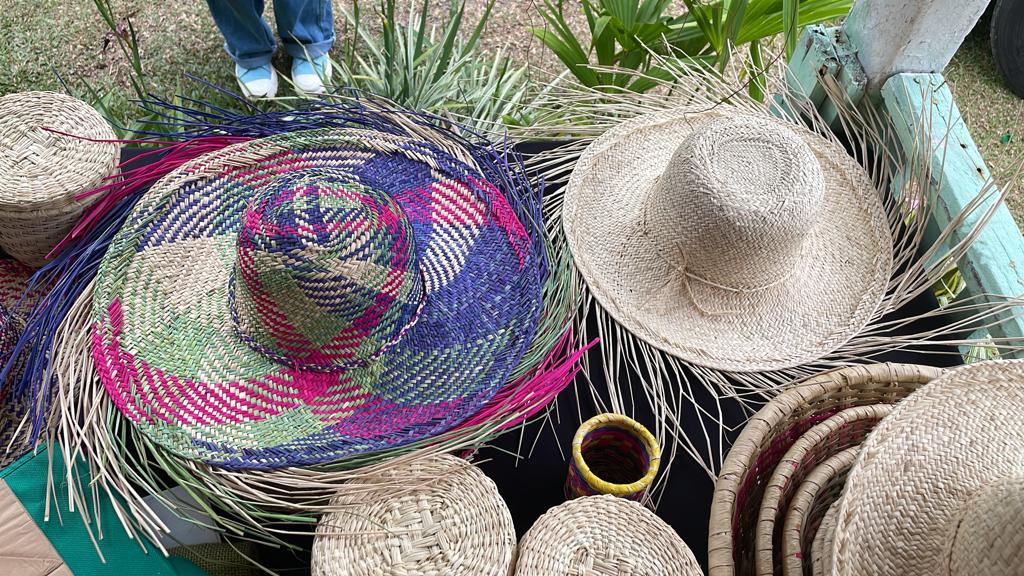
Crafts in fibers and natural dyes from the indigenous community of Quitirrisí (Huetar people)

Se trata de artesanías elaboradas a mano con fibras y tintes naturales de la comunidad indígena de  Quitirrisí, cantón de Mora, provincia de San José. Son productos de cestería y sombrería, utilitarios  y decorativos; elaboradas con materiales, técnicas, colores, acabados y elementos estéticos propios  de la herencia e identidad cultural colectiva de éste pueblo indígena costarricense. Para su  confección se aplican técnicas del tejido, entrecruzado, trenzado, torcido, empalmado o petatillo,  tejido doble, tejido simple; dando como resultado, canastas, tapetes, bolsas, aisladores, portavasos,  abanicos de mano, sombreros, entre otros. Para su elaboración, se utilizan fibras naturales como la paja (“pita”), chidra,…

Descripción

Se trata de artesanías elaboradas a mano con fibras y tintes naturales de la comunidad indígena de  Quitirrisí, cantón de Mora, provincia de San José. Son productos de cestería y sombrería, utilitarios  y decorativos; elaboradas con materiales, técnicas, colores, acabados y elementos estéticos propios  de la herencia e identidad cultural colectiva de éste pueblo indígena costarricense. Para su  confección se aplican técnicas del tejido, entrecruzado, trenzado, torcido, empalmado o petatillo,  tejido doble, tejido simple; dando como resultado, canastas, tapetes, bolsas, aisladores, portavasos,  abanicos de mano, sombreros, entre otros.

Para su elaboración, se utilizan fibras naturales como la paja (“pita”), chidra, tule y violeta. Tintes  naturales propios de la cultura indígena Huetar de diferentes frutos, plantas y raíces. Otros  materiales son, el barniz, goma, tela y utensilios y equipo básico como el machete para cortar las  hojas, ollas grandes para hervirlas y teñirlas en fuego de leña, tijeras, agujas y agujón. El corte de  las plantas que proveen la fibra, debe realizarse preferiblemente en luna menguante.

Lo primero que se hace es obtener la materia prima, luego se separa el material que se va a utilizar  de cada cogollo; se cocina el material y se escurre para luego separar una por una las hojas del  cogollo y se pone a secar al sol. Una vez seca la paja, se pueden aplicar los tintes (hirviendo en agua  con la planta o fruto para teñir) o dejar en color natural. Luego, se selecciona el material según la  artesanía a elaborar; por ejemplo, para cestería y aisladores se usa la paja pequeña o corta, para  sombreros o bolsas se utiliza la paja más larga.

En el país existe otro pueblo indígena que trabaja las fibras naturales para hacer sombreros, se trata  del pueblo Gnoves en la parte sur del país; sin embargo, la fibra que utilizan y los diseños son  diferentes, la fibra proviene de la palma y bejuco. En la parte de la cestería tradicional indígena  también están las jabas de los pueblos de Bribrí y Cabécar.

En la comunidad de Quitirrisí, solamente 6 familias elaboran este tipo de artesanía, la mayoría de  ellos sobrepasan los 55 años. Aprendieron sus oficios y técnicas artesanales de sus ancestros. En el  caso de doña Veracruz Mena Hernández, recuerda que su abuelo Tito Hernández fue de los primeros  que participaban en las ferias en San José centro, cuando ella era muy joven; su mamá doña Rosario  Hernández fue la segunda generación, ella la tercera y ahora su hija Verónica Guzmán Mena (joven  de 16 años) sería la cuarta generación. Estima que hay unos 10 aprendices jóvenes.

Los visitantes pueden ver directamente el oficio y artesanías, en la comunidad indígena de Quitirrisí,  a lo largo del camino principal se pueden identificar las artesanías expuestas en pequeños talleres,  casas y pequeñas tiendas. También en la tienda de artesanía indígena ubicada en San José: Chietón  Morén Museo y Mercadito de Artesanías.

En la comunidad solamente quedan alrededor de seis maestros artesanos: Rosario Hernández,  Julieta Mena, Vera Cruz Mena (cuenta con el Sello COSTA RICA ARTESANAL), Marta Mena, Olga  Pérez y Rubén Parra.

english

Handicrafts in natural fibers and dyes from the indigenous community of QuitirrisiIn the indigenous community of Quitirrisí, in the canton of Mora, province of San José, basketry and headgear products, both utilitarian and decorative, are produced using materials, techniques, colors, finishes and aesthetic elements typical of the collective cultural heritage and identity of this Costa Rican indigenous people.

They are made using weaving techniques, interweaving, braiding, twisting, splicing, double weaving and single weaving, resulting in baskets, rugs, bags, insulators, cup holders, hand fans and hats, among others. Natural fibers such as «pita», «chidra», «tule» and violet straw are used for their production. Natural dyes from different fruits, plants and roots from the indigenous «Huetar» culture are used. Other materials are varnish, rubber, cloth and basic utensils and equipment such as the «machete» to cut the leaves, large pots to boil and dye them in a wood fire, scissors, needles and needle. The cutting of the plants that provide the fiber should preferably be done during the waning moon.

The first thing to do is to obtain the raw material, then the material to be used is separated, the material is cooked and drained and then the leaves are separated one by one from the heart and dried in the sun. Once the straw is dry, the dyes can be applied (boiling in water with the plant or fruit to be dyed) or left in natural color. Then, the material is selected according to the handicraft to be made; For example, for baskets and insulators, small or short straws are used, while for hats or bags, longer straws are used. In the country, there is another indigenous people who work with natural fibers to make hats, the «Gnoves» people in the southern part of the country. However, the fiber they use and the designs are different, the fiber comes from the palm and «bejuco». In the area of ​​traditional Indigenous basketry, there are also the jabas from the villages of Bribrí and Cabécar.

In the community of Quitirrisí, only six families produce this type of craftwork, and they learned their trades and craft techniques from their ancestors. In the case of Veracruz Mena Hernández, she remembers that her grandfather Tito Hernández was one of the first to participate in the fairs in San José center, when she was very young. Her mother Rosario Hernández was the second generation, she was the third and now her daughter Verónica Guzmán Mena (16 years old) is the fourth generation. She estimates that there are about 10 young apprentices.

Visitors can directly see the craft and handicrafts, along the main road, you can identify the handicrafts displayed in small workshops, houses and small shops, also in the small handicraft market.

There are only about six master craftsmen left in the community: Rosario Hernández, Julieta Mena, Marta Mena, Olga Pérez and Rubén Parra. Veracruz Mena has the ARTESANAL COSTA RICA seal.

Valoraciones

No hay valoraciones aún.

Sé el primero en valorar “Crafts in fibers and natural dyes from the indigenous community of Quitirrisí (Huetar people)”

Tu dirección de correo electrónico no será publicada. Los campos obligatorios están marcados con *

Descripción

Se trata de artesanías elaboradas a mano con fibras y tintes naturales de la comunidad indígena de  Quitirrisí, cantón de Mora, provincia de San José. Son productos de cestería y sombrería, utilitarios  y decorativos; elaboradas con materiales, técnicas, colores, acabados y elementos estéticos propios  de la herencia e identidad cultural colectiva de éste pueblo indígena costarricense. Para su  confección se aplican técnicas del tejido, entrecruzado, trenzado, torcido, empalmado o petatillo,  tejido doble, tejido simple; dando como resultado, canastas, tapetes, bolsas, aisladores, portavasos,  abanicos de mano, sombreros, entre otros.

Para su elaboración, se utilizan fibras naturales como la paja (“pita”), chidra, tule y violeta. Tintes  naturales propios de la cultura indígena Huetar de diferentes frutos, plantas y raíces. Otros  materiales son, el barniz, goma, tela y utensilios y equipo básico como el machete para cortar las  hojas, ollas grandes para hervirlas y teñirlas en fuego de leña, tijeras, agujas y agujón. El corte de  las plantas que proveen la fibra, debe realizarse preferiblemente en luna menguante.

Lo primero que se hace es obtener la materia prima, luego se separa el material que se va a utilizar  de cada cogollo; se cocina el material y se escurre para luego separar una por una las hojas del  cogollo y se pone a secar al sol. Una vez seca la paja, se pueden aplicar los tintes (hirviendo en agua  con la planta o fruto para teñir) o dejar en color natural. Luego, se selecciona el material según la  artesanía a elaborar; por ejemplo, para cestería y aisladores se usa la paja pequeña o corta, para  sombreros o bolsas se utiliza la paja más larga.

En el país existe otro pueblo indígena que trabaja las fibras naturales para hacer sombreros, se trata  del pueblo Gnoves en la parte sur del país; sin embargo, la fibra que utilizan y los diseños son  diferentes, la fibra proviene de la palma y bejuco. En la parte de la cestería tradicional indígena  también están las jabas de los pueblos de Bribrí y Cabécar.

En la comunidad de Quitirrisí, solamente 6 familias elaboran este tipo de artesanía, la mayoría de  ellos sobrepasan los 55 años. Aprendieron sus oficios y técnicas artesanales de sus ancestros. En el  caso de doña Veracruz Mena Hernández, recuerda que su abuelo Tito Hernández fue de los primeros  que participaban en las ferias en San José centro, cuando ella era muy joven; su mamá doña Rosario  Hernández fue la segunda generación, ella la tercera y ahora su hija Verónica Guzmán Mena (joven  de 16 años) sería la cuarta generación. Estima que hay unos 10 aprendices jóvenes.

Los visitantes pueden ver directamente el oficio y artesanías, en la comunidad indígena de Quitirrisí,  a lo largo del camino principal se pueden identificar las artesanías expuestas en pequeños talleres,  casas y pequeñas tiendas. También en la tienda de artesanía indígena ubicada en San José: Chietón  Morén Museo y Mercadito de Artesanías.

En la comunidad solamente quedan alrededor de seis maestros artesanos: Rosario Hernández,  Julieta Mena, Vera Cruz Mena (cuenta con el Sello COSTA RICA ARTESANAL), Marta Mena, Olga  Pérez y Rubén Parra.

english

Handicrafts in natural fibers and dyes from the indigenous community of QuitirrisiIn the indigenous community of Quitirrisí, in the canton of Mora, province of San José, basketry and headgear products, both utilitarian and decorative, are produced using materials, techniques, colors, finishes and aesthetic elements typical of the collective cultural heritage and identity of this Costa Rican indigenous people.

They are made using weaving techniques, interweaving, braiding, twisting, splicing, double weaving and single weaving, resulting in baskets, rugs, bags, insulators, cup holders, hand fans and hats, among others. Natural fibers such as «pita», «chidra», «tule» and violet straw are used for their production. Natural dyes from different fruits, plants and roots from the indigenous «Huetar» culture are used. Other materials are varnish, rubber, cloth and basic utensils and equipment such as the «machete» to cut the leaves, large pots to boil and dye them in a wood fire, scissors, needles and needle. The cutting of the plants that provide the fiber should preferably be done during the waning moon.

The first thing to do is to obtain the raw material, then the material to be used is separated, the material is cooked and drained and then the leaves are separated one by one from the heart and dried in the sun. Once the straw is dry, the dyes can be applied (boiling in water with the plant or fruit to be dyed) or left in natural color. Then, the material is selected according to the handicraft to be made; For example, for baskets and insulators, small or short straws are used, while for hats or bags, longer straws are used. In the country, there is another indigenous people who work with natural fibers to make hats, the «Gnoves» people in the southern part of the country. However, the fiber they use and the designs are different, the fiber comes from the palm and «bejuco». In the area of ​​traditional Indigenous basketry, there are also the jabas from the villages of Bribrí and Cabécar.

In the community of Quitirrisí, only six families produce this type of craftwork, and they learned their trades and craft techniques from their ancestors. In the case of Veracruz Mena Hernández, she remembers that her grandfather Tito Hernández was one of the first to participate in the fairs in San José center, when she was very young. Her mother Rosario Hernández was the second generation, she was the third and now her daughter Verónica Guzmán Mena (16 years old) is the fourth generation. She estimates that there are about 10 young apprentices.

Visitors can directly see the craft and handicrafts, along the main road, you can identify the handicrafts displayed in small workshops, houses and small shops, also in the small handicraft market.

There are only about six master craftsmen left in the community: Rosario Hernández, Julieta Mena, Marta Mena, Olga Pérez and Rubén Parra. Veracruz Mena has the ARTESANAL COSTA RICA seal.

Valoraciones

No hay valoraciones aún.

Sé el primero en valorar “Crafts in fibers and natural dyes from the indigenous community of Quitirrisí (Huetar people)”

Tu dirección de correo electrónico no será publicada. Los campos obligatorios están marcados con *

Descripción

Se trata de artesanías elaboradas a mano con fibras y tintes naturales de la comunidad indígena de  Quitirrisí, cantón de Mora, provincia de San José. Son productos de cestería y sombrería, utilitarios  y decorativos; elaboradas con materiales, técnicas, colores, acabados y elementos estéticos propios  de la herencia e identidad cultural colectiva de éste pueblo indígena costarricense. Para su  confección se aplican técnicas del tejido, entrecruzado, trenzado, torcido, empalmado o petatillo,  tejido doble, tejido simple; dando como resultado, canastas, tapetes, bolsas, aisladores, portavasos,  abanicos de mano, sombreros, entre otros.

Para su elaboración, se utilizan fibras naturales como la paja (“pita”), chidra, tule y violeta. Tintes  naturales propios de la cultura indígena Huetar de diferentes frutos, plantas y raíces. Otros  materiales son, el barniz, goma, tela y utensilios y equipo básico como el machete para cortar las  hojas, ollas grandes para hervirlas y teñirlas en fuego de leña, tijeras, agujas y agujón. El corte de  las plantas que proveen la fibra, debe realizarse preferiblemente en luna menguante.

Lo primero que se hace es obtener la materia prima, luego se separa el material que se va a utilizar  de cada cogollo; se cocina el material y se escurre para luego separar una por una las hojas del  cogollo y se pone a secar al sol. Una vez seca la paja, se pueden aplicar los tintes (hirviendo en agua  con la planta o fruto para teñir) o dejar en color natural. Luego, se selecciona el material según la  artesanía a elaborar; por ejemplo, para cestería y aisladores se usa la paja pequeña o corta, para  sombreros o bolsas se utiliza la paja más larga.

En el país existe otro pueblo indígena que trabaja las fibras naturales para hacer sombreros, se trata  del pueblo Gnoves en la parte sur del país; sin embargo, la fibra que utilizan y los diseños son  diferentes, la fibra proviene de la palma y bejuco. En la parte de la cestería tradicional indígena  también están las jabas de los pueblos de Bribrí y Cabécar.

En la comunidad de Quitirrisí, solamente 6 familias elaboran este tipo de artesanía, la mayoría de  ellos sobrepasan los 55 años. Aprendieron sus oficios y técnicas artesanales de sus ancestros. En el  caso de doña Veracruz Mena Hernández, recuerda que su abuelo Tito Hernández fue de los primeros  que participaban en las ferias en San José centro, cuando ella era muy joven; su mamá doña Rosario  Hernández fue la segunda generación, ella la tercera y ahora su hija Verónica Guzmán Mena (joven  de 16 años) sería la cuarta generación. Estima que hay unos 10 aprendices jóvenes.

Los visitantes pueden ver directamente el oficio y artesanías, en la comunidad indígena de Quitirrisí,  a lo largo del camino principal se pueden identificar las artesanías expuestas en pequeños talleres,  casas y pequeñas tiendas. También en la tienda de artesanía indígena ubicada en San José: Chietón  Morén Museo y Mercadito de Artesanías.

En la comunidad solamente quedan alrededor de seis maestros artesanos: Rosario Hernández,  Julieta Mena, Vera Cruz Mena (cuenta con el Sello COSTA RICA ARTESANAL), Marta Mena, Olga  Pérez y Rubén Parra.

english

Handicrafts in natural fibers and dyes from the indigenous community of QuitirrisiIn the indigenous community of Quitirrisí, in the canton of Mora, province of San José, basketry and headgear products, both utilitarian and decorative, are produced using materials, techniques, colors, finishes and aesthetic elements typical of the collective cultural heritage and identity of this Costa Rican indigenous people.

They are made using weaving techniques, interweaving, braiding, twisting, splicing, double weaving and single weaving, resulting in baskets, rugs, bags, insulators, cup holders, hand fans and hats, among others. Natural fibers such as «pita», «chidra», «tule» and violet straw are used for their production. Natural dyes from different fruits, plants and roots from the indigenous «Huetar» culture are used. Other materials are varnish, rubber, cloth and basic utensils and equipment such as the «machete» to cut the leaves, large pots to boil and dye them in a wood fire, scissors, needles and needle. The cutting of the plants that provide the fiber should preferably be done during the waning moon.

The first thing to do is to obtain the raw material, then the material to be used is separated, the material is cooked and drained and then the leaves are separated one by one from the heart and dried in the sun. Once the straw is dry, the dyes can be applied (boiling in water with the plant or fruit to be dyed) or left in natural color. Then, the material is selected according to the handicraft to be made; For example, for baskets and insulators, small or short straws are used, while for hats or bags, longer straws are used. In the country, there is another indigenous people who work with natural fibers to make hats, the «Gnoves» people in the southern part of the country. However, the fiber they use and the designs are different, the fiber comes from the palm and «bejuco». In the area of ​​traditional Indigenous basketry, there are also the jabas from the villages of Bribrí and Cabécar.

In the community of Quitirrisí, only six families produce this type of craftwork, and they learned their trades and craft techniques from their ancestors. In the case of Veracruz Mena Hernández, she remembers that her grandfather Tito Hernández was one of the first to participate in the fairs in San José center, when she was very young. Her mother Rosario Hernández was the second generation, she was the third and now her daughter Verónica Guzmán Mena (16 years old) is the fourth generation. She estimates that there are about 10 young apprentices.

Visitors can directly see the craft and handicrafts, along the main road, you can identify the handicrafts displayed in small workshops, houses and small shops, also in the small handicraft market.

There are only about six master craftsmen left in the community: Rosario Hernández, Julieta Mena, Marta Mena, Olga Pérez and Rubén Parra. Veracruz Mena has the ARTESANAL COSTA RICA seal.

Valoraciones

No hay valoraciones aún.

Sé el primero en valorar “Crafts in fibers and natural dyes from the indigenous community of Quitirrisí (Huetar people)”

Tu dirección de correo electrónico no será publicada. Los campos obligatorios están marcados con *

Descripción

These are crafts made by hand with natural fibers and dyes from the indigenous community of Quitirrisí, canton of Mora, province of San José. They are basketry and hat products, utilitarian and decorative; made with materials, techniques, colors, finishes and aesthetic elements typical of the collective cultural heritage and identity of this Costa Rican indigenous people. For its preparation, weaving techniques are applied, crisscrossing, braiding, twisting, splicing or petatillo, double weaving, simple weaving; resulting in baskets, mats, bags, insulators, cup holders, hand fans, hats, among others.

For its production, natural fibers such as straw (“pita”), chidra, tule and violet are used. Natural dyes typical of the Huetar indigenous culture of different fruits, plants and roots. Other materials are varnish, rubber, fabric and utensils and basic equipment such as a machete to cut the leaves, large pots to boil and dye them over a wood fire, scissors, needles and a needle. Cutting the plants that provide fiber should preferably be done during the waning moon.

The first thing to do is obtain the raw material, then the material to be used is separated from each bud; The material is cooked and drained, then the leaves are separated from the bud one by one and dried in the sun. Once the straw is dry, dyes can be applied (boiling in water with the plant or fruit to dye) or left in natural color. Then, the material is selected according to the craft to be made; For example, for basket weaving and insulators, small or short straw is used, for hats or bags, longer straw is used.

In the country there is another indigenous people who work with natural fibers to make hats, they are the Gnoves people in the southern part of the country; However, the fiber they use and the designs are different, the fiber comes from palm and vine. As part of the traditional indigenous basketry, there are also the jabas from the towns of Bribrí and Cabécar.

In the community of Quitirrisí, only 6 families make this type of crafts, most of them are over 55 years old. They learned their crafts and craft techniques from their ancestors. In the case of Mrs. Veracruz Mena Hernández, she remembers that her grandfather Tito Hernández was one of the first to participate in the fairs in downtown San José, when she was very young; Her mother, Mrs. Rosario Hernández, was the second generation, she was the third, and now her daughter Verónica Guzmán Mena (16 years old) would be the fourth generation. He estimates there are about 10 young apprentices.

Visitors can see directly the trade and crafts, in the indigenous community of Quitirrisí, along the main road you can identify the crafts exhibited in small workshops, houses and small shops. Also in the indigenous crafts store located in San José: Chietón Morén Museo y Mercadito de Artesanías.

There are only around six master craftsmen left in the community: Rosario Hernández, Julieta Mena, Vera Cruz Mena (has the COSTA RICA ARTESANAL Seal), Marta Mena, Olga Pérez and Rubén Parra.

englishHandicrafts in natural fibers and dyes from the indigenous community of Quitirrisi

In the indigenous community of Quitirrisí, in the canton of Mora, province of San José, basketry and headgear products, both utilitarian and decorative, are produced using materials, techniques, colors, finishes and aesthetic elements typical of the collective cultural heritage and identity of this Costa Rican indigenous people.

They are made using weaving techniques, interweaving, braiding, twisting, splicing, double weaving and single weaving, resulting in baskets, rugs, bags, insulators, cup holders, hand fans and hats, among others. Natural fibers such as "pita", "chidra", "tule" and violet straw are used for their production. Natural dyes from different fruits, plants and roots from the indigenous "Huetar" culture are used. Other materials are varnish, rubber, cloth and basic utensils and equipment such as the "machete" to cut the leaves, large pots to boil and dye them in a wood fire, scissors, needles and needle. The cutting of the plants that provide the fiber should preferably be done during the waning moon.

The first thing to do is to obtain the raw material, then the material to be used is separated, the material is cooked and drained and then the leaves are separated one by one from the heart and dried in the sun. Once the straw is dry, the dyes can be applied (boiling in water with the plant or fruit to be dyed) or left in natural color. Then, the material is selected according to the handicraft to be made; For example, for baskets and insulators, small or short straws are used, while for hats or bags, longer straws are used. In the country, there is another indigenous people who work with natural fibers to make hats, the "Gnoves" people in the southern part of the country. However, the fiber they use and the designs are different, the fiber comes from the palm and "bejuco". In the area of ​​traditional Indigenous basketry, there are also the jabas from the villages of Bribrí and Cabécar.

In the community of Quitirrisí, only six families produce this type of craftwork, and they learned their trades and craft techniques from their ancestors. In the case of Veracruz Mena Hernández, she remembers that her grandfather Tito Hernández was one of the first to participate in the fairs in San José center, when she was very young. Her mother Rosario Hernández was the second generation, she was the third and now her daughter Verónica Guzmán Mena (16 years old) is the fourth generation. She estimates that there are about 10 young apprentices.

Visitors can directly see the craft and handicrafts, along the main road, you can identify the handicrafts displayed in small workshops, houses and small shops, also in the small handicraft market.

There are only about six master craftsmen left in the community: Rosario Hernández, Julieta Mena, Marta Mena, Olga Pérez and Rubén Parra. Veracruz Mena has the ARTESANAL COSTA RICA seal.

Valoraciones

No hay valoraciones aún.

Sé el primero en valorar “Crafts in fibers and natural dyes from the indigenous community of Quitirrisí (Huetar people)”

Tu dirección de correo electrónico no será publicada. Los campos obligatorios están marcados con *

Descripción

Se trata de artesanías elaboradas a mano con fibras y tintes naturales de la comunidad indígena de  Quitirrisí, cantón de Mora, provincia de San José. Son productos de cestería y sombrería, utilitarios  y decorativos; elaboradas con materiales, técnicas, colores, acabados y elementos estéticos propios  de la herencia e identidad cultural colectiva de éste pueblo indígena costarricense. Para su  confección se aplican técnicas del tejido, entrecruzado, trenzado, torcido, empalmado o petatillo,  tejido doble, tejido simple; dando como resultado, canastas, tapetes, bolsas, aisladores, portavasos,  abanicos de mano, sombreros, entre otros.

Para su elaboración, se utilizan fibras naturales como la paja (“pita”), chidra, tule y violeta. Tintes  naturales propios de la cultura indígena Huetar de diferentes frutos, plantas y raíces. Otros  materiales son, el barniz, goma, tela y utensilios y equipo básico como el machete para cortar las  hojas, ollas grandes para hervirlas y teñirlas en fuego de leña, tijeras, agujas y agujón. El corte de  las plantas que proveen la fibra, debe realizarse preferiblemente en luna menguante.

Lo primero que se hace es obtener la materia prima, luego se separa el material que se va a utilizar  de cada cogollo; se cocina el material y se escurre para luego separar una por una las hojas del  cogollo y se pone a secar al sol. Una vez seca la paja, se pueden aplicar los tintes (hirviendo en agua  con la planta o fruto para teñir) o dejar en color natural. Luego, se selecciona el material según la  artesanía a elaborar; por ejemplo, para cestería y aisladores se usa la paja pequeña o corta, para  sombreros o bolsas se utiliza la paja más larga.

En el país existe otro pueblo indígena que trabaja las fibras naturales para hacer sombreros, se trata  del pueblo Gnoves en la parte sur del país; sin embargo, la fibra que utilizan y los diseños son  diferentes, la fibra proviene de la palma y bejuco. En la parte de la cestería tradicional indígena  también están las jabas de los pueblos de Bribrí y Cabécar.

En la comunidad de Quitirrisí, solamente 6 familias elaboran este tipo de artesanía, la mayoría de  ellos sobrepasan los 55 años. Aprendieron sus oficios y técnicas artesanales de sus ancestros. En el  caso de doña Veracruz Mena Hernández, recuerda que su abuelo Tito Hernández fue de los primeros  que participaban en las ferias en San José centro, cuando ella era muy joven; su mamá doña Rosario  Hernández fue la segunda generación, ella la tercera y ahora su hija Verónica Guzmán Mena (joven  de 16 años) sería la cuarta generación. Estima que hay unos 10 aprendices jóvenes.

Los visitantes pueden ver directamente el oficio y artesanías, en la comunidad indígena de Quitirrisí,  a lo largo del camino principal se pueden identificar las artesanías expuestas en pequeños talleres,  casas y pequeñas tiendas. También en la tienda de artesanía indígena ubicada en San José: Chietón  Morén Museo y Mercadito de Artesanías.

En la comunidad solamente quedan alrededor de seis maestros artesanos: Rosario Hernández,  Julieta Mena, Vera Cruz Mena (cuenta con el Sello COSTA RICA ARTESANAL), Marta Mena, Olga  Pérez y Rubén Parra.

english

Handicrafts in natural fibres and dyes from the indigenous community of Quitirrisi

In the indigenous community of Quitirrisí, in the canton of Mora, province of San José, basketry and headgear products, both utilitarian and decorative, are produced using materials, techniques, colours, finishes and aesthetic elements typical of the collective cultural heritage and identity of this Costa Rican indigenous people.

They are made using weaving techniques, interweaving, braiding, twisting, splicing, double weaving and single weaving, resulting in baskets, rugs, bags, insulators, cup holders, hand fans and hats, among others. Natural fibres such as «pita», «chidra», «tule» and violet straw are used for their production. Natural dyes from different fruits, plants and roots from the indigenous «Huetar» culture are used. Other materials are varnish, rubber, cloth and basic utensils and equipment such as the «machete» to cut the leaves, large pots to boil and dye them in a wood fire, scissors, needles and needle. The cutting of the plants that provide the fibre should preferably be done during the waning moon.

The first thing to do is to obtain the raw material, then the material to be used is separated, the material is cooked and drained and then the leaves are separated one by one from the heart and dried in the sun. Once the straw is dry, the dyes can be applied (boiling in water with the plant or fruit to be dyed) or left in natural colour. Then, the material is selected according to the handicraft to be made; for example, for basketry and insulators, small or short straw are used, while for hats or bags, longer straw is used. In the country, there is another indigenous people who work with natural fibres to make hats, the «Gnoves» people in the southern part of the country. However, the fibre they use and the designs are different, the fibre comes from the palm and «bejuco». In the area of traditional Indigenous basketry, there are also the jabas from the villages of Bribrí and Cabécar.

In the community of Quitirrisí, only six families produce this type of craftwork, and they learned their trades and craft techniques from their ancestors. In the case of Veracruz Mena Hernández, she remembers that her grandfather Tito Hernández was one of the first to participate in the fairs in San José centre, when she was very young. Her mother Rosario Hernández was the second generation, she was the third and now her daughter Verónica Guzmán Mena (16 years old) is the fourth generation. She estimates that there are about 10 young apprentices.

Visitors can directly see the craft and handicrafts, along the main road, you can identify the handicrafts displayed in small workshops, houses and small shops, also in the small handicraft market.

There are only about six master craftsmen left in the community: Rosario Hernández, Julieta Mena, Marta Mena, Olga Pérez and Rubén Parra. Veracruz Mena has the COSTA RICA ARTESANAL seal.

Valoraciones

No hay valoraciones aún.

Sé el primero en valorar “Artesanía en fibras y tintes naturales de la comunidad indigena de quitirrisí (pueblo huetar)”

Tu dirección de correo electrónico no será publicada. Los campos obligatorios están marcados con *