
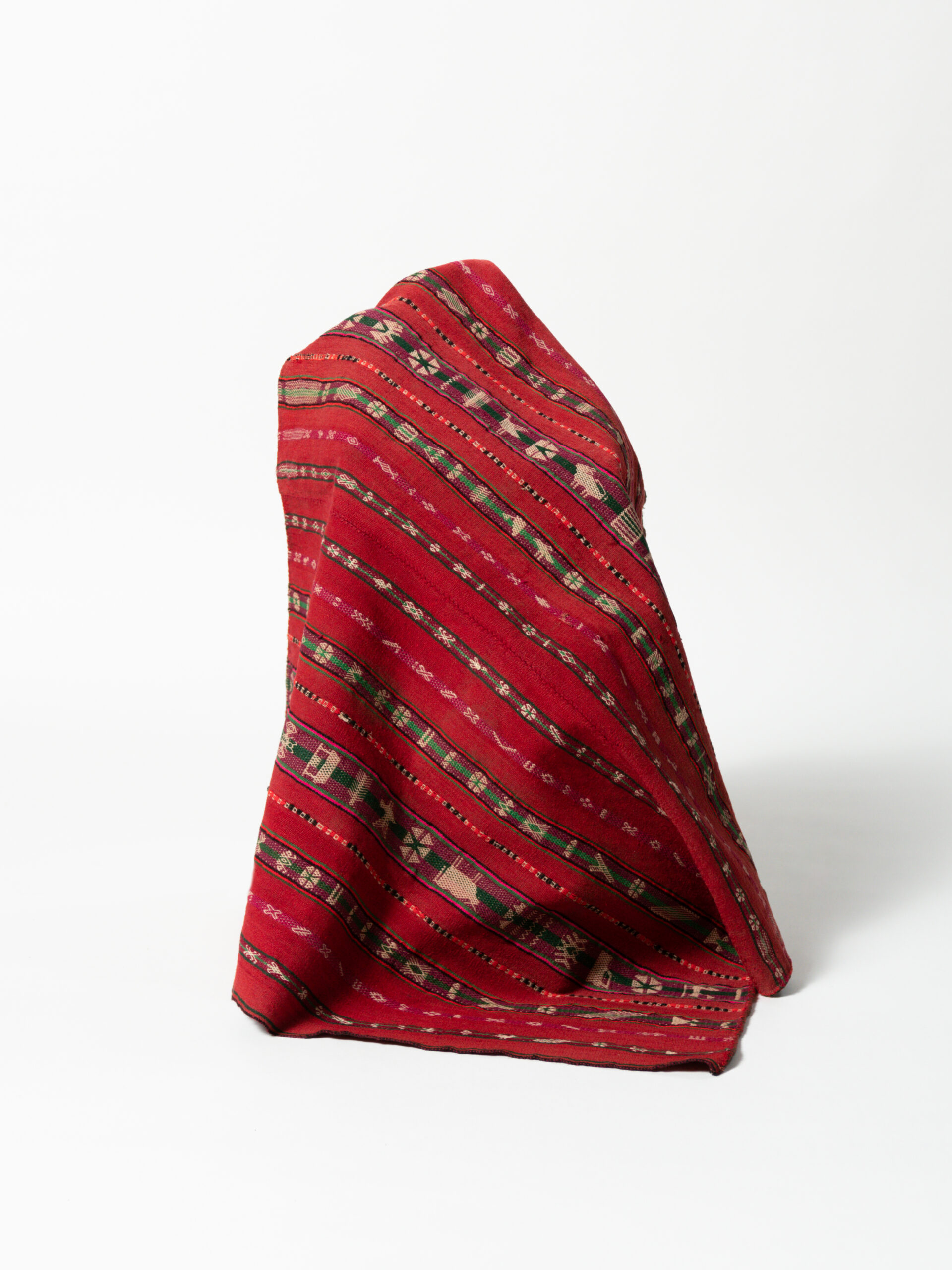
The textile art of taquile

Author: Madeleine BurnsTaquile is a town of weavers and farmers who live on one of the 36 islands of Lake Titicaca, the highest navigable lake in the world, in the Puno region, Peru. The island is located 36 km from the city of Puno (3 and a half hours away by lake). It is located […]

Descripción

Author: Madeleine BurnsTaquile is a town of weavers and farmers who live on one of the 36 islands of Lake Titicaca, the highest navigable lake in the world, in the Puno region, Peru. The island is located 36 km from the city of Puno (3 and a half hours away by lake). It is located at an altitude of 3,810 meters above sea level and has an area of ​​5.8 km long and 1.6 km wide.

Approximately 500 families (2,000 people) reside in Taquile. The mother tongue is Quechua and they are descendants of the ancient Colla de Capachica civilization, from whom they inherited the technique and artistic design of weaving.

Textile activity is the center of their social life and, since the 1970s, also of their economic life, since weaving has become their main source of income.

The tradition of weaving on the island of Taquile dates back to the ancient Inca, Pukara and Colla civilizations, which is why it keeps elements of pre-Hispanic Andean cultures alive.

The textile art of Taquile transmits a message of respect for tradition, nature and culture itself. Each garment is a unique work of art that tells a story and has incalculable historical and cultural value. The weaves are made by hand or on pre-Hispanic pedal looms.

The horizontal loom is an instrument of pre-Hispanic origin. It is only used by women and the most traditional garments (which are also of pre-Hispanic origin) are woven with it, such as thechumpi(sash), the chuspa (bag to store coca leaves), the poncho, the scarf and the lliclla, among other traditional garments. The most important parts of the horizontal loom are: the hillagua (“chain thread” that separates the even threads from the odd ones of the warp and helps lift them to make the weave), thewishkata(sword-shaped stick that aligns the plot) and thewichuña(flame bone with which the fabric is adjusted). Each of them jealously guards the weaver’s knowledge.

The pedal loom is an instrument of colonial origin. It is handled by men to manufacture the different types of cloths (fabrics) with which skirts, vests, pants and thechalle(scarf that is sometimes worn around the neck and other times around the waist).

The most characteristic garments are the chullo, a knitted hat with ear flaps, and the calendar belt, a wide belt that represents the annual cycles associated with ritual and agricultural activities. The calendar belt has attracted the interest of many researchers, since it represents elements of the community’s oral tradition and its history. Although the design of Taquile textile art has introduced new symbols and contemporary images, the traditional style and techniques are still maintained.

Traditional clothing shows the philosophy and thought of a culture in the figures of animals, plants, human beings and the gods that are referred to in its oral tradition. Textile art is a concrete and visual manifestation of a symbolic system that gives identity to a people.”

Taquile has a specialized school to learn local crafts, which contributes to the viability and continuity of the tradition. Tourism has contributed to the development of the community economy, which is based mainly on the textile trade and tourism.

The population of Taquile lived relatively isolated from the mainland until the 1950s, and the notion of community is still very strong among them. This is reflected in the organization of community life and collective decision-making.

While tourism is seen as an effective way to ensure the continuity of textile tradition, increasing demand also translates into significant changes in material, production and meaning.

english

 The textile art of Taquile.Taquile is a village of weavers and farmers who live on one of the 36 islands of Lake Titicaca, the island is located 36 km from the city of Puno (three and a half hours by lake). It is at an altitude of 3,810 meters above sea level and has an area of ​​5.8 km long and 1.6 km wide. Approximately 500 families (2,000 people) live in Taquile. Their mother tongue is Quechua and they are descendants of the ancient Colla civilization of Capachica, from whom they inherited the technique and artistic design of weaving.

Textile activity is the center of their social life and, since the 1970s, also of their economic life, as weaving has become their main source of income. The tradition of weaving on the island of Taquile dates back to the ancient Inca, Pukara and Colla civilizations, so it keeps alive elements of the pre-Hispanic Andean cultures. Each garment is a unique work of art that tells a story and is of incalculable historical and cultural value. The weavings are made by hand or on pre-Hispanic pedal looms.

The horizontal loom is an instrument of pre-Hispanic origin. It is used only by women and is used to weave the most traditional garments. The most important parts of the horizontal loom are: the hillagua (‘chain thread’ that separates the odd and even threads of the warp and helps to lift them for weaving), the ‘wishkata’ (sword-shaped stick that aligns the weft) and the ‘wichuña’ (llama bone with which the weave is adjusted). Each of them jealously guards the weaver’s knowledge. The pedal loom is an instrument of colonial origin. It is used by the men to make the different types of cloth used to make polleras (skirts), waistcoats, trousers and the challe (a shawl that is sometimes worn around the neck and sometimes around the waist).

The most characteristic garments are the chullo, a knitted cap with earflaps, and the calendar-belt, a wide belt that represents the annual cycles associated with ritual and agricultural activities. The calendar belt has attracted the interest of many researchers, as it represents elements of the community’s oral tradition and history.

Textile art is a concrete and visual manifestation of a symbolic system that gives identity to a people. Taquile has a specialized school for learning local crafts. The people of Taquile lived in relative isolation from the mainland until the 1950s, and the notion of community is still very strong among them. This is reflected in the organization of community life and collective decision-making. While tourism is seen as an effective way to ensure the continuity of the textile tradition, the growing demand also translates into significant changes in terms of material, production and meaning.

Valoraciones

No hay valoraciones aún.

Sé el primero en valorar “The textile art of taquile”

Tu dirección de correo electrónico no será publicada. Los campos obligatorios están marcados con *

Descripción

Author: Madeleine BurnsTaquile is a town of weavers and farmers who live on one of the 36 islands of Lake Titicaca, the highest navigable lake in the world, in the Puno region, Peru. The island is located 36 km from the city of Puno (3 and a half hours away by lake). It is located at an altitude of 3,810 meters above sea level and has an area of ​​5.8 km long and 1.6 km wide.

Approximately 500 families (2,000 people) reside in Taquile. The mother tongue is Quechua and they are descendants of the ancient Colla de Capachica civilization, from whom they inherited the technique and artistic design of weaving.

Textile activity is the center of their social life and, since the 1970s, also of their economic life, since weaving has become their main source of income.

The tradition of weaving on the island of Taquile dates back to the ancient Inca, Pukara and Colla civilizations, which is why it keeps elements of pre-Hispanic Andean cultures alive.

The textile art of Taquile transmits a message of respect for tradition, nature and culture itself. Each garment is a unique work of art that tells a story and has incalculable historical and cultural value. The weaves are made by hand or on pre-Hispanic pedal looms.

The horizontal loom is an instrument of pre-Hispanic origin. It is only used by women and the most traditional garments (which are also of pre-Hispanic origin) are woven with it, such as thechumpi(sash), the chuspa (bag to store coca leaves), the poncho, the scarf and the lliclla, among other traditional garments. The most important parts of the horizontal loom are: the hillagua (“chain thread” that separates the even threads from the odd ones of the warp and helps lift them to make the weave), thewishkata(sword-shaped stick that aligns the plot) and thewichuña(flame bone with which the fabric is adjusted). Each of them jealously guards the weaver’s knowledge.

The pedal loom is an instrument of colonial origin. It is handled by men to manufacture the different types of cloths (fabrics) with which skirts, vests, pants and thechalle(scarf that is sometimes worn around the neck and other times around the waist).

The most characteristic garments are the chullo, a knitted hat with ear flaps, and the calendar belt, a wide belt that represents the annual cycles associated with ritual and agricultural activities. The calendar belt has attracted the interest of many researchers, since it represents elements of the community’s oral tradition and its history. Although the design of Taquile textile art has introduced new symbols and contemporary images, the traditional style and techniques are still maintained.

Traditional clothing shows the philosophy and thought of a culture in the figures of animals, plants, human beings and the gods that are referred to in its oral tradition. Textile art is a concrete and visual manifestation of a symbolic system that gives identity to a people.”

Taquile has a specialized school to learn local crafts, which contributes to the viability and continuity of the tradition. Tourism has contributed to the development of the community economy, which is based mainly on the textile trade and tourism.

The population of Taquile lived relatively isolated from the mainland until the 1950s, and the notion of community is still very strong among them. This is reflected in the organization of community life and collective decision-making.

While tourism is seen as an effective way to ensure the continuity of textile tradition, increasing demand also translates into significant changes in material, production and meaning.

english

 The textile art of Taquile.Taquile is a village of weavers and farmers who live on one of the 36 islands of Lake Titicaca, the island is located 36 km from the city of Puno (three and a half hours by lake). It is at an altitude of 3,810 meters above sea level and has an area of ​​5.8 km long and 1.6 km wide. Approximately 500 families (2,000 people) live in Taquile. Their mother tongue is Quechua and they are descendants of the ancient Colla civilization of Capachica, from whom they inherited the technique and artistic design of weaving.

Textile activity is the center of their social life and, since the 1970s, also of their economic life, as weaving has become their main source of income. The tradition of weaving on the island of Taquile dates back to the ancient Inca, Pukara and Colla civilizations, so it keeps alive elements of the pre-Hispanic Andean cultures. Each garment is a unique work of art that tells a story and is of incalculable historical and cultural value. The weavings are made by hand or on pre-Hispanic pedal looms.

The horizontal loom is an instrument of pre-Hispanic origin. It is used only by women and is used to weave the most traditional garments. The most important parts of the horizontal loom are: the hillagua (‘chain thread’ that separates the odd and even threads of the warp and helps to lift them for weaving), the ‘wishkata’ (sword-shaped stick that aligns the weft) and the ‘wichuña’ (llama bone with which the weave is adjusted). Each of them jealously guards the weaver’s knowledge. The pedal loom is an instrument of colonial origin. It is used by the men to make the different types of cloth used to make polleras (skirts), waistcoats, trousers and the challe (a shawl that is sometimes worn around the neck and sometimes around the waist).

The most characteristic garments are the chullo, a knitted cap with earflaps, and the calendar-belt, a wide belt that represents the annual cycles associated with ritual and agricultural activities. The calendar belt has attracted the interest of many researchers, as it represents elements of the community’s oral tradition and history.

Textile art is a concrete and visual manifestation of a symbolic system that gives identity to a people. Taquile has a specialized school for learning local crafts. The people of Taquile lived in relative isolation from the mainland until the 1950s, and the notion of community is still very strong among them. This is reflected in the organization of community life and collective decision-making. While tourism is seen as an effective way to ensure the continuity of the textile tradition, the growing demand also translates into significant changes in terms of material, production and meaning.

Valoraciones

No hay valoraciones aún.

Sé el primero en valorar “The textile art of taquile”

Tu dirección de correo electrónico no será publicada. Los campos obligatorios están marcados con *

Descripción

Author: Madeleine BurnsTaquile is a town of weavers and farmers who live on one of the 36 islands of Lake Titicaca, the highest navigable lake in the world, in the Puno region, Peru. The island is located 36 km from the city of Puno (3 and a half hours away by lake). It is located at an altitude of 3,810 meters above sea level and has an area of ​​5.8 km long and 1.6 km wide.

Approximately 500 families (2,000 people) reside in Taquile. The mother tongue is Quechua and they are descendants of the ancient Colla de Capachica civilization, from whom they inherited the technique and artistic design of weaving.

Textile activity is the center of their social life and, since the 1970s, also of their economic life, since weaving has become their main source of income.

The tradition of weaving on the island of Taquile dates back to the ancient Inca, Pukara and Colla civilizations, which is why it keeps elements of pre-Hispanic Andean cultures alive.

The textile art of Taquile transmits a message of respect for tradition, nature and culture itself. Each garment is a unique work of art that tells a story and has incalculable historical and cultural value. The weaves are made by hand or on pre-Hispanic pedal looms.

The horizontal loom is an instrument of pre-Hispanic origin. It is only used by women and the most traditional garments (which are also of pre-Hispanic origin) are woven with it, such as thechumpi(sash), the chuspa (bag to store coca leaves), the poncho, the scarf and the lliclla, among other traditional garments. The most important parts of the horizontal loom are: the hillagua (“chain thread” that separates the even threads from the odd ones of the warp and helps lift them to make the weave), thewishkata(sword-shaped stick that aligns the plot) and thewichuña(flame bone with which the fabric is adjusted). Each of them jealously guards the weaver’s knowledge.

The pedal loom is an instrument of colonial origin. It is handled by men to manufacture the different types of cloths (fabrics) with which skirts, vests, pants and thechalle(scarf that is sometimes worn around the neck and other times around the waist).

The most characteristic garments are the chullo, a knitted hat with ear flaps, and the calendar belt, a wide belt that represents the annual cycles associated with ritual and agricultural activities. The calendar belt has attracted the interest of many researchers, since it represents elements of the community’s oral tradition and its history. Although the design of Taquile textile art has introduced new symbols and contemporary images, the traditional style and techniques are still maintained.

Traditional clothing shows the philosophy and thought of a culture in the figures of animals, plants, human beings and the gods that are referred to in its oral tradition. Textile art is a concrete and visual manifestation of a symbolic system that gives identity to a people.”

Taquile has a specialized school to learn local crafts, which contributes to the viability and continuity of the tradition. Tourism has contributed to the development of the community economy, which is based mainly on the textile trade and tourism.

The population of Taquile lived relatively isolated from the mainland until the 1950s, and the notion of community is still very strong among them. This is reflected in the organization of community life and collective decision-making.

While tourism is seen as an effective way to ensure the continuity of textile tradition, increasing demand also translates into significant changes in material, production and meaning.

english

 The textile art of Taquile.Taquile is a village of weavers and farmers who live on one of the 36 islands of Lake Titicaca, the island is located 36 km from the city of Puno (three and a half hours by lake). It is at an altitude of 3,810 meters above sea level and has an area of ​​5.8 km long and 1.6 km wide. Approximately 500 families (2,000 people) live in Taquile. Their mother tongue is Quechua and they are descendants of the ancient Colla civilization of Capachica, from whom they inherited the technique and artistic design of weaving.

Textile activity is the center of their social life and, since the 1970s, also of their economic life, as weaving has become their main source of income. The tradition of weaving on the island of Taquile dates back to the ancient Inca, Pukara and Colla civilizations, so it keeps alive elements of the pre-Hispanic Andean cultures. Each garment is a unique work of art that tells a story and is of incalculable historical and cultural value. The weavings are made by hand or on pre-Hispanic pedal looms.

The horizontal loom is an instrument of pre-Hispanic origin. It is used only by women and is used to weave the most traditional garments. The most important parts of the horizontal loom are: the hillagua (‘chain thread’ that separates the odd and even threads of the warp and helps to lift them for weaving), the ‘wishkata’ (sword-shaped stick that aligns the weft) and the ‘wichuña’ (llama bone with which the weave is adjusted). Each of them jealously guards the weaver’s knowledge. The pedal loom is an instrument of colonial origin. It is used by the men to make the different types of cloth used to make polleras (skirts), waistcoats, trousers and the challe (a shawl that is sometimes worn around the neck and sometimes around the waist).

The most characteristic garments are the chullo, a knitted cap with earflaps, and the calendar-belt, a wide belt that represents the annual cycles associated with ritual and agricultural activities. The calendar belt has attracted the interest of many researchers, as it represents elements of the community’s oral tradition and history.

Textile art is a concrete and visual manifestation of a symbolic system that gives identity to a people. Taquile has a specialized school for learning local crafts. The people of Taquile lived in relative isolation from the mainland until the 1950s, and the notion of community is still very strong among them. This is reflected in the organization of community life and collective decision-making. While tourism is seen as an effective way to ensure the continuity of the textile tradition, the growing demand also translates into significant changes in terms of material, production and meaning.

Valoraciones

No hay valoraciones aún.

Sé el primero en valorar “The textile art of taquile”

Tu dirección de correo electrónico no será publicada. Los campos obligatorios están marcados con *

Descripción

Author: Madeleine BurnsTaquile is a town of weavers and farmers who live on one of the 36 islands of Lake Titicaca, the highest navigable lake in the world, in the Puno region, Peru. The island is located 36 km from the city of Puno (3 and a half hours away by lake). It is located at an altitude of 3,810 meters above sea level and has an area of ​​5.8 km long and 1.6 km wide.

Approximately 500 families (2,000 people) reside in Taquile. The mother tongue is Quechua and they are descendants of the ancient Colla de Capachica civilization, from whom they inherited the technique and artistic design of weaving.

Textile activity is the center of their social life and, since the 1970s, also of their economic life, since weaving has become their main source of income.

The tradition of weaving on the island of Taquile dates back to the ancient Inca, Pukara and Colla civilizations, which is why it keeps elements of pre-Hispanic Andean cultures alive.

The textile art of Taquile transmits a message of respect for tradition, nature and culture itself. Each garment is a unique work of art that tells a story and has incalculable historical and cultural value. The weaves are made by hand or on pre-Hispanic pedal looms.

The horizontal loom is an instrument of pre-Hispanic origin. It is only used by women and the most traditional garments (which are also of pre-Hispanic origin) are woven with it, such as thechumpi(sash), the chuspa (bag to store coca leaves), the poncho, the scarf and the lliclla, among other traditional garments. The most important parts of the horizontal loom are: the hillagua (“chain thread” that separates the even threads from the odd ones of the warp and helps lift them to make the weave), thewishkata(sword-shaped stick that aligns the plot) and thewichuña(flame bone with which the fabric is adjusted). Each of them jealously guards the weaver’s knowledge.

The pedal loom is an instrument of colonial origin. It is handled by men to manufacture the different types of cloths (fabrics) with which skirts, vests, pants and thechalle(scarf that is sometimes worn around the neck and other times around the waist).

The most characteristic garments are the chullo, a knitted hat with ear flaps, and the calendar belt, a wide belt that represents the annual cycles associated with ritual and agricultural activities. The calendar belt has attracted the interest of many researchers, since it represents elements of the community’s oral tradition and its history. Although the design of Taquile textile art has introduced new symbols and contemporary images, the traditional style and techniques are still maintained.

Traditional clothing shows the philosophy and thought of a culture in the figures of animals, plants, human beings and the gods that are referred to in its oral tradition. Textile art is a concrete and visual manifestation of a symbolic system that gives identity to a people.”

Taquile has a specialized school to learn local crafts, which contributes to the viability and continuity of the tradition. Tourism has contributed to the development of the community economy, which is based mainly on the textile trade and tourism.

The population of Taquile lived relatively isolated from the mainland until the 1950s, and the notion of community is still very strong among them. This is reflected in the organization of community life and collective decision-making.

While tourism is seen as an effective way to ensure the continuity of textile tradition, increasing demand also translates into significant changes in material, production and meaning.

english

 The textile art of Taquile.Taquile is a village of weavers and farmers who live on one of the 36 islands of Lake Titicaca, the island is located 36 km from the city of Puno (three and a half hours by lake). It is at an altitude of 3,810 meters above sea level and has an area of ​​5.8 km long and 1.6 km wide. Approximately 500 families (2,000 people) live in Taquile. Their mother tongue is Quechua and they are descendants of the ancient Colla civilization of Capachica, from whom they inherited the technique and artistic design of weaving.

Textile activity is the center of their social life and, since the 1970s, also of their economic life, as weaving has become their main source of income. The tradition of weaving on the island of Taquile dates back to the ancient Inca, Pukara and Colla civilizations, so it keeps alive elements of the pre-Hispanic Andean cultures. Each garment is a unique work of art that tells a story and is of incalculable historical and cultural value. The weavings are made by hand or on pre-Hispanic pedal looms.

The horizontal loom is an instrument of pre-Hispanic origin. It is used only by women and is used to weave the most traditional garments. The most important parts of the horizontal loom are: the hillagua (‘chain thread’ that separates the odd and even threads of the warp and helps to lift them for weaving), the ‘wishkata’ (sword-shaped stick that aligns the weft) and the ‘wichuña’ (llama bone with which the weave is adjusted). Each of them jealously guards the weaver’s knowledge. The pedal loom is an instrument of colonial origin. It is used by the men to make the different types of cloth used to make polleras (skirts), waistcoats, trousers and the challe (a shawl that is sometimes worn around the neck and sometimes around the waist).

The most characteristic garments are the chullo, a knitted cap with earflaps, and the calendar-belt, a wide belt that represents the annual cycles associated with ritual and agricultural activities. The calendar belt has attracted the interest of many researchers, as it represents elements of the community’s oral tradition and history.

Textile art is a concrete and visual manifestation of a symbolic system that gives identity to a people. Taquile has a specialized school for learning local crafts. The people of Taquile lived in relative isolation from the mainland until the 1950s, and the notion of community is still very strong among them. This is reflected in the organization of community life and collective decision-making. While tourism is seen as an effective way to ensure the continuity of the textile tradition, the growing demand also translates into significant changes in terms of material, production and meaning.

Valoraciones

No hay valoraciones aún.

Sé el primero en valorar “The textile art of taquile”

Tu dirección de correo electrónico no será publicada. Los campos obligatorios están marcados con *

Descripción

Author: Madeleine BurnsTaquile is a town of weavers and farmers who live on one of the 36 islands of Lake Titicaca, the highest navigable lake in the world, in the Puno region, Peru. The island is located 36 km from the city of Puno (3 and a half hours away by lake). It is located at an altitude of 3,810 meters above sea level and has an area of ​​5.8 km long and 1.6 km wide.

Approximately 500 families (2,000 people) reside in Taquile. The mother language is Quechua and they are descendants of the ancient Colla de Capachica civilization, from whom they inherited the technique and artistic design of weaving.

Textile activity is the center of their social life and, since the 1970s, also of their economic life, since weaving has become their main source of income.

The tradition of weaving on the island of Taquile dates back to the ancient Inca, Pukara and Colla civilizations, which is why it keeps elements of pre-Hispanic Andean cultures alive.

The textile art of Taquile transmits a message of respect for tradition, nature and culture itself. Each garment is a unique work of art that tells a story and has incalculable historical and cultural value. The weaves are made by hand or on pre-Hispanic pedal looms.

The horizontal loom is an instrument of pre-Hispanic origin. It is only worn by women and the most traditional garments (which are also of pre-Hispanic origin) are woven with it, such as thechumpi(sash), the chuspa (bag to store coca leaves), the poncho, the scarf and the lliclla, among other traditional garments. The most important parts of the horizontal loom are: the hillagua (“chain thread” that separates the even threads from the odd ones of the warp and helps lift them to make the weave), thewishkata(sword-shaped stick that aligns the plot) and thewichuña(flame bone with which the fabric is adjusted). Each of them jealously guards the weaver’s knowledge.

The pedal loom is an instrument of colonial origin. It is handled by men to manufacture the different types of cloths (fabrics) with which skirts, vests, pants and thechalle(scarf that is sometimes worn around the neck and other times around the waist).

The most characteristic garments are the chullo, a knitted hat with ear flaps, and the calendar belt, a wide belt that represents the annual cycles associated with ritual and agricultural activities. The calendar belt has attracted the interest of many researchers, since it represents elements of the community’s oral tradition and its history. Although the design of Taquile textile art has introduced new symbols and contemporary images, the traditional style and techniques are still maintained.

Traditional clothing shows the philosophy and thought of a culture in the figures of animals, plants, human beings and the gods that are referred to in its oral tradition. “Textile art is a concrete and visual manifestation of a symbolic system that gives identity to a people.”

Taquile has a specialized school to learn local crafts, which contributes to the viability and continuity of the tradition. Tourism has contributed to the development of the community economy, which is based mainly on the textile trade and tourism.

The population of Taquile lived relatively isolated from the mainland until the 1950s, and the notion of community is still very strong among them. This is reflected in the organization of community life and collective decision-making.

While tourism is seen as an effective way to ensure the continuity of textile tradition, increasing demand also translates into significant changes in material, production and meaning.

english

 The textile art of Taquile.Taquile is a village of weavers and farmers who live on one of the 36 islands of Lake Titicaca, the island is located 36 km from the city of Puno (three and a half hours by lake). It is at an altitude of 3,810 meters above sea level and has an area of ​​5.8 km long and 1.6 km wide. Approximately 500 families (2,000 people) live in Taquile. Their mother language is Quechua and they are descendants of the ancient Colla civilization of Capachica, from whom they inherited the technique and artistic design of weaving.

Textile activity is the center of their social life and, since the 1970s, also of their economic life, as weaving has become their main source of income. The tradition of weaving on the island of Taquile dates back to the ancient Inca, Pukara and Colla civilizations, so it keeps alive elements of the pre-Hispanic Andean cultures. Each garment is a unique work of art that tells a story and is of incalculable historical and cultural value. The weavings are made by hand or on pre-Hispanic pedal looms.

The horizontal loom is an instrument of pre-Hispanic origin. It is used only by women and is used to weave the most traditional garments. The most important parts of the horizontal loom are: the hillagua (‘chain thread’ that separates the odd and even threads of the warp and helps to lift them for weaving), the ‘wishkata’ (sword-shaped stick that aligns the weft) and the ‘wichuña’ (llama bone with which the weave is adjusted). Each of them jealously guards the weaver’s knowledge. The pedal loom is an instrument of colonial origin. It is used by the men to make the different types of cloth used to make polleras (skirts), waistcoats, trousers and the challe (a shawl that is sometimes worn around the neck and sometimes around the waist).

The most characteristic garments are the chullo, a knitted cap with earflaps, and the calendar-belt, a wide belt that represents the annual cycles associated with ritual and agricultural activities. The calendar belt has attracted the interest of many researchers, as it represents elements of the community’s oral tradition and history.

Textile art is a concrete and visual manifestation of a symbolic system that gives identity to a people. Taquile has a specialized school for learning local crafts. The people of Taquile lived in relative isolation from the mainland until the 1950s, and the notion of community is still very strong among them. This is reflected in the organization of community life and collective decision-making. While tourism is seen as an effective way to ensure the continuity of the textile tradition, the growing demand also translates into significant changes in terms of material, production and meaning.

Valoraciones

No hay valoraciones aún.

Sé el primero en valorar “The textile art of taquile”

Tu dirección de correo electrónico no será publicada. Los campos obligatorios están marcados con *

Descripción

Author: Madeleine BurnsTaquile is a town of weavers and farmers who live on one of the 36 islands of Lake Titicaca, the highest navigable lake in the world, in the Puno region, Peru. The island is located 36 km from the city of Puno (3 and a half hours away by lake). It is located at an altitude of 3,810 meters above sea level and has an area of ​​5.8 km long and 1.6 km wide.

Approximately 500 families (2,000 people) reside in Taquile. The mother tongue is Quechua and they are descendants of the ancient Colla de Capachica civilization, from whom they inherited the technique and artistic design of weaving.

Textile activity is the center of their social life and, since the 1970s, also of their economic life, since weaving has become their main source of income.

The tradition of weaving on the island of Taquile dates back to the ancient Inca, Pukara and Colla civilizations, which is why it keeps elements of pre-Hispanic Andean cultures alive.

The textile art of Taquile transmits a message of respect for tradition, nature and culture itself. Each garment is a unique work of art that tells a story and has incalculable historical and cultural value. The weaves are made by hand or on pre-Hispanic pedal looms.

The horizontal loom is an instrument of pre-Hispanic origin. It is only used by women and the most traditional garments (which are also of pre-Hispanic origin) are woven with it, such as thechumpi(sash), the chuspa (bag to store coca leaves), the poncho, the scarf and the lliclla, among other traditional garments. The most important parts of the horizontal loom are: the hillagua (“chain thread” that separates the even threads from the odd ones of the warp and helps lift them to make the weave), thewishkata(sword-shaped stick that aligns the plot) and thewichuña(flame bone with which the fabric is adjusted). Each of them jealously guards the weaver’s knowledge.

The pedal loom is an instrument of colonial origin. It is handled by men to manufacture the different types of cloths (fabrics) with which skirts, vests, pants and thechalle(scarf that is sometimes worn around the neck and other times around the waist).

The most characteristic garments are the chullo, a knitted hat with ear flaps, and the calendar belt, a wide belt that represents the annual cycles associated with ritual and agricultural activities. The calendar belt has attracted the interest of many researchers, since it represents elements of the community’s oral tradition and its history. Although the design of Taquile textile art has introduced new symbols and contemporary images, the traditional style and techniques are still maintained.

Traditional clothing shows the philosophy and thought of a culture in the figures of animals, plants, human beings and the gods that are referred to in its oral tradition. Textile art is a concrete and visual manifestation of a symbolic system that gives identity to a people.”

Taquile has a specialized school to learn local crafts, which contributes to the viability and continuity of the tradition. Tourism has contributed to the development of the community economy, which is based mainly on the textile trade and tourism.

The population of Taquile lived relatively isolated from the mainland until the 1950s, and the notion of community is still very strong among them. This is reflected in the organization of community life and collective decision-making.

While tourism is seen as an effective way to ensure the continuity of textile tradition, increasing demand also translates into significant changes in material, production and meaning.

english

 The textile art of Taquile.Taquile is a village of weavers and farmers who live on one of the 36 islands of Lake Titicaca, the island is located 36 km from the city of Puno (three and a half hours by lake). It is at an altitude of 3,810 meters above sea level and has an area of ​​5.8 km long and 1.6 km wide. Approximately 500 families (2,000 people) live in Taquile. Their mother tongue is Quechua and they are descendants of the ancient Colla civilization of Capachica, from whom they inherited the technique and artistic design of weaving.

Textile activity is the center of their social life and, since the 1970s, also of their economic life, as weaving has become their main source of income. The tradition of weaving on the island of Taquile dates back to the ancient Inca, Pukara and Colla civilizations, so it keeps alive elements of the pre-Hispanic Andean cultures. Each garment is a unique work of art that tells a story and is of incalculable historical and cultural value. The weavings are made by hand or on pre-Hispanic pedal looms.

The horizontal loom is an instrument of pre-Hispanic origin. It is used only by women and is used to weave the most traditional garments. The most important parts of the horizontal loom are: the hillagua (‘chain thread’ that separates the odd and even threads of the warp and helps to lift them for weaving), the ‘wishkata’ (sword-shaped stick that aligns the weft) and the ‘wichuña’ (llama bone with which the weave is adjusted). Each of them jealously guards the weaver’s knowledge. The pedal loom is an instrument of colonial origin. It is used by the men to make the different types of cloth used to make polleras (skirts), waistcoats, trousers and the challe (a shawl that is sometimes worn around the neck and sometimes around the waist).

The most characteristic garments are the chullo, a knitted cap with earflaps, and the calendar-belt, a wide belt that represents the annual cycles associated with ritual and agricultural activities. The calendar belt has attracted the interest of many researchers, as it represents elements of the community’s oral tradition and history.

Textile art is a concrete and visual manifestation of a symbolic system that gives identity to a people. Taquile has a specialized school for learning local crafts. The people of Taquile lived in relative isolation from the mainland until the 1950s, and the notion of community is still very strong among them. This is reflected in the organization of community life and collective decision-making. While tourism is seen as an effective way to ensure the continuity of the textile tradition, the growing demand also translates into significant changes in terms of material, production and meaning.

Valoraciones

No hay valoraciones aún.

Sé el primero en valorar “The textile art of taquile”

Tu dirección de correo electrónico no será publicada. Los campos obligatorios están marcados con *

Descripción

Autora: Madeleine Burns

Taquile es un pueblo de tejedores y agricultores que habitan en una de las 36 islas del Lago Titicaca, el lago navegable más alto del mundo, en la región de Puno, Perú. La isla está situada a 36 km de la ciudad de Puno (a 3 horas y media de viaje por vía lacustre). Se encuentra a una altitud de 3.810 msnm y posee una superficie de 5.8 km de largo por 1.6 km de ancho.

En Taquile residen aproximadamente 500 familias (2.000 personas). La lengua materna es el quechua y son descendientes de la antigua civilización Colla de Capachica, de quienes heredaron la técnica y el diseño artístico del tejido.

La actividad textil es el centro de su vida social y, desde la década de 1970 también de su vida económica, pues el tejido se ha convertido en su principal fuente de ingresos.

La tradición de tejer en la isla de Taquile se remonta a las antiguas civilizaciones inca, pukara y colla, por lo que mantiene vivos elementos de las culturas andinas prehispánicas.

El arte textil de Taquile transmite un mensaje de respeto a la tradición, a la naturaleza y a la propia cultura. Cada prenda es una obra de arte única que cuenta una historia y que tiene un valor histórico y cultural incalculable. Los tejidos se hacen a mano o en telares prehispánicos de pedal.

El telar horizontal, es un instrumento de origen prehispánico. Lo utilizan únicamente las mujeres y con él se tejen las prendas más tradicionales (que son también de origen prehispánico), como el chumpi (faja), la chuspa (bolsa para guardar hojas de coca), el poncho, la chalina y la lliclla, entre otras prendas tradicionales. Las partes más importantes del telar horizontal son: la hillagua (“hilo cadena” que separa los hilos pares de los impares de la urdimbre y ayuda a levantarlos para realizar el entramado), la wishkata (palo en forma de espada que alinea la trama) y la wichuña (hueso de llama con el que se ajusta el tejido). Cada una de ellas guarda celosamente los conocimientos del tejedor.

El telar a pedal, es un instrumento de origen colonial. Es manejado por los varones para fabricar los distintos tipos de bayetas (telas) con las que se elaboran polleras (faldas), chalecos, pantalones y el challe (chalina que a veces se usa en el cuello y otras en la cintura).

Las prendas más características son el chullo, un gorro de punto con orejeras, y el cinturón-calendario, un cinturón ancho que representa los ciclos anuales asociados a las actividades rituales y agrícolas. El cinturón-calendario ha atraído el interés de muchos investigadores, ya que representa elementos de la tradición oral de la comunidad y de su historia. Aunque el diseño del arte textil de Taquile ha introducido nuevos símbolos e imágenes contemporáneas, aún se mantienen el estilo y las técnicas tradicionales.

La vestimenta tradicional muestra la filosofía y pensamiento de una cultura en las figuras de animales, plantas, seres humanos y los dioses que están referidos en su tradición oral. El arte textil es una manifestación concreta y visual de un sistema simbólico que otorga identidad a un pueblo”.

Taquile tiene una escuela especializada para aprender la artesanía local, lo que contribuye a la viabilidad y a la continuidad de la tradición. El turismo ha contribuido al desarrollo de la economía comunitaria, que se basa principalmente en el comercio textil y en el turismo.

La población de Taquile vivió relativamente aislada del continente hasta los años cincuenta, y la noción de comunidad sigue siendo muy fuerte entre ellos. Esto se refleja en la organización de la vida comunitaria y en la toma de decisiones colectiva.

Mientras que el turismo se considera como una manera eficaz de asegurar la continuidad de la tradición textil, la demanda creciente también se traduce en cambios significativos en cuanto al material, producción y significado.

english

 The textile art of Taquile.

Taquile is a village of weavers and farmers who live on one of the 36 islands of Lake Titicaca, the island is located 36 km from the city of Puno (three and a half hours by lake). It is at an altitude of 3,810 metres above sea level and has an area of 5.8 km long and 1.6 km wide. Approximately 500 families (2,000 people) live in Taquile. Their mother tongue is Quechua and they are descendants of the ancient Colla civilisation of Capachica, from whom they inherited the technique and artistic design of weaving.

Textile activity is the centre of their social life and, since the 1970s, also of their economic life, as weaving has become their main source of income. The tradition of weaving on the island of Taquile dates back to the ancient Inca, Pukara and Colla civilisations, so it keeps alive elements of the pre-Hispanic Andean cultures. Each garment is a unique work of art that tells a story and is of incalculable historical and cultural value. The weavings are made by hand or on pre-Hispanic pedal looms.

The horizontal loom is an instrument of pre-Hispanic origin. It is used only by women and is used to weave the most traditional garments. The most important parts of the horizontal loom are: the hillagua (‘chain thread’ that separates the odd and even threads of the warp and helps to lift them for weaving), the ‘wishkata’ (sword-shaped stick that aligns the weft) and the ‘wichuña’ (llama bone with which the weave is adjusted). Each of them jealously guards the weaver’s knowledge. The pedal loom is an instrument of colonial origin. It is used by the men to make the different types of cloth used to make polleras (skirts), waistcoats, trousers and the challe (a shawl that is sometimes worn around the neck and sometimes around the waist).

The most characteristic garments are the chullo, a knitted cap with earflaps, and the calendar-belt, a wide belt that represents the annual cycles associated with ritual and agricultural activities. The calendar belt has attracted the interest of many researchers, as it represents elements of the community’s oral tradition and history.

Textile art is a concrete and visual manifestation of a symbolic system that gives identity to a people. Taquile has a specialised school for learning local crafts. The people of Taquile lived in relative isolation from the mainland until the 1950s, and the notion of community is still very strong among them. This is reflected in the organisation of community life and collective decision-making. While tourism is seen as an effective way to ensure the continuity of the textile tradition, the growing demand also translates into significant changes in terms of material, production and meaning.

Valoraciones

No hay valoraciones aún.

Sé el primero en valorar “El arte textil de taquile”

Tu dirección de correo electrónico no será publicada. Los campos obligatorios están marcados con *