
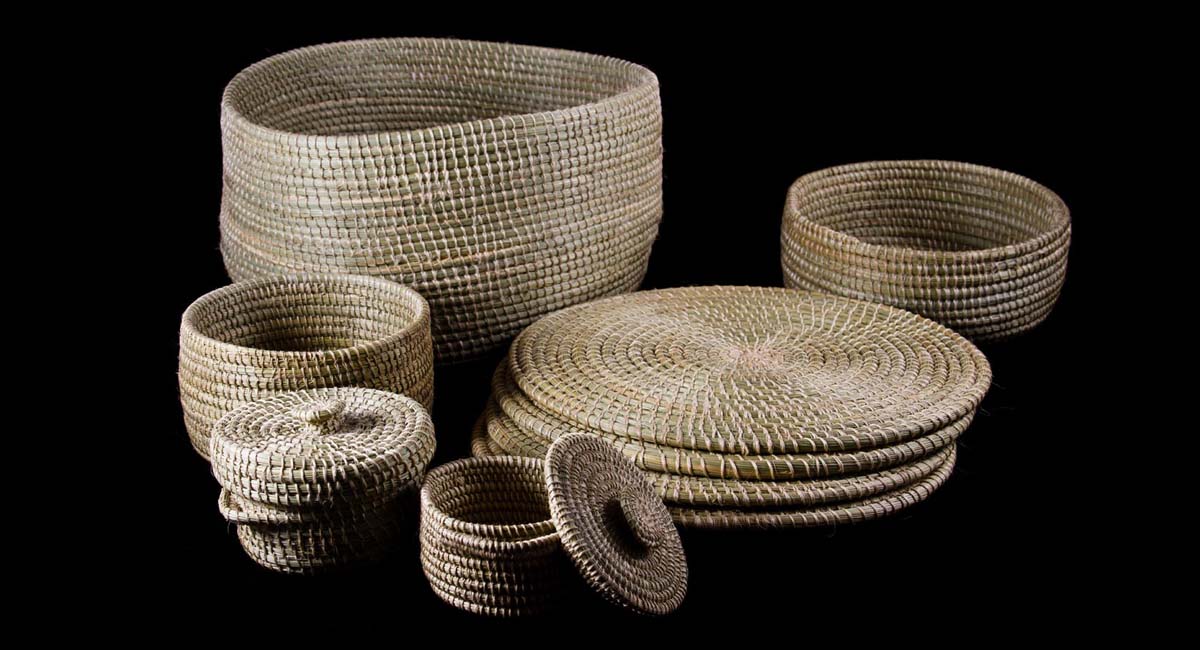
Vegetable fibers

La materia prima para el trabajo en fibras vegetales es variada y extensa en el Ecuador y depende de la zona en la que viven los artesanos (Costa, Sierra, Oriente). Las fibras pueden ser rígidas, semirrígidas o suaves; las más trabajadas son la duda, carrizo, totora, palma, paja de cerro, paja toquilla, mimbre, zapán, tallo de trigo, chocolatillo, zuro y bejuco. Las técnicas básicas consisten en entrelazar, enrollar, trenzar y tejer manualmente estos elementos (varas, hierbas o pajas) para construir objetos planos y volumétricos. Algunas fibras son teñidas con tintes naturales o anilinas y otras se dejan al natural. En…

Descripción

La materia prima para el trabajo en fibras vegetales es variada y extensa en el Ecuador y depende de la zona en la que viven los artesanos (Costa, Sierra, Oriente). Las fibras pueden ser rígidas, semirrígidas o suaves; las más trabajadas son la duda, carrizo, totora, palma, paja de cerro, paja toquilla, mimbre, zapán, tallo de trigo, chocolatillo, zuro y bejuco.

Las técnicas básicas consisten en entrelazar, enrollar, trenzar y tejer manualmente estos elementos (varas, hierbas o pajas) para construir objetos planos y volumétricos. Algunas fibras son teñidas con tintes naturales o anilinas y otras se dejan al natural.

En Ecuador se hace cestería de diferentes tamaños y formas: cestos, canastos, moisés[1], diaper bags, garbage cans. These products are created in the provinces of Azuay, Imbabura, Bolívar, Tungurahua, Cotopaxi, Manabí, Esmeraldas, Santa Elena, El Oro and throughout the Amazon. In most provinces of the country, utilitarian and individual objects such as cup holders, mats are made.[2], mats, mats, purses, blowers, keychains, furniture, purses, among others.

Rope making is another artisanal work, with this technique ropes, ropes and threads are produced with which ties or moorings are made. These handmade objects are manufactured in the provinces of Carchi, Imbabura, Cañar, Azuay and Loja. In Cotopaxi, Tungurahua, Imbabura and Chimborazo the indigenous communities weave shigras or cabuya bags. On the other hand, there is hat making, a sub-branch that is worked in the provinces of Manabí, Santa Elena, Esmeraldas, Azuay, Cañar and Morona Santiago.

It is important to mention the material made by the indigenous nationalities of the Amazon from a bark known as llanchama.[3]. This bark, after being beaten and washed, acquires a texture similar to a thick cloth that is dyed or decorated for clothing.[1]Small traditional crib for babies that is later lined with sponge and fabric.[2]A type of carpet woven from fibers that are used to place on the floor as support.[3]Inner fibrous bark of trees of the Moraceae and Palmaceae families.

EnglishProducts from vegetable fibers

The raw material for working with vegetable fibers is varied and extensive in Ecuador and depends on the area in which the artisans live (coast, highlands, east). The fibers can be rigid, semi-rigid or soft; The most commonly used are doubt, carrizo, totora, palm, mountain straw, toquilla straw, wicker, zapán, wheat stalk, chocolatillo, zuro and bejuco. The basic techniques consist of intertwining, winding, braiding and weaving these elements (sticks, grasses or straws) by hand to construct flat and volumetric objects. Some fibers are dyed with natural dyes or aniline dyes and others are left natural.

In Ecuador, basketry is made in different sizes and shapes: baskets, baskets, bassinets, nappy baskets, and waste baskets. These products are made in the provinces of Azuay, Imbabura, Bolívar, Tungurahua, Cotopaxi, Manabí, Esmeraldas, Santa Elena, El Oro and throughout the Amazon. In most of the country’s provinces, utilitarian and individual objects are made, such as cup holders, mats, mats, mats, wallets, blowers, key rings, furniture, and wallets, among others.

Cordage is another handicraft, with this technique ropes, ropes and threads are produced to make ties or moorings. These handicrafts are made in the provinces of Carchi, Imbabura, Cañar, Azuay and Loja. In Cotopaxi, Tungurahua, Imbabura and Chimborazo, the Indigenous communities weave ‘shigras’ or cabuya bags. On the other hand, there is hat weaving, a sub-branch that is worked in the provinces of Manabí, Santa Elena, Esmeraldas, Azuay, Cañar and Morona Santiago.

It is important to mention the material made by the indigenous nationalities of the Amazon from a bark known as «llanchama». This bark, after being beaten and washed, acquires a texture similar to a coarse cloth that is dyed or decorated for clothing.

Valoraciones

No hay valoraciones aún.

Sé el primero en valorar “Vegetable fibers”

Tu dirección de correo electrónico no será publicada. Los campos obligatorios están marcados con *

Descripción

La materia prima para el trabajo en fibras vegetales es variada y extensa en el Ecuador y depende de la zona en la que viven los artesanos (Costa, Sierra, Oriente). Las fibras pueden ser rígidas, semirrígidas o suaves; las más trabajadas son la duda, carrizo, totora, palma, paja de cerro, paja toquilla, mimbre, zapán, tallo de trigo, chocolatillo, zuro y bejuco.

Las técnicas básicas consisten en entrelazar, enrollar, trenzar y tejer manualmente estos elementos (varas, hierbas o pajas) para construir objetos planos y volumétricos. Algunas fibras son teñidas con tintes naturales o anilinas y otras se dejan al natural.

En Ecuador se hace cestería de diferentes tamaños y formas: cestos, canastos, moisés[1], diaper bags, garbage cans. These products are created in the provinces of Azuay, Imbabura, Bolívar, Tungurahua, Cotopaxi, Manabí, Esmeraldas, Santa Elena, El Oro and throughout the Amazon. In most provinces of the country, utilitarian and individual objects such as cup holders, mats are made.[2], mats, mats, purses, blowers, keychains, furniture, purses, among others.

Rope making is another artisanal work, with this technique ropes, ropes and threads are produced with which ties or moorings are made. These handmade objects are manufactured in the provinces of Carchi, Imbabura, Cañar, Azuay and Loja. In Cotopaxi, Tungurahua, Imbabura and Chimborazo the indigenous communities weave shigras or cabuya bags. On the other hand, there is hat making, a sub-branch that is worked in the provinces of Manabí, Santa Elena, Esmeraldas, Azuay, Cañar and Morona Santiago.

It is important to mention the material made by the indigenous nationalities of the Amazon from a bark known as llanchama.[3]. This bark, after being beaten and washed, acquires a texture similar to a thick cloth that is dyed or decorated for clothing.[1]Small traditional crib for babies that is later lined with sponge and fabric.[2]A type of carpet woven from fibers that are used to place on the floor as support.[3]Inner fibrous bark of trees of the Moraceae and Palmaceae families.

EnglishProducts from vegetable fibers

The raw material for working with vegetable fibers is varied and extensive in Ecuador and depends on the area in which the artisans live (coast, highlands, east). The fibers can be rigid, semi-rigid or soft; The most commonly used are doubt, carrizo, totora, palm, mountain straw, toquilla straw, wicker, zapán, wheat stalk, chocolatillo, zuro and bejuco. The basic techniques consist of intertwining, winding, braiding and weaving these elements (sticks, grasses or straws) by hand to construct flat and volumetric objects. Some fibers are dyed with natural dyes or aniline dyes and others are left natural.

In Ecuador, basketry is made in different sizes and shapes: baskets, baskets, bassinets, nappy baskets, and waste baskets. These products are made in the provinces of Azuay, Imbabura, Bolívar, Tungurahua, Cotopaxi, Manabí, Esmeraldas, Santa Elena, El Oro and throughout the Amazon. In most of the country’s provinces, utilitarian and individual objects are made, such as cup holders, mats, mats, mats, wallets, blowers, key rings, furniture, and wallets, among others.

Cordage is another handicraft, with this technique ropes, ropes and threads are produced to make ties or moorings. These handicrafts are made in the provinces of Carchi, Imbabura, Cañar, Azuay and Loja. In Cotopaxi, Tungurahua, Imbabura and Chimborazo, the Indigenous communities weave ‘shigras’ or cabuya bags. On the other hand, there is hat weaving, a sub-branch that is worked in the provinces of Manabí, Santa Elena, Esmeraldas, Azuay, Cañar and Morona Santiago.

It is important to mention the material made by the indigenous nationalities of the Amazon from a bark known as «llanchama». This bark, after being beaten and washed, acquires a texture similar to a coarse cloth that is dyed or decorated for clothing.

Valoraciones

No hay valoraciones aún.

Sé el primero en valorar “Vegetable fibers”

Tu dirección de correo electrónico no será publicada. Los campos obligatorios están marcados con *

Descripción

La materia prima para el trabajo en fibras vegetales es variada y extensa en el Ecuador y depende de la zona en la que viven los artesanos (Costa, Sierra, Oriente). Las fibras pueden ser rígidas, semirrígidas o suaves; las más trabajadas son la duda, carrizo, totora, palma, paja de cerro, paja toquilla, mimbre, zapán, tallo de trigo, chocolatillo, zuro y bejuco.

Las técnicas básicas consisten en entrelazar, enrollar, trenzar y tejer manualmente estos elementos (varas, hierbas o pajas) para construir objetos planos y volumétricos. Algunas fibras son teñidas con tintes naturales o anilinas y otras se dejan al natural.

En Ecuador se hace cestería de diferentes tamaños y formas: cestos, canastos, moisés[1], diaper bags, garbage cans. These products are created in the provinces of Azuay, Imbabura, Bolívar, Tungurahua, Cotopaxi, Manabí, Esmeraldas, Santa Elena, El Oro and throughout the Amazon. In most provinces of the country, utilitarian and individual objects such as cup holders, mats are made.[2], mats, mats, purses, blowers, keychains, furniture, purses, among others.

Rope making is another artisanal work, with this technique ropes, ropes and threads are produced with which ties or moorings are made. These handmade objects are manufactured in the provinces of Carchi, Imbabura, Cañar, Azuay and Loja. In Cotopaxi, Tungurahua, Imbabura and Chimborazo the indigenous communities weave shigras or cabuya bags. On the other hand, there is hat making, a sub-branch that is worked in the provinces of Manabí, Santa Elena, Esmeraldas, Azuay, Cañar and Morona Santiago.

It is important to mention the material made by the indigenous nationalities of the Amazon from a bark known as llanchama.[3]. This bark, after being beaten and washed, acquires a texture similar to a thick cloth that is dyed or decorated for clothing.[1]Small traditional crib for babies that is later lined with sponge and fabric.[2]A type of carpet woven from fibers that are used to place on the floor as support.[3]Inner fibrous bark of trees of the Moraceae and Palmaceae families.

EnglishProducts from vegetable fibers

The raw material for working with vegetable fibers is varied and extensive in Ecuador and depends on the area in which the artisans live (coast, highlands, east). The fibers can be rigid, semi-rigid or soft; The most commonly used are doubt, carrizo, totora, palm, mountain straw, toquilla straw, wicker, zapán, wheat stalk, chocolatillo, zuro and bejuco. The basic techniques consist of intertwining, winding, braiding and weaving these elements (sticks, grasses or straws) by hand to construct flat and volumetric objects. Some fibers are dyed with natural dyes or aniline dyes and others are left natural.

In Ecuador, basketry is made in different sizes and shapes: baskets, baskets, bassinets, nappy baskets, and waste baskets. These products are made in the provinces of Azuay, Imbabura, Bolívar, Tungurahua, Cotopaxi, Manabí, Esmeraldas, Santa Elena, El Oro and throughout the Amazon. In most of the country’s provinces, utilitarian and individual objects are made, such as cup holders, mats, mats, mats, wallets, blowers, key rings, furniture, and wallets, among others.

Cordage is another handicraft, with this technique ropes, ropes and threads are produced to make ties or moorings. These handicrafts are made in the provinces of Carchi, Imbabura, Cañar, Azuay and Loja. In Cotopaxi, Tungurahua, Imbabura and Chimborazo, the Indigenous communities weave ‘shigras’ or cabuya bags. On the other hand, there is hat weaving, a sub-branch that is worked in the provinces of Manabí, Santa Elena, Esmeraldas, Azuay, Cañar and Morona Santiago.

It is important to mention the material made by the indigenous nationalities of the Amazon from a bark known as «llanchama». This bark, after being beaten and washed, acquires a texture similar to a coarse cloth that is dyed or decorated for clothing.

Valoraciones

No hay valoraciones aún.

Sé el primero en valorar “Vegetable fibers”

Tu dirección de correo electrónico no será publicada. Los campos obligatorios están marcados con *

Descripción

La materia prima para el trabajo en fibras vegetales es variada y extensa en el Ecuador y depende de la zona en la que viven los artesanos (Costa, Sierra, Oriente). Las fibras pueden ser rígidas, semirrígidas o suaves; las más trabajadas son la duda, carrizo, totora, palma, paja de cerro, paja toquilla, mimbre, zapán, tallo de trigo, chocolatillo, zuro y bejuco.

Las técnicas básicas consisten en entrelazar, enrollar, trenzar y tejer manualmente estos elementos (varas, hierbas o pajas) para construir objetos planos y volumétricos. Algunas fibras son teñidas con tintes naturales o anilinas y otras se dejan al natural.

En Ecuador se hace cestería de diferentes tamaños y formas: cestos, canastos, moisés[1], diaper bags, garbage cans. These products are created in the provinces of Azuay, Imbabura, Bolívar, Tungurahua, Cotopaxi, Manabí, Esmeraldas, Santa Elena, El Oro and throughout the Amazon. In most provinces of the country, utilitarian and individual objects such as cup holders, mats are made.[2], mats, mats, purses, blowers, keychains, furniture, purses, among others.

Rope making is another artisanal work, with this technique ropes, ropes and threads are produced with which ties or moorings are made. These handmade objects are manufactured in the provinces of Carchi, Imbabura, Cañar, Azuay and Loja. In Cotopaxi, Tungurahua, Imbabura and Chimborazo the indigenous communities weave shigras or cabuya bags. On the other hand, there is hat making, a sub-branch that is worked in the provinces of Manabí, Santa Elena, Esmeraldas, Azuay, Cañar and Morona Santiago.

It is important to mention the material made by the indigenous nationalities of the Amazon from a bark known as llanchama.[3]. This bark, after being beaten and washed, acquires a texture similar to a thick cloth that is dyed or decorated for clothing.[1]Small traditional crib for babies that is later lined with sponge and fabric.[2]A type of carpet woven from fibers that are used to place on the floor as support.[3]Inner fibrous bark of trees of the Moraceae and Palmaceae families.

EnglishProducts from vegetable fibers

The raw material for working with vegetable fibers is varied and extensive in Ecuador and depends on the area in which the artisans live (coast, highlands, east). The fibers can be rigid, semi-rigid or soft; The most commonly used are doubt, carrizo, totora, palm, mountain straw, toquilla straw, wicker, zapán, wheat stalk, chocolatillo, zuro and bejuco. The basic techniques consist of intertwining, winding, braiding and weaving these elements (sticks, grasses or straws) by hand to construct flat and volumetric objects. Some fibers are dyed with natural dyes or aniline dyes and others are left natural.

In Ecuador, basketry is made in different sizes and shapes: baskets, baskets, bassinets, nappy baskets, and waste baskets. These products are made in the provinces of Azuay, Imbabura, Bolívar, Tungurahua, Cotopaxi, Manabí, Esmeraldas, Santa Elena, El Oro and throughout the Amazon. In most of the country’s provinces, utilitarian and individual objects are made, such as cup holders, mats, mats, mats, wallets, blowers, key rings, furniture, and wallets, among others.

Cordage is another handicraft, with this technique ropes, ropes and threads are produced to make ties or moorings. These handicrafts are made in the provinces of Carchi, Imbabura, Cañar, Azuay and Loja. In Cotopaxi, Tungurahua, Imbabura and Chimborazo, the Indigenous communities weave ‘shigras’ or cabuya bags. On the other hand, there is hat weaving, a sub-branch that is worked in the provinces of Manabí, Santa Elena, Esmeraldas, Azuay, Cañar and Morona Santiago.

It is important to mention the material made by the indigenous nationalities of the Amazon from a bark known as «llanchama». This bark, after being beaten and washed, acquires a texture similar to a coarse cloth that is dyed or decorated for clothing.

Valoraciones

No hay valoraciones aún.

Sé el primero en valorar “Vegetable fibers”

Tu dirección de correo electrónico no será publicada. Los campos obligatorios están marcados con *

Descripción

La materia prima para el trabajo en fibras vegetales es variada y extensa en el Ecuador y depende de la zona en la que viven los artesanos (Costa, Sierra, Oriente). Las fibras pueden ser rígidas, semirrígidas o suaves; las más trabajadas son la duda, carrizo, totora, palma, paja de cerro, paja toquilla, mimbre, zapán, tallo de trigo, chocolatillo, zuro y bejuco.

Las técnicas básicas consisten en entrelazar, enrollar, trenzar y tejer manualmente estos elementos (varas, hierbas o pajas) para construir objetos planos y volumétricos. Algunas fibras son teñidas con tintes naturales o anilinas y otras se dejan al natural.

En Ecuador se hace cestería de diferentes tamaños y formas: cestos, canastos, moisés[1], diaper bags, garbage cans. These products are created in the provinces of Azuay, Imbabura, Bolívar, Tungurahua, Cotopaxi, Manabí, Esmeraldas, Santa Elena, El Oro and throughout the Amazon. In most provinces of the country, utilitarian and individual objects such as cup holders, mats are made.[2], mats, mats, purses, blowers, keychains, furniture, purses, among others.

Rope making is another artisanal work, with this technique ropes, ropes and threads are produced with which ties or moorings are made. These handmade objects are manufactured in the provinces of Carchi, Imbabura, Cañar, Azuay and Loja. In Cotopaxi, Tungurahua, Imbabura and Chimborazo the indigenous communities weave shigras or cabuya bags. On the other hand, there is hat making, a sub-branch that is worked in the provinces of Manabí, Santa Elena, Esmeraldas, Azuay, Cañar and Morona Santiago.

It is important to mention the material made by the indigenous nationalities of the Amazon from a bark known as llanchama.[3]. This bark, after being beaten and washed, acquires a texture similar to a thick cloth that is dyed or decorated for clothing.[1]Small traditional crib for babies that is later lined with sponge and fabric.[2]A type of carpet woven from fibers that are used to place on the floor as support.[3]Inner fibrous bark of trees of the Moraceae and Palmaceae families.

EnglishProducts from vegetable fibers

The raw material for working with vegetable fibers is varied and extensive in Ecuador and depends on the area in which the artisans live (coast, highlands, east). The fibers can be rigid, semi-rigid or soft; The most commonly used are doubt, carrizo, totora, palm, mountain straw, toquilla straw, wicker, zapán, wheat stalk, chocolatillo, zuro and bejuco. The basic techniques consist of intertwining, winding, braiding and weaving these elements (sticks, grasses or straws) by hand to construct flat and volumetric objects. Some fibers are dyed with natural dyes or aniline dyes and others are left natural.

In Ecuador, basketry is made in different sizes and shapes: baskets, baskets, bassinets, nappy baskets, and waste baskets. These products are made in the provinces of Azuay, Imbabura, Bolívar, Tungurahua, Cotopaxi, Manabí, Esmeraldas, Santa Elena, El Oro and throughout the Amazon. In most of the country’s provinces, utilitarian and individual objects are made, such as cup holders, mats, mats, mats, wallets, blowers, key rings, furniture, and wallets, among others.

Cordage is another handicraft, with this technique ropes, ropes and threads are produced to make ties or moorings. These handicrafts are made in the provinces of Carchi, Imbabura, Cañar, Azuay and Loja. In Cotopaxi, Tungurahua, Imbabura and Chimborazo, the Indigenous communities weave ‘shigras’ or cabuya bags. On the other hand, there is hat weaving, a sub-branch that is worked in the provinces of Manabí, Santa Elena, Esmeraldas, Azuay, Cañar and Morona Santiago.

It is important to mention the material made by the indigenous nationalities of the Amazon from a bark known as «llanchama». This bark, after being beaten and washed, acquires a texture similar to a coarse cloth that is dyed or decorated for clothing.

Valoraciones

No hay valoraciones aún.

Sé el primero en valorar “Vegetable fibers”

Tu dirección de correo electrónico no será publicada. Los campos obligatorios están marcados con *

Descripción

La materia prima para el trabajo en fibras vegetales es variada y extensa en el Ecuador y depende de la zona en la que viven los artesanos (Costa, Sierra, Oriente). Las fibras pueden ser rígidas, semirrígidas o suaves; las más trabajadas son la duda, carrizo, totora, palma, paja de cerro, paja toquilla, mimbre, zapán, tallo de trigo, chocolatillo, zuro y bejuco.

Las técnicas básicas consisten en entrelazar, enrollar, trenzar y tejer manualmente estos elementos (varas, hierbas o pajas) para construir objetos planos y volumétricos. Algunas fibras son teñidas con tintes naturales o anilinas y otras se dejan al natural.

En Ecuador se hace cestería de diferentes tamaños y formas: cestos, canastos, moisés[1], diaper bags, garbage cans. These products are created in the provinces of Azuay, Imbabura, Bolívar, Tungurahua, Cotopaxi, Manabí, Esmeraldas, Santa Elena, El Oro and throughout the Amazon. In most provinces of the country, utilitarian and individual objects such as cup holders, mats are made.[2], mats, mats, purses, blowers, keychains, furniture, purses, among others.

Rope making is another artisanal work, with this technique ropes, ropes and threads are produced with which ties or moorings are made. These handmade objects are manufactured in the provinces of Carchi, Imbabura, Cañar, Azuay and Loja. In Cotopaxi, Tungurahua, Imbabura and Chimborazo the indigenous communities weave shigras or cabuya bags. On the other hand, there is hat making, a sub-branch that is worked in the provinces of Manabí, Santa Elena, Esmeraldas, Azuay, Cañar and Morona Santiago.

It is important to mention the material made by the indigenous nationalities of the Amazon from a bark known as llanchama.[3]. This bark, after being beaten and washed, acquires a texture similar to a thick cloth that is dyed or decorated for clothing.[1]Small traditional crib for babies that is later lined with sponge and fabric.[2]A type of carpet woven from fibers that are used to place on the floor as support.[3]Inner fibrous bark of trees of the Moraceae and Palmaceae families.

EnglishProducts from vegetable fibers

The raw material for working with vegetable fibers is varied and extensive in Ecuador and depends on the area in which the artisans live (coast, highlands, east). The fibers can be rigid, semi-rigid or soft; The most commonly used are doubt, carrizo, totora, palm, mountain straw, toquilla straw, wicker, zapán, wheat stalk, chocolatillo, zuro and bejuco. The basic techniques consist of intertwining, winding, braiding and weaving these elements (sticks, grasses or straws) by hand to construct flat and volumetric objects. Some fibers are dyed with natural dyes or aniline dyes and others are left natural.

In Ecuador, basketry is made in different sizes and shapes: baskets, baskets, bassinets, nappy baskets, and waste baskets. These products are made in the provinces of Azuay, Imbabura, Bolívar, Tungurahua, Cotopaxi, Manabí, Esmeraldas, Santa Elena, El Oro and throughout the Amazon. In most of the country’s provinces, utilitarian and individual objects are made, such as cup holders, mats, mats, wallets, blowers, key rings, furniture, and wallets, among others.

Cordage is another handicraft, with this technique ropes, ropes and threads are produced to make ties or moorings. These handicrafts are made in the provinces of Carchi, Imbabura, Cañar, Azuay and Loja. In Cotopaxi, Tungurahua, Imbabura and Chimborazo, the Indigenous communities weave ‘shigras’ or cabuya bags. On the other hand, there is hat weaving, a sub-branch that is worked in the provinces of Manabí, Santa Elena, Esmeraldas, Azuay, Cañar and Morona Santiago.

It is important to mention the material made by the indigenous nationalities of the Amazon from a bark known as «llanchama». This bark, after being beaten and washed, acquires a texture similar to a coarse cloth that is dyed or decorated for clothing.

Valoraciones

No hay valoraciones aún.

Sé el primero en valorar “Vegetable fibers”

Tu dirección de correo electrónico no será publicada. Los campos obligatorios están marcados con *

Descripción

La materia prima para el trabajo en fibras vegetales es variada y extensa en el Ecuador y depende de la zona en la que viven los artesanos (Costa, Sierra, Oriente). Las fibras pueden ser rígidas, semirrígidas o suaves; las más trabajadas son la duda, carrizo, totora, palma, paja de cerro, paja toquilla, mimbre, zapán, tallo de trigo, chocolatillo, zuro y bejuco.

Las técnicas básicas consisten en entrelazar, enrollar, trenzar y tejer manualmente estos elementos (varas, hierbas o pajas) para construir objetos planos y volumétricos. Algunas fibras son teñidas con tintes naturales o anilinas y otras se dejan al natural.

En Ecuador se hace cestería de diferentes tamaños y formas: cestos, canastos, moisés[1], diaper bags, garbage cans. These products are created in the provinces of Azuay, Imbabura, Bolívar, Tungurahua, Cotopaxi, Manabí, Esmeraldas, Santa Elena, El Oro and throughout the Amazon. In most provinces of the country, utilitarian and individual objects such as cup holders, mats are made.[2], mats, mats, purses, blowers, keychains, furniture, purses, among others.

Rope making is another artisanal work, with this technique ropes, ropes and threads are produced with which ties or moorings are made. These handmade objects are manufactured in the provinces of Carchi, Imbabura, Cañar, Azuay and Loja. In Cotopaxi, Tungurahua, Imbabura and Chimborazo the indigenous communities weave shigras or cabuya bags. On the other hand, there is hat making, a sub-branch that is worked in the provinces of Manabí, Santa Elena, Esmeraldas, Azuay, Cañar and Morona Santiago.

It is important to mention the material made by the indigenous nationalities of the Amazon from a bark known as llanchama.[3]. This bark, after being beaten and washed, acquires a texture similar to a thick cloth that is dyed or decorated for clothing.[1]Small traditional crib for babies that is later lined with sponge and fabric.[2]A type of carpet woven from fibers that are used to place on the floor as support.[3]Inner fibrous bark of trees of the Moraceae and Palmaceae families.

EnglishProducts from vegetable fibers

The raw material for working with vegetable fibers is varied and extensive in Ecuador and depends on the area in which the artisans live (coast, highlands, east). The fibers can be rigid, semi-rigid or soft; The most commonly used are doubt, carrizo, totora, palm, mountain straw, toquilla straw, wicker, zapán, wheat stalk, chocolatillo, zuro and bejuco. The basic techniques consist of intertwining, winding, braiding and weaving these elements (sticks, grasses or straws) by hand to construct flat and volumetric objects. Some fibers are dyed with natural dyes or aniline dyes and others are left natural.

In Ecuador, basketry is made in different sizes and shapes: baskets, baskets, bassinets, nappy baskets, and waste baskets. These products are made in the provinces of Azuay, Imbabura, Bolívar, Tungurahua, Cotopaxi, Manabí, Esmeraldas, Santa Elena, El Oro and throughout the Amazon. In most of the country’s provinces, utilitarian and individual objects are made, such as cup holders, mats, mats, mats, wallets, blowers, key rings, furniture, and wallets, among others.

Cordage is another handicraft, with this technique ropes, ropes and threads are produced to make ties or moorings. These handicrafts are made in the provinces of Carchi, Imbabura, Cañar, Azuay and Loja. In Cotopaxi, Tungurahua, Imbabura and Chimborazo, the Indigenous communities weave ‘shigras’ or cabuya bags. On the other hand, there is hat weaving, a sub-branch that is worked in the provinces of Manabí, Santa Elena, Esmeraldas, Azuay, Cañar and Morona Santiago.

It is important to mention the material made by the indigenous nationalities of the Amazon from a bark known as «llanchama». This bark, after being beaten and washed, acquires a texture similar to a coarse cloth that is dyed or decorated for clothing.

Valoraciones

No hay valoraciones aún.

Sé el primero en valorar “Vegetable fibers”

Tu dirección de correo electrónico no será publicada. Los campos obligatorios están marcados con *

Descripción

La materia prima para el trabajo en fibras vegetales es variada y extensa en el Ecuador y depende de la zona en la que viven los artesanos (Costa, Sierra, Oriente). Las fibras pueden ser rígidas, semirrígidas o suaves; las más trabajadas son la duda, carrizo, totora, palma, paja de cerro, paja toquilla, mimbre, zapán, tallo de trigo, chocolatillo, zuro y bejuco.

Las técnicas básicas consisten en entrelazar, enrollar, trenzar y tejer manualmente estos elementos (varas, hierbas o pajas) para construir objetos planos y volumétricos. Algunas fibras son teñidas con tintes naturales o anilinas y otras se dejan al natural.

En Ecuador se hace cestería de diferentes tamaños y formas: cestos, canastos, moisés[1], pañaleras, basureros. Estos productos se crean en las provincias de Azuay, Imbabura, Bolívar, Tungurahua, Cotopaxi, Manabí, Esmeraldas, Santa Elena, El Oro y en toda la Amazonía. En la mayoría de las provincias del país se realizan objetos utilitarios e individuales como portavasos, esteras[2], esterillas, petates, carteras, sopladores, llaveros, muebles, carteras, entre otros.

La cordelería es otra labor artesanal, con esta técnica se producen cuerdas, sogas e hilos con los que se realizan ataduras o amarres. Estos objetos artesanales se fabrican en las provincias de Carchi, Imbabura, Cañar, Azuay y Loja. En Cotopaxi, Tungurahua, Imbabura y Chimborazo las comunidades indígenas tejen shigras o bolsos de cabuya. Por otro lado, está la sombrerería, subrama que se trabaja en las provincias de Manabí, Santa Elena, Esmeraldas, Azuay, Cañar y Morona Santiago.

Es importante mencionar el material elaborado por las nacionalidades indígenas de la Amazonía a partir de una corteza conocida como llanchama[3]. Esta corteza, después de ser golpeada y lavada, adquiere una textura similar a una tela gruesa que se le tiñe o decora para vestimenta.

[1] Pequeña cuna tradicional para bebés que posteriormente es forrada con esponja y tela.

[2] Especie de alfombras tejidas de fibras que se emplean para colocar en el piso como soporte.

[3] Corteza fibrosa interior de árboles de las familias de las moráceas y de las palmáceas.

English

Products from vegetable fibres

The raw material for working with vegetable fibres is varied and extensive in Ecuador and depends on the area in which the artisans live (coast, highlands, east). The fibres can be rigid, semi-rigid or soft; the most commonly used are duda, carrizo, totora, palm, mountain straw, toquilla straw, wicker, zapán, wheat stalk, chocolatillo, zuro and bejuco. The basic techniques consist of intertwining, winding, braiding and weaving these elements (sticks, grasses or straws) by hand to construct flat and volumetric objects. Some fibres are dyed with natural dyes or aniline dyes and others are left natural.

In Ecuador, basketry is made in different sizes and shapes: baskets, baskets, bassinets, nappy baskets, and waste baskets. These products are made in the provinces of Azuay, Imbabura, Bolívar, Tungurahua, Cotopaxi, Manabí, Esmeraldas, Santa Elena, El Oro and throughout the Amazon. In most of the country’s provinces, utilitarian and individual objects are made, such as cup holders, mats, mats, mats, mats, wallets, blowers, key rings, furniture, and wallets, among others.

Cordage is another handicraft, with this technique ropes, ropes and threads are produced to make ties or moorings. These handicrafts are made in the provinces of Carchi, Imbabura, Cañar, Azuay and Loja. In Cotopaxi, Tungurahua, Imbabura and Chimborazo, the Indigenous communities weave ‘shigras’ or cabuya bags. On the other hand, there is hat weaving, a sub-branch that is worked in the provinces of Manabí, Santa Elena, Esmeraldas, Azuay, Cañar and Morona Santiago.

It is important to mention the material made by the indigenous nationalities of the Amazon from a bark known as «llanchama». This bark, after being beaten and washed, acquires a texture similar to a coarse cloth that is dyed or decorated for clothing.

Valoraciones

No hay valoraciones aún.

Sé el primero en valorar “Fibras vegetales”

Tu dirección de correo electrónico no será publicada. Los campos obligatorios están marcados con *