
Descripción
El tejido manual y cestería con fibras naturales en la Republica dominicana se remonta a la época precolombina con los tejidos en algodón y palma que confeccionaban los aborígenes tainos para vestimentas e ídolos.
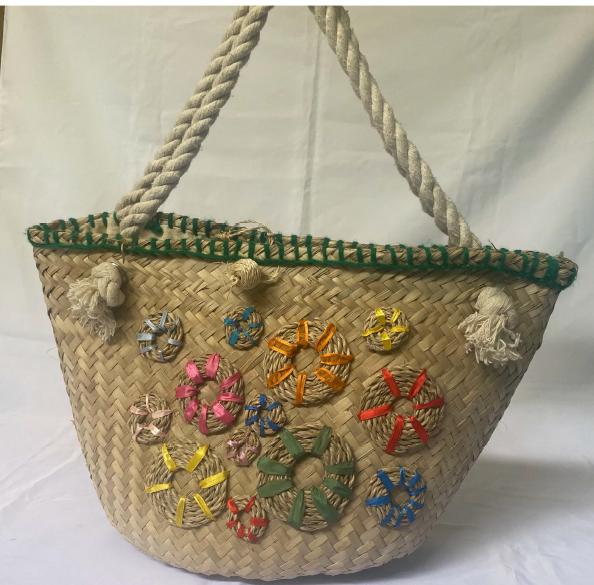
La confección del tradicional macuto de boca ancha, (bolso con tira) hecho de palma de guano (Coccothrinax barbadensis) es una de las principales artesanías de esta técnica, de tejido vertical y horizontal, que se inicia su hechura con el cogollo nuevo de la palma.
Sobre la confección de este bolso se tiene registro de su amplio uso desde principios del siglo XIX, por escritos de Pedro Francisco Bonó pensador dominicano que resaltó la importancia social y económica del conjunto de actividades que llamó “industrias”, refiriéndose a la producción artesanal de árganas, serones, esteras, macutos, aparejos, escobas, aguaderas, sillas, sombreros, hamacas y canastas en comunidades de la Región Cibao” (comunidades del entorno del mayor valle del país.
En cuanto a la confección de sombreros sus orígenes son españoles de palma cana (Sabal umbraculifera). As indicated in the following quote from Walter Cordero, a researcher on these topics.
“There is no evidence in the writings of Indian chroniclers that the aborigines were weavers.
In recent years there has been an interest in converting the traditional duffel bag into fashionable casual bags with painted decorations.
in acrylics of country and sea landscapes.
Other modifications to the guano bag were made by the MICM, (2021) through its Division of Promotion of Crafts-DFA with the participation of the Corazón a Corazón y Artesanía de Frontera Foundation, a municipal entity that operates a craft center in the border province of Elías Piña, financed by the European Union, to assist artisans from its surroundings and the Central Plateau region of Haiti.
english
Weaving with natural fibersHand weaving and basketry with natural fibers in the Dominican Republic date back to pre-Columbian times with the cotton and palm weavings made by the native Taino Indians for clothing and idols.
The making of the traditional wide-mouthed macuto (bag with strap) made of guano palm (Coccothrinax barbadensis) is one of the main handicrafts of this technique, of vertical and horizontal weaving, which begins its making with the new bud of the palm. About the making of this bag, there is a record of its wide use since the beginning of the 19th century, in the writings of Pedro Francisco Bonó, a Dominican thinker who highlighted the social and economic importance of the set of activities he called «industries», referring to the handicraft production of «árganas», «serones», «esteras», «macutos», «aparejos», «escobas», «aguaderas», chairs, hats, hammocks and baskets in communities of the Cibao Region» (communities around the largest valley in the country).
As for the manufacture of hats, their origins are Spanish, made of «palma cana» (Sabal umbraculifera). As the quote from Walter Cordero, a researcher on these subjects, indicates: «There is no evidence in the writings of the Indian chroniclers that the aborigines wove. In recent years there has been an interest in converting the traditional backpack into fashionable casual bags with acrylic-painted decorations of country and seascapes.
Other modifications to the «macuto de guano» were made by the MICM, (2021) through its Division for the Promotion of Crafts-DFA with the participation of the Fundación Corazón a Corazón and Artesanía de Frontera, a municipal entity that operates a crafts center in the border province of Elías Piña, financed by the European Union, to assist artisans in the area and in the Plateau Central region of Haiti.
Valoraciones
No hay valoraciones aún.