
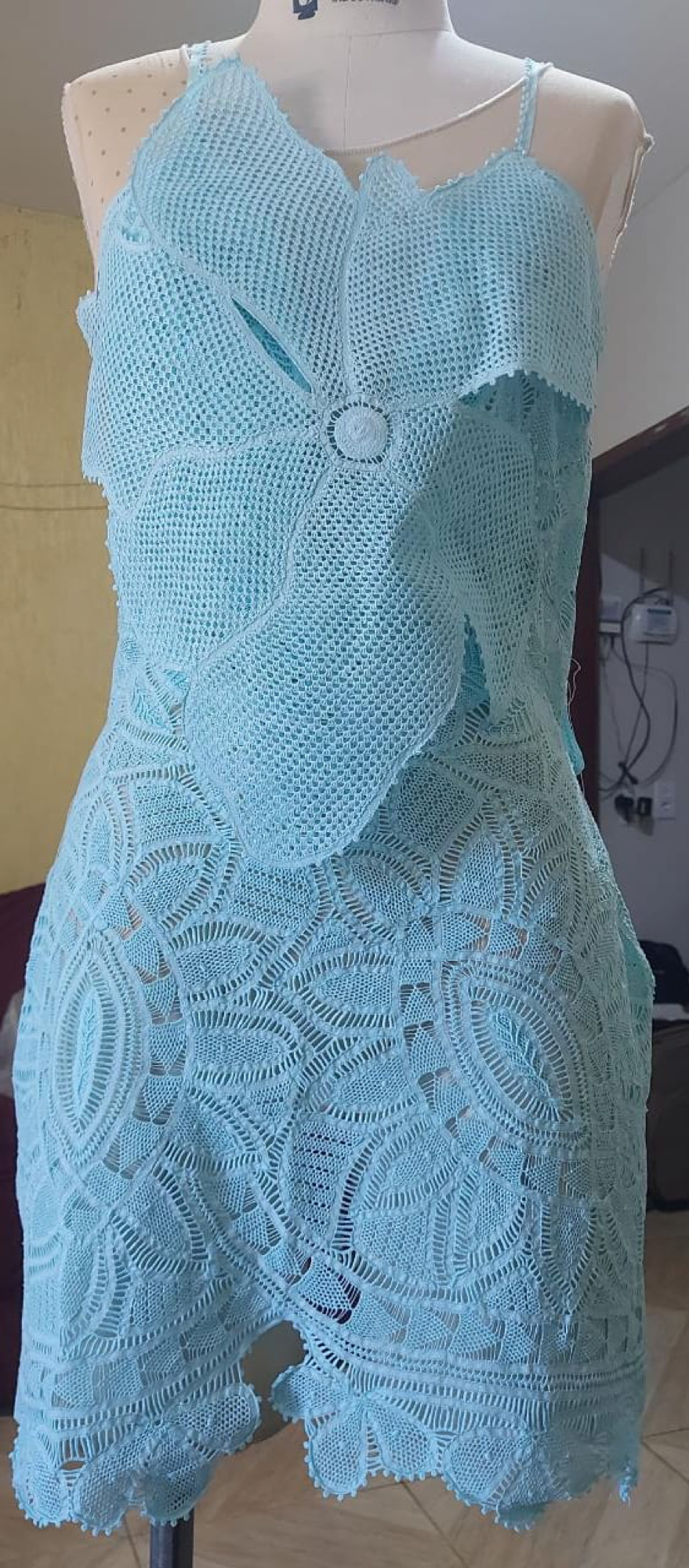
Descripción
A Renda Renascença surgiu na região de Flandres, na Europa, durante o século XV, no período renascentista, razão pela qual recebeu essa denominação. No século XIX foi trazida ao Brasil por freiras e desenvolveu-se e, vários estados do Nordeste, tornando-se hoje um patrimônio nacional, sendo a região do Cariri Paraibano a única a ter o selo de indicação geográfica da Renda Renascença e a cidade de Monteiro o título de Cidade Artesanal da Renda Renascença concedido pelo Conselho Mundial de Artesanato. Atualmente a Renda renascença está com um processos em curso para ser tombada como patrimônio da cultura imaterial brasileira.
A importância cultural e econômica da Renda Renascença foi demonstrada com a criação do Centro de Referência da Renda Renascença – CRENÇA, na cidade de Monteiro. Instalado em um casarão histórico no centro da cidade, possui espaço de pesquisa e criação, promoção e vendas da renda Produzida na Região.
Na região do Cariri Paraibano, que abrange 5 cidades, vivem centenas de famílias que fazem deste oficio seu principal sustento. Pesquisa realizada no início de 2023 demostrou que a a população artesã caiu de 3.000 para 300 no espaço de pouco mais de vinte anos e a tendência é o desaparecimento da Renda Renascenças em alguns anos se não houver uma mudança no padrão de consumo e de produção. A baixa remuneração pelo trabalho e a idade avançada média das rendeiras agravam essa tendência de extinção da atividade como oportunidade de trabalho.
Dentre as 300 rendeiras entrevistas nesta pesquisa de 2023 difícil escolher qual delas poderia representar este oficio. Optamos por escolher Marlene Vital. Cresceu em uma família de mulheres rendeiras: mãe, irmãs e uma tia, com quem aprendeu o oficio. Em 2001 foi convidada para gerenciar a primeira casa das rendeiras em Monteiro. Participou de eventos no Uruguai, Portugal, França. Em 2018 contemplada com o título de Mestra Nacional.
Spanish
Renascença LaceRenascença Lace emerged in the region of Flanders, in Europe, during the 15th century, at the time of the Renaissance, which is why it received this name. In the 19th century it was brought to Brazil by nuns and developed in several Northeastern states, becoming today a national heritage, with the Cariri Paraibano region being the only one to have the geographical indication seal of the Renda Renascença and the city of Monteiro the title. from Craft City of Renaissance Lace awarded by the World Crafts Council. Currently, Renda renascença has a process underway to be classified as a heritage of Brazilian intangible culture.
The cultural and economic importance of Renacença Lace was demonstrated with the creation of the Renascença Lace Reference Center – CRENÇA, in the city of Monteiro. Located in a historic mansion in the center of the city, it has space for research and creation, promotion and sale of lace produced in the region.
In the Cariri Paraibano region, which covers 5 cities, there are hundreds of families who make this work their main means of living. An investigation carried out in early 2023 showed that the population of artisans fell from 3,000 to 300 in just over twenty years and the trend is that Renascença Lace will disappear in a few years if there are no changes in the pattern of consumption and production. The low remuneration for work and the advanced average age of lace makers aggravate this trend towards the extinction of the activity as a job option.
English
Renaissance laceThe Renascença lace originated in the region of Flanders, in Europe, during the 15th century, at the time of the Renaissance, where it received this name. In the 19th century, it was brought to Brazil by nuns and developed in several states of the Northeast, becoming today a national heritage, the region of Cariri Paraibano being the only one to have the seal of geographical indication of Renda Renascença and the city of Monteiro the title of Craft City of Renaissance Lace granted by the World Crafts Council. Currently, Renda Renascença is in the process of being cataloged as a heritage of Brazilian intangible culture.
The cultural and economic importance was demonstrated with the creation of the Renda renascença Lace Reference Center – CRENÇA, in the city of Monteiro. Installed in a historic mansion in the center of the city, it has space for research and creation, promotion and sale of lace produced in the region. In the region of Cariri Paraibano, which includes 5 towns. There are hundreds of families that make this work their main source of livelihood.
Research conducted in early 2023 showed that the population of artisans fell from 3,000 to 300 in just over twenty years and the trend is for it to disappear in a few years if there are no changes in the pattern of consumption and production. The low remuneration of the work and the advanced age of the producers aggravate this trend towards the extinction of the activity as an outlet for employment.
Among the 300 lacemakers interviewed in this 2023 survey, it was difficult to choose which one could represent this trade. We chose Marlene Vital. She grew up in a family of lacemakers: mother, sisters and aunt, from whom she learned the trade. In 2001, she was invited to manage the first lacemaker’s house in Monteiro. She participated in events in Uruguay, Portugal and France.
Valoraciones
No hay valoraciones aún.